

How Tech Improves Inventory Accuracy in Spas
Running a spa without proper inventory tracking can lead to costly mistakes, wasted products, and lost client trust. Here’s the reality:
- 25–40% of products are wasted in Canadian spas due to poor tracking.
- Overstocking ties up cash and risks product expiration, especially for organic items.
- Understocking causes service delays, emergency shipping costs, and lost bookings.
Manual methods like spreadsheets often result in errors, with average inventory accuracy at just 65%. Technology offers a better solution:
- Smart label systems (like QR codes) reduce errors and save time.
- Real-time inventory software automates tracking, prevents stockouts, and monitors expiry dates.
- Vendor integration enables automated reordering, optimizing stock levels and cutting waste.
These tools save spas up to CAD $5,000 annually, improve profit margins by 10–15%, and enhance the client experience by ensuring products are always available. Investing in modern inventory systems isn’t just practical - it’s a game-changer for profitability and client satisfaction.
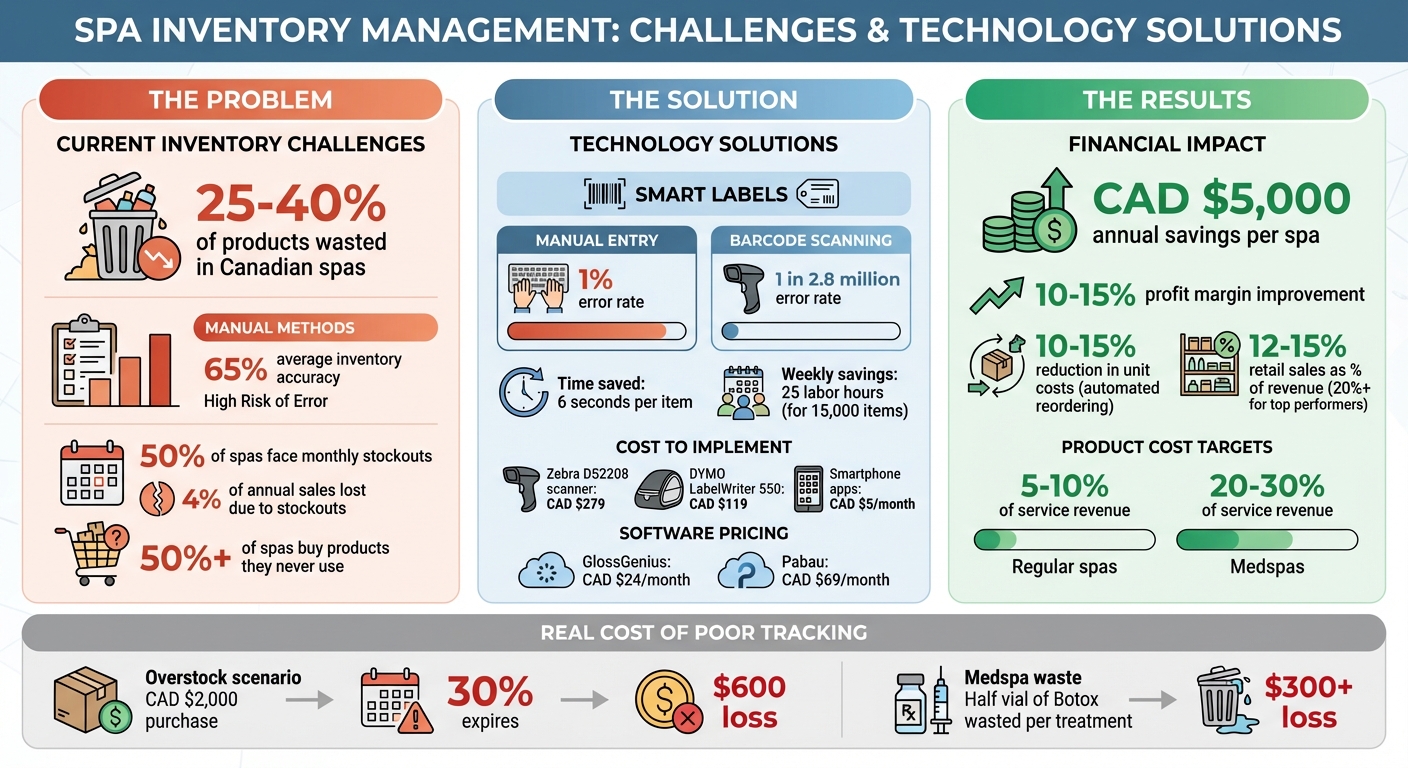
Spa Inventory Management Statistics: Costs, Savings, and Technology Impact
Best Practices Med Spa Inventory Management
sbb-itb-8ec3e54
Common Inventory Problems in Spas
For many spa owners, inventory management often takes a backseat. Unfortunately, this approach can lead to overlooked costs and unnoticed losses that can significantly impact profitability.
Manual Tracking Mistakes and Product Loss
Using spreadsheets or other manual tools for inventory tracking is a recipe for errors. During busy times, staff might miscount items, products can get misplaced in treatment rooms, and simple data entry mistakes pile up. To put it into perspective, businesses relying on manual methods have an average inventory accuracy rate of just 65%. That means one out of every three items on your shelf likely won’t align with your records.
"Inventory shrink is the official, slightly boring term for the difference between what you think you have in stock and what you actually have. It's the silent profit-killer." - Jackson, Pure Spa Direct
Product loss can happen in several ways. For instance, staff might use products for personal purposes or apply too much during treatments due to unclear portion guidelines. Organic or natural products, like essential oils or custom scrubs, are particularly prone to spoilage, as they can oxidize or develop mould quickly. Administrative mistakes - such as forgetting to log returns, skipping shipment checks, or mishandling invoices - add to the problem. For medspas dealing with high-value injectables, a single error with a $500+ filler vial can erase the profit from multiple treatments. These errors don’t just lead to product loss; they also make it harder to maintain accurate stock records and streamline reordering.
When errors in tracking pile up, they create imbalances that make managing stock even more challenging.
Overstocking and Understocking
Striking the right balance between too much and too little stock is tough without real-time data. Overstocking ties up cash flow and risks product expiration. Imagine spending CAD $2,000 on a new skincare line, only to see 30% of it expire before it sells - that’s a direct $600 loss. For spas focused on clean beauty products with shorter shelf lives, this issue can become even more pronounced.
On the flip side, understocking creates its own headaches. Running out of key products mid-treatment not only frustrates clients and staff but can also lead to costly emergency shipping fees or even lost bookings. Stockouts can cut into profits, with businesses losing an average of 4% of annual sales due to these disruptions. Beyond the financial hit, running out of stock damages client trust and eliminates upselling opportunities during treatments.
These challenges highlight the need for smarter systems that can simplify and improve inventory management.
Technology Solutions for Better Inventory Accuracy
Modern tools have taken the place of outdated spreadsheets, offering real-time, automated systems that help reduce errors, save time, and cut down on losses.
Smart Label Technology
Barcode and QR code systems drastically reduce errors - from a 1% error rate with manual entry to as low as 1 in 2.8 million scans. They also save about 6 seconds per item scanned. For a business handling 15,000 items per week, this translates to saving 25 labour hours.
QR codes offer a big advantage over traditional UPC barcodes because they can store more information. This makes them perfect for tracking details like expiry dates and batch numbers, especially for organic products or medical-grade skincare. With the beauty industry preparing to adopt 2D barcodes at checkout by the end of 2027, spas can already start using QR codes internally to control perishables. This is especially critical for backbar facial products prone to waste, which can range from 25% to 40% without proper monitoring.
"Barcode input reduces errors dramatically, showing rates as low as 1 in 2.8 million." - Holly Stanley, Inventory Management Expert
The good news? Setting up smart labels doesn’t have to break the bank. For example, a Zebra DS2208 scanner costs around CAD $279, while a DYMO LabelWriter 550 is about CAD $119. Even smartphone apps, starting at just CAD $5/month, make high-tech tracking easy to implement. The secret to success lies in consistent staff training - whether it’s scanning items during receiving, transferring products to treatment rooms, or at the point of sale.
Once smart labelling is in place, pairing it with real-time inventory software takes stock management to the next level.
Real-Time Inventory Management Software
Building on smart label systems, inventory software updates stock levels in real time as sales and treatments happen. For retail products, the system deducts items at checkout. For back-bar supplies, it links consumables to service protocols, automatically tracking the exact quantities used.
This feature is especially helpful for medspas that rely on high-value injectables. The software can monitor lot numbers, provide expiry alerts, and offer centralized visibility across multiple locations. For example, GlossGenius, a platform used by over 100,000 beauty and wellness businesses, starts at CAD $24/month and includes barcode scanning. Meanwhile, Pabau, tailored for medspas, starts at CAD $69/month and specializes in tracking injectables and their expiry dates.
"This all-in-one system is incredibly convenient. You don't need to purchase countless add-ons to access the tools that everyone values." - Uliana R., G2 Reviewer, Pabau
The software also prevents mid-treatment stockouts by sending low-stock alerts when inventory drops below set thresholds. Mobile integration allows staff to perform quick audits using handheld scanners, instantly resolving discrepancies without the need for time-consuming manual counts.
Vendor Integration for Automated Reordering
Advanced inventory systems can even connect directly with supplier platforms. This feature automates purchase orders when stock hits reorder points, using historical data and seasonal trends to optimize stock levels while reducing waste.
For medspas, where product costs can account for 20–30% of service revenue, this precision is invaluable. It ensures high-value items like Botox are always available while avoiding losses from expired products. The software automatically deducts used items as they’re consumed during treatments, providing the real-time accuracy needed for seamless automated reordering.
"Zenoti is a robust system that has the POS, inventory management, and marketing tools, making it a comprehensive solution for our business." - Dr. Kelly Cobb, Owner, Nouriche Wellness & Aesthetics
Benefits of Accurate Inventory Management for Spas
Cost Savings and Less Waste
Keeping a close eye on inventory can save money and reduce waste significantly. Without proper systems in place, spas can lose 25–40% of professional products. For instance, if a spa overbuys CAD $2,000 worth of a product line, it could face a $600 loss if 30% expires before use. Similarly, poor scheduling in medspas can lead to wasting half a vial of Botox per treatment, costing over CAD $300 each time.
Using technology to manage inventory can increase profit margins by 10–15% and save businesses up to CAD $5,000 annually. Shockingly, more than half of salons and spas regularly purchase products they never use, tying up funds that could be better spent elsewhere.
Smart inventory systems help spas keep product costs within 5–10% of service revenue, while medspas can better handle their higher product-to-revenue ratio of 20–30%. Automated reordering for high-demand items reduces unit costs by 10–15%, and tools like digital scales ensure precise product usage during treatments, cutting down on unnoticed waste.
Better Client Experience
Beyond saving money, accurate inventory management improves the experience for clients. With real-time tracking, spas can ensure products are always in stock, avoiding the frustration of cancelled appointments - a problem that affects 50% of spas relying on manual methods.
When staff know retail products are available, they can confidently recommend items, allowing clients to purchase on the spot rather than searching elsewhere. This reliability is especially crucial for medspas, where tracking lot numbers and expiration dates ensures only safe, fresh products are used. Additionally, inventory systems can suggest personalized recommendations based on a client’s purchase history, fostering stronger relationships. Retail sales, which often account for 12–15% of total revenue (and over 20% for top performers), also benefit from these tailored suggestions.
Data-Driven Decision Making
Real-time analytics turn inventory data into actionable insights. These tools help owners identify fast-selling products and dead stock, allowing them to adjust pricing or run targeted promotions. Seasonal trends, like increased demand for moisturizing treatments in winter, can also be spotted, enabling smarter purchasing that avoids both shortages and overstocking.
For spas with multiple locations, centralized dashboards offer a clear view of purchasing trends across sites. This visibility makes it easier to transfer stock between locations or focus marketing efforts where they’ll have the most impact. Advanced features like ABC analysis categorize inventory into high-priority items needing daily monitoring and low-cost items that can be checked less frequently, helping managers focus on what truly matters for profitability.
Conclusion
Keeping track of inventory manually just doesn’t cut it for today’s busy spas. Nearly 50% of salons deal with monthly shortages, while 25–40% of products go to waste. Technology steps in to turn inventory management from a time-consuming chore into a smart, profit-boosting system that also keeps clients happy.
"Inventory is the silent profit lever in every beauty business. Ignore it, and you bleed cash. Master it, and you unlock higher margins, smoother operations, and happier clients." - Suplery
With modern inventory systems, spas can save up to CAD $5,000 annually and improve profit margins by 10–15%. But it’s not just about the money. Automating these processes frees up staff to spend less time counting stock and more time focusing on what really matters - delivering amazing treatments and building strong client relationships.
For medspas managing high-value injectables, the stakes are even higher. Efficiency here isn’t just about convenience; it’s about compliance and safety. Tracking batch numbers and expiration dates ensures treatments are safe and meet legal standards, reducing risks while maintaining trust.
Investing in advanced inventory management isn’t just a smart move - it’s essential. The tools are available, the returns are clear, and sticking to outdated methods only leads to more waste and lost revenue.
FAQs
What’s the easiest way to start tracking spa inventory with QR codes?
To keep tabs on your spa inventory using QR codes, start by digitizing your records. This means noting down essential details like serial numbers, product categories, and where each item is stored. Once that's done, create unique QR codes for every item and attach them to your products or equipment.
Make sure your staff knows how to scan these codes during inventory checks or when items are checked in or out. Scanning updates the records instantly, cutting down on errors and making tracking more efficient. This simple system ensures your inventory is always up to date.
How do I set reorder points so I don’t overstock or run out?
To establish reorder points effectively, rely on systems that monitor inventory in real time and automate restocking based on usage trends and lead times. Start by analysing your average usage rates and incorporating supplier lead times into the equation. From there, set minimum stock levels that will act as a trigger for reordering. It’s also important to revisit and adjust these points regularly to account for trends or seasonal fluctuations. This approach helps maintain the right balance - avoiding both overstocking and stockouts.
What inventory data should I review weekly to cut waste?
To cut down on waste, keep an eye on weekly data like product usage, current stock levels, and any gaps between recorded inventory and actual counts. Consistently tracking these details can highlight inefficiencies and help reduce losses.
Leave a comment