

AI Skin Devices vs Traditional Tools
AI skin devices are reshaping skincare, offering precision and insights that manual tools can't match. While manual tools like microneedling pens or dermaplaning blades rely on practitioner expertise, AI devices analyse thousands of data points in seconds, detecting skin issues weeks before they appear. They provide consistent, data-driven results, while traditional methods often vary based on the operator.
Key Highlights:
- AI tools assess over 40 skin parameters (e.g., UV damage, texture) and adjust treatments in real time.
- Manual tools depend on visual/tactile feedback and fixed settings, limiting accuracy.
- AI systems deliver measurable progress tracking, boosting client trust and satisfaction.
- Safety: AI devices are more precise for diverse skin tones, reducing risks like pigmentation issues.
Quick Comparison:
| Feature | Manual Tools | AI Skin Devices |
|---|---|---|
| Assessment | Visual/tactile feedback | 50,000+ data points in seconds |
| Consistency | Practitioner variability | Standardized, <5% variation |
| Detection | Surface-level issues | Sub-surface, weeks in advance |
| Adjustments | Fixed settings | Real-time sensor-based changes |
| Progress Tracking | Manual notes/photos | Automated, quantifiable metrics |
AI devices bring a modern edge to skincare, but integrating them requires training, ongoing updates, and budget planning. A hybrid approach - combining AI insights with manual expertise - can deliver the best results for clients.
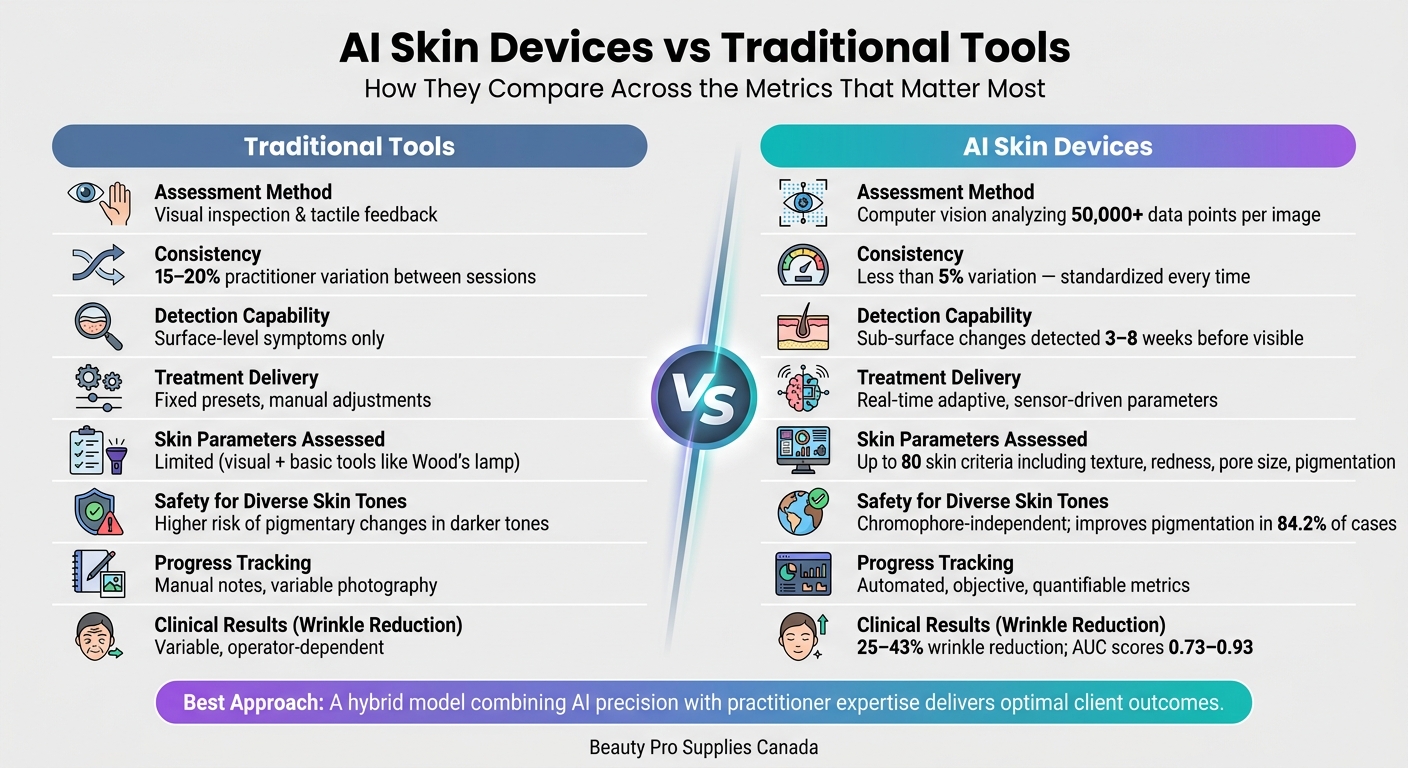
AI Skin Devices vs Traditional Tools: Key Differences at a Glance
AI Skin Apps vs Skin Analysis Machines - Which One Actually Works Better in 2025?
sbb-itb-8ec3e54
Key Differences: AI Devices vs. Traditional Tools
The difference between AI-assisted devices and traditional tools boils down to how they gather and act on information. Traditional tools rely on what a practitioner can observe and feel, while AI devices work with vast amounts of data to deliver insights and treatments.
AI Skin Devices: How They Work and What They Do
AI skin devices combine advanced technologies like computer vision, deep learning neural networks, and sensor-integrated hardware to assess and treat skin conditions. These systems can process over 50,000 data points from a single image in seconds, identifying subtle changes in skin texture, tone, pigmentation, and hydration that are invisible to the naked eye.
What makes AI devices stand out is their ability to adapt in real time. Instead of sticking to fixed settings, these devices use sensors to measure skin hydration and impedance, then automatically adjust parameters like light intensity, radiofrequency output, or current levels during treatment. This adaptability allows them to target concerns such as fine lines, hyperpigmentation, and uneven texture with remarkable precision. Even more impressively, AI can detect skin changes three to eight weeks before they become visible, giving practitioners a head start in planning treatments.
"Machine learning excels at pattern recognition and tracking. Combined with dermatological expertise, it's revolutionising preventive skincare." - Prof. James Liu, Stanford AI Lab
In contrast, traditional tools are limited to fixed, manually controlled settings, restricting their ability to adapt to real-time skin conditions.
Traditional Tools: What They Offer and Where They Fall Short
Traditional tools, like microdermabrasion machines, IPL devices, and LED panels with preset programs, depend heavily on the skill and experience of the practitioner using them. These tools rely on visual and tactile assessments, often supported by devices like Wood's lamps (UV light for pigmentation) or dermatoscopes (10–20× magnification) to guide decisions.
While effective for addressing surface-level issues - such as smoothing texture, correcting mild tone irregularities, and managing early signs of aging - traditional tools have limitations. Assessments based on practitioner expertise can vary significantly between sessions, and preset programs cannot adapt to the skin's condition on a particular day. For more complex concerns, like melasma or deeper structural changes, this lack of adaptability can hinder results. These limitations can directly impact clinical outcomes and client satisfaction, particularly in Canadian medi-spas where precision and consistency are highly valued.
| Feature | Traditional Tools | AI Skin Devices |
|---|---|---|
| Assessment Method | Visual inspection, tactile feedback | Computer vision, 50,000+ data points |
| Consistency | 15–20% practitioner variation | Less than 5% variation |
| Detection Capability | Surface symptoms only | Sub-surface changes, 3–8 weeks early |
| Treatment Delivery | Fixed presets, manual adjustment | Adaptive, sensor-driven in real time |
| Documentation | Manual notes, variable photography | Automated, objective progress metrics |
These distinctions highlight the differences in treatment precision, adaptability, and overall safety between the two approaches. AI devices, with their data-driven insights, set a new standard for skincare, while traditional tools remain reliant on practitioner expertise and manual adjustments.
Effectiveness, Precision, and Safety
Setting Treatment Parameters
Traditional treatment tools often rely on manual settings based on visual assessments and static protocols, which can lead to inconsistent outcomes. On the other hand, AI-powered devices use real-time sensor feedback to analyse up to 80 skin criteria using professional skin analysis tools, such as texture, redness, pore size, and pigmentation. This data allows the device to automatically adjust treatment intensity and duration for each session. Some advanced systems even include exposome data - like sleep patterns, diet, and environmental factors - to create a detailed skin profile. This level of precision ensures more consistent results across different treatments.
"Deeper personalisation through technology will be the frontier to tackle." - Tim Roberts, Head of Science, Therabody
Result Consistency Across Sessions
The precision of AI devices directly translates into consistent and predictable results across multiple sessions. Unlike traditional methods, which can be affected by operator variability, AI systems deliver standardised performance by leveraging machine learning. These systems track progress over time, using image comparison to detect subtle changes in skin features - like shifts in lesion counts or pigment fading - that might go unnoticed during a visual assessment. This consistency not only improves clinical reliability but also builds client trust in AI-assisted treatments.
A clinical study conducted in 2025 demonstrated that AI-based skin analysis tools could accurately predict treatment effectiveness. For example, the Area Under the Curve (AUC) scores ranged from 0.86 for skin firmness to 0.73–0.93 for wrinkle reduction, showing measurable improvements immediately and two months post-treatment.
"AI-powered analysis tools leverage deep learning algorithms and image processing techniques to assess skin parameters... These systems have the potential to standardize assessments and reduce inter-observer variability." - Woohyuk Yoon and Hea Kyeong Shin, Department of Plastic and Reconstructive Surgery, Dongguk University
Safety Across Different Skin Types
One of the standout benefits of AI devices is their ability to ensure safety for a wide range of skin types. Traditional energy-based devices often target melanin, which increases the risk of pigmentary changes in darker skin tones. In contrast, AI-guided RF microneedling is chromophore-independent, significantly reducing these risks. Studies show that this approach improves pigmentation in 84.2% of cases, reduces wrinkles by 25–43%, and increases skin thickness by over 40%. These safety enhancements make AI devices particularly valuable in diverse Canadian clinics. However, it’s crucial that the AI models used are trained on diverse datasets to minimise algorithmic bias and ensure equitable outcomes.
"Best-practice research consistently recommends conservative fluence settings, longer wavelengths, and adequate cooling for patients with darker skin tones to minimise the risk of adverse pigmentary changes." - Caitlyn Johnson, The M-ethod
Client Experience and Satisfaction
Personalised Treatments and Progress Tracking
AI devices bring a tailored approach to skincare by customising treatments based on individual skin characteristics like texture, hydration, and pigmentation. For example, Haut.AI's Face Analysis 3.0, which has analysed more than 3 million images, evaluates over 40 skin parameters from a single photo in less than five seconds.
Unlike traditional methods that rely on visual assessments, which can be skewed by factors like lighting or fatigue, AI delivers precise, quantifiable results. It measures things like pore density, spot coverage, and wrinkle depth using exact metrics - providing a level of accuracy that the human eye simply can’t match. This allows clients to monitor their progress with clear, measurable data.
"AI is excellent at quantifying things a human eye might miss. It can precisely measure pore size, spot count, and surface texture uniformity." - Pure Med Spa
This objective tracking not only boosts client confidence but also encourages consistency. When clients see tangible improvements, like reduced pigmentation or smoother fine lines during follow-ups, they’re more likely to stick to their treatment plans. These accurate metrics also contribute to a smoother and more effective overall experience.
Comfort, Recovery Time, and Long-Term Results
AI technology doesn’t just stop at tracking progress - it also enhances the comfort and recovery process during treatments. Traditional high-intensity procedures like Thermage or Ultherapy, while effective, often involve significant discomfort and downtime. AI-assisted devices, however, use real-time sensor feedback to adjust treatment intensity on the fly, ensuring a more comfortable experience without compromising results.
At-home AI-powered devices are designed for regular use with minimal recovery time, while in-clinic treatments like RF microneedling offer impressive results. For instance, these protocols can improve skin thickness by over 40% and reduce wrinkles by 25–43%, with noticeable changes starting as early as 30 days after treatment. However, it’s important to note that collagen production takes time, with peak results typically visible between three to six months.
"The most effective skincare journeys combine the precision of professional treatments with the discipline of a tailored home routine. Neither works as well in isolation." - The M-ethod
Business Factors for Canadian Clinics
Cost and Training Requirements
When it comes to running a clinic, financial and training considerations play a big role in shaping efficiency and patient care. Traditional tools often come with hefty upfront costs, while AI-powered devices typically follow a subscription model that covers software, data, and analysis. This subscription-based approach spreads costs over time, making it easier for smaller clinics to manage their budgets.
Training requirements also differ significantly. Traditional tools rely on manual skills, which can vary from person to person. On the other hand, AI devices require staff to learn how to capture standardized images and interpret data accurately. This shift can mean retraining up to 70% of your team. Payment options like Beauty Pro Supplies Canada's interest-free Sezzle plan (four instalments over six weeks) can help clinics ease cash flow concerns as they invest in these new tools and skills.
Addressing these financial and training needs is just the first step. Clinics must also prepare for the ongoing demands of device maintenance and regulatory compliance.
Data Compliance and Device Upkeep
The maintenance needs for AI devices are more complex compared to traditional tools. While traditional tools require regular calibration, repairs, and cleaning, AI devices demand continuous software updates, model retraining, and performance monitoring to stay effective.
In Canada, Health Canada oversees the "total product lifecycle" for machine learning-enabled medical devices. This includes monitoring software versions and post-market performance to ensure safety. The Predetermined Change Control Plan (PCCP) simplifies updates by pre-authorizing certain changes, saving clinics time and money.
"The use of a PCCP [Predetermined Change Control Plan] allows timely and ongoing management of risks while ensuring device safety and effectiveness." - Health Canada
Another critical factor is ensuring AI platforms are trained on data that reflects Canada's diverse population, including a variety of skin tones. When evaluating AI tools, clinics should confirm whether the device is designed for skin quantification rather than diagnostics, as diagnostic tools face stricter regulatory requirements. Meeting these standards not only ensures safety for all skin types but also supports the level of clinical accuracy discussed earlier.
Choosing the Right Tools for Your Practice
When it comes to selecting tools for your practice, there’s no one-size-fits-all solution. The right choice depends on your clients’ specific needs, your treatment goals, and your budget. As mentioned earlier, a hybrid approach - using AI for initial assessments alongside traditional tools for interventions - offers a balanced way to combine data insights with hands-on expertise. This approach aligns well with the focus on precision and client satisfaction discussed previously.
Matching the right device to the right skin concern is key to achieving better results. For instance, RF microneedling stands out as a chromophore-independent option, making it a safer choice for clients with deeper Fitzpatrick skin tones. In contrast, light-based devices may pose a higher risk of post-inflammatory hyperpigmentation for these skin types. Incorporating AI skin analysis tools - particularly those supported by independent clinical evidence - can help fine-tune treatment parameters with consistency, especially when working with more challenging skin profiles.
For Canadian clinics, managing the financial aspect of investing in professional-grade equipment doesn’t have to be overwhelming. Companies like Beauty Pro Supplies Canada offer a range of tools, equipment, and online training resources, along with flexible payment options. This allows clinic owners and aestheticians to expand their services gradually and within their financial means.
Ultimately, start by understanding your clients’ needs, ensure the devices you choose are backed by solid clinical evidence, and use AI as a tool to support - not replace - your professional expertise. It’s this combination of data-driven insights and human judgement that leads to the best outcomes.
FAQs
Are AI skin devices worth the cost for a small Canadian clinic?
AI-powered skin devices can be a smart investment for small clinics across Canada. These tools offer accurate skin analysis, help with early detection of skin concerns, and enable tailored treatment plans for clients. While the price tag for some devices goes beyond $500, their advanced capabilities can improve client satisfaction and deliver better results. Whether or not to invest depends on factors like your clinic's size, budget, and the demand from your clientele. For clinics looking to adopt cutting-edge solutions, these devices could align with growth objectives and help attract new clients.
How do I confirm an AI device is safe for darker skin tones?
When considering an AI skin device for darker skin tones, it's crucial to look for clinical research and evidence-based guidelines tailored to skin of colour. The device should have a well-documented safety profile and protocols designed to minimise risks such as hyperpigmentation. Additionally, confirm that the device is suitable for melanin-rich skin and that practitioners are trained to follow procedures specifically adapted for darker skin tones. This ensures treatments are both safe and effective.
Will AI tools replace my hands-on skills as an aesthetician?
AI skincare tools are meant to work alongside, not take the place of, the skilled care provided by aestheticians. These tools can deliver objective skin analyses and tailored suggestions, but they fall short when it comes to understanding complex skin issues or offering the detailed, hands-on attention that professionals provide. Experts emphasize that AI tools should be seen as complementary technologies that assist and amplify the expertise and judgement of trained aestheticians, rather than replacing them.
Leave a comment