
Sanitation vs. Disinfection: What Beauty Clinics Need
Ensuring hygiene in beauty clinics is non-negotiable. Proper sanitation and disinfection protect clients and staff with protective gloves from harmful bacteria, fungi, and viruses. These two processes are distinct but work together to maintain safety and compliance with Canadian health standards.
- Sanitation: Removes visible dirt and reduces bacteria to safe levels using soap, water, and scrubbing.
- Disinfection: Eliminates most pathogens with chemical agents, requiring clean surfaces and specific contact times.
Key Takeaways:
- Sanitation always comes first to prepare surfaces for disinfection.
- Use Health Canada–approved disinfectants for tools and high-touch areas.
- Follow strict protocols for reusable tools, high-touch surfaces, and disposable items.
- Maintain detailed cleaning logs to meet provincial regulations.
Skipping steps or rushing hygiene protocols can lead to serious infections and damage your clinic’s reputation. By following clear, consistent processes, you ensure client safety and build trust.
LIVE Infection Control Class: Salon Sanitation, Disinfection & Safety Standards
sbb-itb-8ec3e54
Sanitation and Disinfection: Definitions and Differences
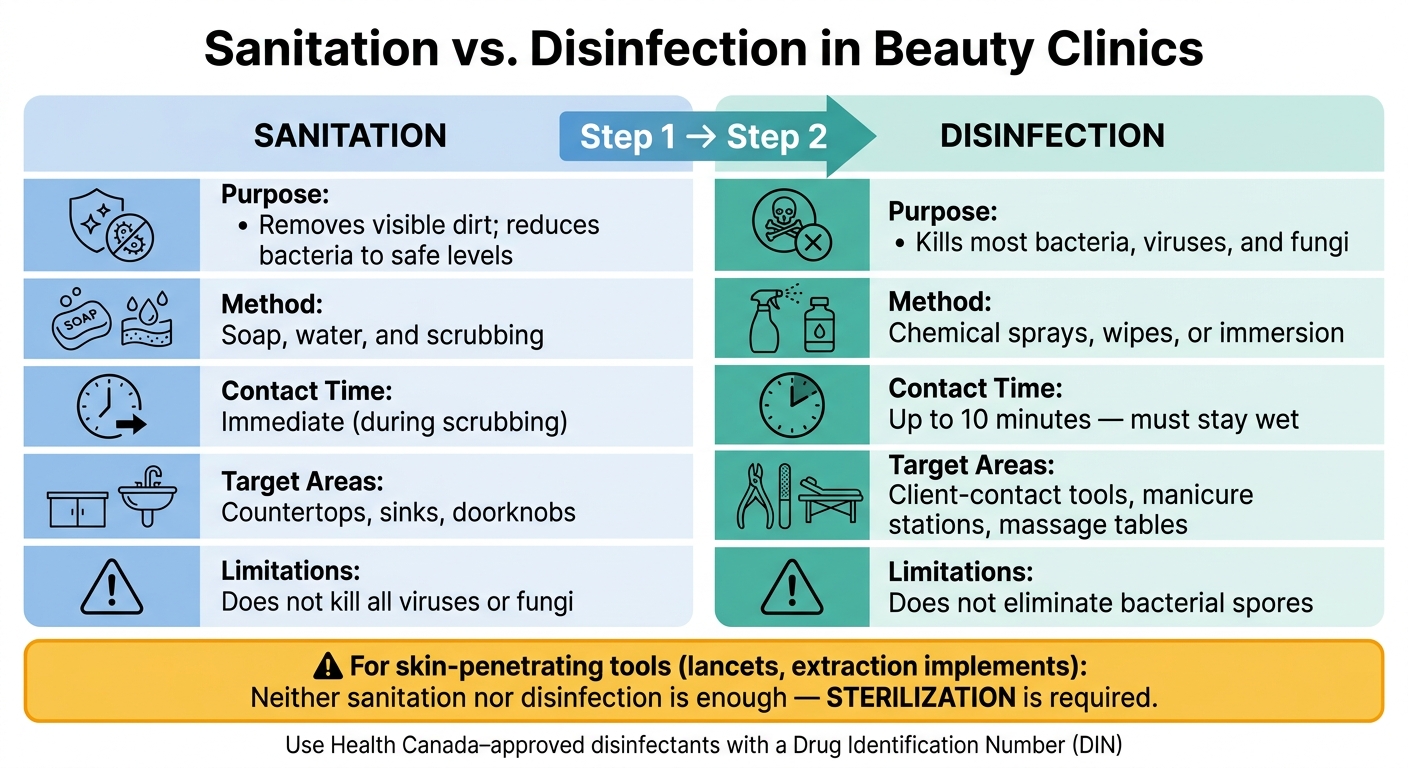
Sanitation vs. Disinfection: Key Differences for Beauty Clinics
Beauty clinics sometimes confuse sanitation with disinfection, which can lead to hygiene oversights that put client safety at risk.
What Is Sanitation?
Sanitation involves physically removing visible dirt, oils, and residue from surfaces and tools using soap, water, and scrubbing. As Kelly from Pure Spa Direct explains:
"Cleaning... is the physical removal of visible debris, oil, and product from a tool using soap, water, and a good scrub. Think of it as clearing the playing field so your disinfectant can actually reach the germs."
Sanitation lowers bacteria to levels deemed safe by public health standards but doesn’t eliminate all viruses or fungi. It’s a routine cleaning measure and serves as the first layer of protection for high-touch areas like doorknobs, sinks, and countertops. Disinfection, on the other hand, uses chemical agents to tackle pathogens that remain after cleaning.
What Is Disinfection?
Disinfection takes things further by using chemical agents - such as sprays, wipes, or immersion solutions - to kill most harmful microorganisms on non-porous surfaces and tools. In Canada, it’s important to use products approved by Health Canada or those that are EPA-registered and hospital-grade.
One key factor is contact time. A disinfectant only works if the surface stays wet for the full duration specified on the product label, which is often up to 10 minutes. Simply wiping and drying a surface immediately won’t achieve the desired results. Disinfection is specifically intended for surfaces and tools that come into direct contact with clients, like manicure stations, massage tables, and metal implements.
Sanitation vs. Disinfection: A Side-by-Side Comparison
These processes aren’t interchangeable - they work together in sequence. Sanitation must always come first because disinfectants can’t reach pathogens hidden beneath dirt or grime. Understanding this distinction is crucial for following Canadian health standards and ensuring client safety.
| Feature | Sanitation | Disinfection |
|---|---|---|
| Purpose | Removes visible dirt; reduces bacteria to safe levels | Kills most bacteria, viruses, and fungi |
| Method | Soap, water, and scrubbing | Chemical sprays, wipes, or immersion |
| Contact Time | Immediate (during scrubbing) | Up to 10 minutes (as per product label) |
| Target Areas | Countertops, sinks, doorknobs | Client-contact tools, manicure stations, massage tables |
| Sequence | Step 1 - must precede disinfection | Step 2 - only on already-clean surfaces |
| Limitations | Does not kill all viruses or fungi | Does not eliminate bacterial spores |
This sequence helps maintain a thorough hygiene routine in beauty clinics.
It’s important to note that for tools that penetrate the skin, such as lancets or extraction implements, neither sanitation nor disinfection is enough. These require sterilization to completely eradicate all microbial life.
Why Beauty Clinics Need Both Sanitation and Disinfection
Beauty clinics rely on both sanitation and disinfection to maintain proper hygiene. These two processes work hand in hand: sanitation clears away visible debris like dirt, oils, and product residue, while disinfection eliminates harmful pathogens that can linger on surfaces. If sanitation is skipped, debris can shield microbes from disinfectants. On the flip side, without disinfection, surfaces may still harbour dangerous contaminants.
Health Risks of Poor Hygiene in Beauty Clinics
Failing to maintain proper hygiene in beauty clinics poses serious health risks for both clients and staff.
"Serious infections like hepatitis B, hepatitis C, and HIV can be spread if proper steps to clean, disinfect or sterilize are not taken by staff at the spa or salon." - York Region Public Health
Beyond these severe infections, poor hygiene practices can lead to fungal conditions and bacterial infections. A notable example is Pseudomonas aeruginosa, often referred to as "green bacteria", which can spread easily between clients. Staff members are equally at risk when infection prevention and control (IPAC) protocols are not consistently followed.
Meeting Canadian Health Guidelines
In Ontario, beauty clinics fall under the category of Personal Service Settings and must adhere to Personal Service Settings Regulation 136/18. Public Health Inspectors conduct inspections at least once a year to ensure compliance with these regulations. Clinics are required to keep detailed records, such as high-level disinfectant logs and forms for accidental exposure to blood or body fluids, as part of their due diligence.
For clinics needing Health Canada–approved disinfectants and professional hygiene supplies, Beauty Pro Supplies Canada offers a variety of products designed for professional use.
How to Sanitize and Disinfect: Step-by-Step
Understanding the difference between sanitizing and disinfecting is important, but doing them correctly is even more critical. As Blaze Lloyd explains:
"Cleaning is an important, mandatory first step before disinfection or sterilization. If you do not first clean a surface, your disinfection and sterilization procedures will be rendered ineffective." – Blaze Lloyd
Skipping or rushing these steps can compromise client safety and lead to non-compliance with regulations.
Sanitation Steps
Start by removing visible debris like residue, oils, or buildup. Use a cloth or scraper for this. Next, scrub the surface or tool with soap and warm water, then rinse thoroughly - high-pressure rinsing works best. Carefully check for any remaining streaks or residue. If you spot any, repeat the cleaning process. Once the surface or tool is spotless, dry it completely with a clean cloth or let it air dry. Only after the item is fully sanitised and dry should you move on to disinfection.
Disinfection Steps
Use a Health Canada–approved disinfectant that's appropriate for the specific item you're cleaning. The level of disinfection needed depends on the tool's use. Here's a quick guide:
| Required Disinfection Level | Examples in Beauty Clinics |
|---|---|
| Low Level | Doorknobs, treatment tables, trolley surfaces, light switches |
| Intermediate Level | Manicure bowls, pedicure basins, lash tiles |
| High Level | Tweezers, cuticle nippers, lash lift shields and tools |
Make sure the disinfectant stays wet on the surface for the full contact time specified on the product label. This step is essential to ensure effectiveness. As Real Cleaning Company highlights:
"Disinfectants need sufficient contact time with the surface to kill or inactivate the targeted microorganisms effectively." – Real Cleaning Company
Once the contact time is complete, let the item air dry fully before storing or reusing it. Always wear personal protective equipment (PPE) like gloves and eye protection when working with disinfectants, and ensure the area is well-ventilated. Following these steps carefully not only meets Canadian health standards but also reinforces trust with your clients.
Hygiene Protocols for Tools, Surfaces, and Spaces
Maintaining proper sanitation and disinfection is crucial, but adapting protocols to specific areas within your clinic ensures even greater safety for clients. Different spaces and tools require tailored hygiene practices based on their use and exposure.
Reusable Tools and Implements
Reusable tools like tweezers, scissors, cuticle nippers, and lash lift shields demand the highest level of care. For non-porous tools used in invasive treatments, follow strict sanitation practices: immerse them fully in a Health Canada–approved disinfectant, then sterilise them using an autoclave or dry heat steriliser.
"Disinfection makes a tool or object safer but does not guarantee the elimination of bacteria or viruses. Sterilization, on the other hand, provides absolute certainty that the object is entirely sterile." – Silcare
After sterilisation, store these tools in sealed sterilisation pouches to keep them sterile until use. This ensures they remain safe and ready for the next client.
Attention should also shift to frequently touched surfaces, which can easily spread contaminants.
High-Touch Areas and Workstations
High-touch surfaces, like treatment tables, trolleys, light switches, and doorknobs, need to be sanitised promptly between clients. Esthetician Diana Muresan highlights the importance of this step:
"Sanitizing means eliminating 99% or more of germs, viruses, and bacteria from your products to prevent cross-contamination between clients." – Diana Muresan, Esthetician
Use a Health Canada–approved disinfectant to clean these surfaces thoroughly. For treatment beds, lay down a fresh disposable paper cover before each client. This simple step creates a clean barrier and takes only seconds to replace. Keep sanitising wipes readily available at every workstation to make quick clean-ups effortless.
Linens and Disposable Items
Proper handling of linens and disposable items is just as critical. Reusable linens should be laundered in hot water after every use to eliminate any lingering pathogens. Never reuse linens for another client without washing them, even if they appear clean.
For disposable items like files, buffers, wooden sticks, sponges, and nitrile gloves, discard them immediately after a single use. As Silcare explains:
"Disposable articles are the foundation of safety. They are essential elements of professional beauty salons." – Silcare
Switching to disposable items wherever possible is one of the simplest ways to minimise cross-contamination risks.
For clinics looking to source reliable hygiene supplies, Beauty Pro Supplies Canada offers a selection of Health Canada–approved products that align perfectly with these safety protocols. Their range ensures your clinic meets the highest standards of cleanliness and client care.
Daily Sanitation and Disinfection Checklist
Consistency is the key to ensuring a clinic is not just visually clean but genuinely hygienic. This checklist turns cleaning protocols into actionable daily tasks, eliminating uncertainty and ensuring accountability among team members. Following these steps helps maintain compliance with Canadian health guidelines throughout the day.
Before Each Client
Start by washing your hands thoroughly with soap and water or using antibacterial hand gel. Before touching anything in the treatment area, put on nitrile gloves and a mask. Use a Health Canada–approved medical aesthetics supplies to clean the workstation, and then place a fresh couch roll on the treatment bed.
Keep pre-sterilised tools sealed in their dated pouches until the client arrives. As esthetician Diana Muresan explains:
"Open the sterile bags just after your client has arrived at the salon so that he/she can be sure that the products and the tools you're using are safe and clean." – Diana Muresan, HeyGoldie
When opening the sterilisation pouches, check the indicators to confirm they’ve been properly sterilised. For single-use items, follow the previously outlined guidelines for disposing of them responsibly.
Once the initial setup is complete, maintain these hygiene standards throughout the day.
Between Clients
Between appointments, act quickly but maintain thoroughness. Disinfect all surfaces the previous client touched using products with ethanol, isopropanol, or hydrogen peroxide - these can eliminate over 98% of microbial cells. Replace the couch roll, dispose of single-use items, remove gloves, and wash your hands.
Reusable tools must go straight into a disinfectant solution and then into sterilisation pouches for autoclaving. Never leave used tools sitting out on the workstation.
End-of-Day Cleaning
End-of-day cleaning goes beyond the surface-level tasks done between clients. Disassemble complex tools or devices to clean internal components that daily wiping may miss. Autoclave all reusable metal implements and seal them in sterilisation pouches, ready for the next day.
Thoroughly sweep and mop the floors, focusing on corners and drains. Disinfect all high-touch surfaces, ensuring you allow the full contact time recommended by the manufacturer before wiping - skipping this step can reduce the disinfectant's effectiveness. Wear nitrile gloves and an apron during this process, as stronger chemicals are often used.
Finally, document the cleaning process. This log serves as proof of compliance with provincial health regulations and helps identify any gaps in your routine. Documentation is not just about meeting standards - it’s a practical tool for maintaining consistent hygiene practices.
Conclusion: Keeping Hygiene Standards High in Beauty Clinics
Sanitation, disinfection, and sterilization each serve a distinct purpose, and understanding the differences is crucial for client safety. Sanitation reduces bacteria, disinfection removes most pathogens, and sterilization completely eliminates microbes. Applying the right process for the appropriate risk level is key to protecting both clients and staff.
Neglecting hygiene can lead to the spread of serious infections and cause lasting harm to a clinic's reputation.
"Cleaning and safety in a beauty salon are priorities and the foundation for delivering high-quality services and ensuring client satisfaction." - Silcare
Maintaining impeccable hygiene standards doesn't have to be complicated. By following clear protocols, clinics can meet Canadian health requirements while fostering client confidence. Use Health Canada–approved products with a Drug Identification Number (DIN), keep detailed cleaning logs, and ensure your team receives regular training. These practices not only protect health but also strengthen trust with every client.
FAQs
When do I need sterilization instead of disinfection?
Sterilization is crucial when tools or equipment come into contact with blood, sterile areas, or require the complete removal of all microorganisms, including spores. This level of cleanliness is vital for invasive procedures or treatments that demand the highest degree of microbial safety, such as surgeries or applications involving direct contact with blood. Techniques like autoclaving are widely recognized for their reliability in achieving this standard.
Disinfection, however, focuses on reducing the number of microorganisms but does not eliminate spores. For situations requiring total microbial removal, sterilization remains the necessary approach.
How do I know a disinfectant is Health Canada–approved?
Disinfectants are considered safe and effective when they’ve been reviewed and authorized by Health Canada. To confirm a product's approval, check its label for a Health Canada authorization number or visit the Health Canada website. Using approved disinfectants is essential for maintaining hygiene standards in your beauty clinic.
What cleaning records do inspectors expect to see?
Inspectors often ask for documented cleaning and disinfection logs. These logs should clearly outline:
- What was cleaned: Specify the equipment, tools, or surfaces.
- When it was done: Include exact dates and times.
- Who performed the task: Record the name or initials of the person responsible.
- Products used: List the disinfectants and cleaning agents, ensuring they meet approved standards.
Additionally, the records must confirm that approved disinfectants were used at the correct dilutions. Keeping these logs accurate and up-to-date is key to meeting health and safety standards in beauty clinics.
Leave a comment