

Lymphatic Drainage Massage for Skin Rejuvenation
Lymphatic drainage massage is a gentle technique that promotes the movement of lymph fluid, helping to reduce puffiness, improve circulation, and brighten skin. This method is especially effective for addressing dullness, inflammation, and water retention, leaving your skin looking healthier and more defined.
Key benefits include:
- Reduced swelling and under-eye puffiness
- Improved skin tone and hydration
- Softer appearance of fine lines
- Calmer skin for those with redness or sensitivity
Using light pressure and rhythmic strokes, the massage clears toxins and enhances natural healing, making it a popular choice among beauty professionals in Canada. Tools like jade rollers and gua sha stones can further refine results. To maximize its effects, regular sessions and proper hydration are recommended.
Whether you're a professional or seeking at-home techniques, this approach offers a simple way to refresh your skin's appearance and health.
Expert Face Lymphatic Drainage Massage Routine
sbb-itb-8ec3e54
Benefits for Skin Health
Lymphatic drainage doesn’t just detoxify - it also boosts the skin’s vitality by improving circulation and hydration.
Better Skin Tone and Circulation
When lymphatic drainage massage stimulates the lymphatic system, it increases blood flow to the face. This brings oxygen and nutrients essential for cell repair while clearing out toxins that contribute to dullness and congestion.
Better circulation means faster cell turnover and regeneration, which are key to maintaining a youthful, glowing complexion. Physiotherapist Taylor Sipos highlights this:
"Improved blood flow to the skin helps deliver essential nutrients and oxygen to the cells, which promotes healthy skin growth and repair."
This technique is especially helpful for managing inflammatory conditions like acne and rosacea. By flushing out impurities and reducing redness, it supports clearer, calmer skin. Additionally, the enhanced circulation helps reduce facial puffiness, giving the face a more sculpted appearance.
Less Puffiness and Inflammation
Using gentle, rhythmic strokes, the massage moves stagnant lymph fluid toward drainage points near the ears, jaw, and collarbone. This reduces puffiness caused by factors like high-salt diets, lack of sleep, or travel. The under-eye area, where skin is particularly thin, benefits significantly, as even small amounts of fluid retention can create noticeable bags or dark circles.
A study in the Journal of Cosmetic and Laser Therapy found that lymphatic drainage massage reduced facial swelling and improved skin tone in post-surgical patients. It also activates the parasympathetic nervous system, which lowers stress-related inflammation in the skin. This makes it effective for conditions like rosacea, eczema, and acne.
Because the technique uses a light touch, it’s ideal for those with sensitive or reactive skin who might not tolerate deeper facial massages. For anyone dealing with "tired" skin from poor circulation or environmental stress, this massage acts like a reset for the skin’s natural detox system, working alongside hydration to refresh and rejuvenate.
Increased Hydration and Collagen Production
The lymphatic system plays a crucial role in maintaining the body’s fluid balance. When it’s working well, skin stays hydrated and nourished as lymph fluid flows freely and waste is removed. The massage helps clear out byproducts that lead to dullness, breakouts, and signs of premature ageing.
Clinics like Keita Beauty in Halifax and The Orthopaedic Therapy Clinic in Toronto highlight the importance of lymphatic drainage as part of a comprehensive skincare routine, often utilizing professional spa supplies to enhance results. Regular sessions not only detoxify but also support graceful ageing.
For the best results, recommend a session schedule tailored to the client’s needs. Encourage drinking water before and after treatments to help flush out toxins and maintain hydration levels.
Before and After Comparison
| Feature | Before Treatment | After Treatment |
|---|---|---|
| Puffiness | Visible swelling, under-eye bags, heavy jawline | Contoured, sculpted look with reduced puffiness |
| Skin Tone | Dull, congested, or uneven | Brighter, more radiant, and evenly toned |
| Hydration | Dehydrated, tight feeling; stagnant fluid | Plump, well-nourished, balanced moisture levels |
| Fine Lines | More noticeable due to dryness and toxin buildup | Softer appearance with improved collagen and elastin |
| Inflammation | Redness, heat, active irritation | Calmer skin with reduced redness and sensitivity |
Techniques and Tools
Now that the benefits for skin are clear, let’s dive into how precise techniques and specialized tools can amplify lymphatic drainage results.
Lymphatic drainage massage relies on an incredibly light touch - imagine the weight of a coin - paired with slow, rhythmic movements that mimic waves in the lymphatic system. The direction of these movements is just as important as the pressure: always guide fluid outward from the centre of the face towards the ears and temples, then downwards towards the collarbones.
Manual Techniques
Every session should begin by “opening the terminus.” This involves placing your fingertips in the hollows above the collarbones and performing 8–12 gentle circular pumps. This step primes the lymphatic pathways, ensuring fluid from the face has a clear route to drain.
From here, use the flats of your hands to sweep downward from the jawline along the sides of the neck towards the collarbones. Use your knuckles or fingertips to trace the jawline, moving from the chin to the earlobes, and gently sweep from the sides of the nose across the cheekbones towards the temples. Around the eyes, use your ring finger for its naturally lighter pressure, tracing a semicircle from the inner corner of the eye to the temple. To finish, sweep outward from the centre of the forehead to the temples, and guide your hands down the sides of the face to the collarbones.
"Facial lymphatic techniques rely on minimal pressure and directionality. Start near the collarbones, clear the neck, then guide fluid laterally across the face. Less pressure often does more." - Cleveland Clinic ENT guidance
Always perform these techniques on clean skin, using a facial oil or moisturizer to avoid dragging. The pace should be slow and steady, never rushed.
To refine these techniques further and add a cooling sensation, many professionals incorporate specialized tools.
Professional Massage Tools
Tools like jade rollers and gua sha stones bring an added layer of precision and soothing effects. Jade and rose quartz rollers are perfect for reducing puffiness in the morning, while gua sha stones - crafted from jade, rose quartz, or stainless steel - are excellent for sculpting the jawline and cheekbones. These tools boost circulation and can smooth fine lines when used at a 15–30 degree angle with light pressure.
For professional-grade tools, check out Beauty Pro Supplies Canada (https://beautyprosupplies.com), which offers a range of options tailored for aestheticians and spa professionals. Always use tools on lubricated skin and sanitize them thoroughly after each use to avoid irritation or infection.
These tools complement manual techniques beautifully, helping to achieve efficient and noticeable skin revitalization.
Manual vs. Tool-Assisted Methods
| Feature | Manual Techniques | Tool-Assisted (Gua Sha/Rollers) |
|---|---|---|
| Primary Benefit | Warmth and intuitive pressure control | Cooling effect (if chilled) and ergonomic for repetitive strokes |
| Ideal Use Case | Sensitive skin or nightly routines | Morning de-puffing or pre-event contouring |
| Pressure Control | Easy to maintain light pressure with fingers | Requires careful handling to avoid excessive pressure |
| Results | Relaxation and subtle fluid drainage | Enhanced circulation and defined contours |
Both approaches are effective in their own right. Manual techniques offer a natural, warm touch and adaptability, making them ideal for those with sensitive skin. On the other hand, tools excel in providing consistent strokes and a sculpting effect. The choice depends on the desired outcome: manual for sensitivity and relaxation, tools for contouring and a cooling boost.
Step-by-Step Facial Protocol
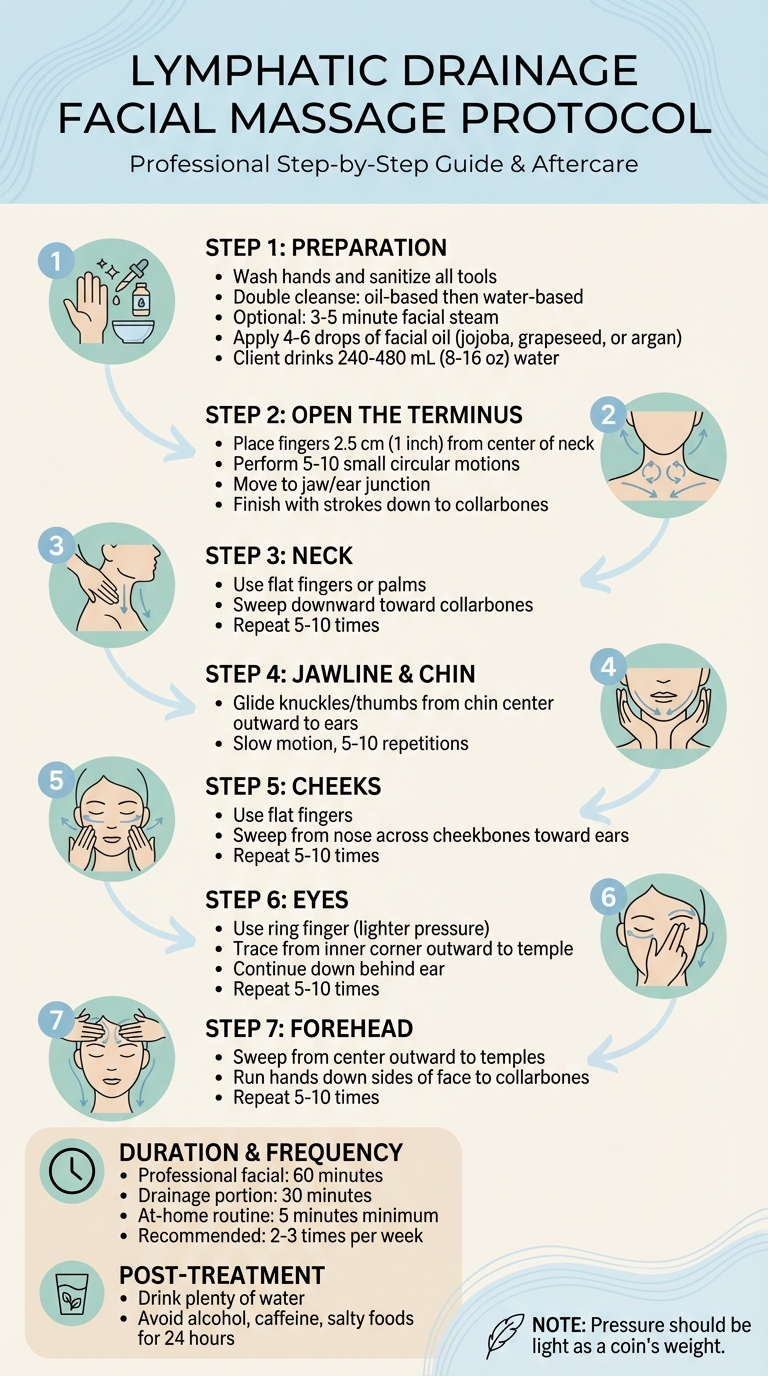
Step-by-Step Lymphatic Drainage Facial Massage Protocol
A proper lymphatic drainage facial follows a specific sequence. This ensures pathways are clear before working on fluid movement, allowing each step to support the lymphatic system in processing waste effectively.
Preparation and Setup
Begin by creating a peaceful, distraction-free atmosphere. Soft lighting and calming music can help your client relax. Wash your hands thoroughly, wear protective vinyl gloves, and sanitize all tools - such as gua sha stones, rollers, or wands - before starting. Perform a double cleanse: first, use an oil-based cleanser to remove makeup or sunscreen, followed by a water-based cleanser to ensure the skin is completely clean. For added benefit, consider a 3–5 minute facial steam to soften tissues and open pores.
Once the skin is prepped, apply 4–6 drops of a lightweight, non-comedogenic facial oil or serum. Jojoba oil works well for all skin types, grapeseed oil is ideal for oily skin, and argan oil suits dry skin. Warm the oil between your palms and gently press it into the skin to create a smooth surface and avoid pulling. Encourage your client to drink 240–480 mL (8–16 oz) of water beforehand and take a few deep breaths to enhance circulation.
With the skin primed and your client relaxed, you’re ready to begin.
Massage Routine by Facial Area
Start by addressing the terminus at the collarbones. Place two fingers about 2.5 cm (1 inch) from the centre of the neck and perform 5–10 small circular motions. Then, move to the area where the jaw meets the ear, finishing with strokes down to the collarbones. This step clears the "drain pipes" so fluid can exit efficiently.
- Neck: Use flat fingers or palms to sweep downwards toward the collarbones. Repeat 5–10 times.
- Jawline and Chin: Glide your knuckles or thumbs from the centre of the chin outward toward the ears. Perform this motion slowly, repeating 5–10 times.
- Cheeks: Use flat fingers to sweep from the nose across the cheekbones toward the ears.
- Eyes: Switch to your ring finger for lighter pressure. Trace from the inner corner of the eye, moving outward toward the temple, then continue the motion down behind the ear.
- Forehead: Sweep from the centre of the forehead outward to the temples, then run your hands down the sides of the face to the collarbones.
Each movement should be light, rhythmic, and repeated 5–10 times.
Duration and Frequency
The length of a session depends on the setting. A standalone lymphatic drainage facial typically takes 60 minutes, while the drainage portion of a broader facial treatment is often about 30 minutes. For at-home routines, even 5 minutes can show visible results. For best outcomes, suggest clients have treatments 2–3 times per week, though gentle daily sessions are generally safe. After the session, remind clients to drink plenty of water to help flush out toxins and waste mobilized during the treatment.
Best Practices and Professional Tips
Contraindications and Precautions
Conducting a detailed client intake is a must. Avoid performing this massage on clients with conditions like acute infections (e.g., cellulitis or sepsis), deep vein thrombosis (DVT), decompensated congestive heart failure (CHF), or malignant tumours. Valerie DuPree, a Certified Manual Lymphatic Drainage Therapist at Full Circle Vitality, highlights:
"Stimulating the lymphatic system during an active infection can exacerbate symptoms and spread pathogens, worsening the client's condition."
She also warns:
"MLD increases circulation, which can dislodge a clot and lead to life-threatening complications such as pulmonary embolism."
Clients in their first trimester of pregnancy, or those with kidney dysfunction (creatinine levels above 2.0), well-controlled hypertension, or chronic infections, must provide written medical clearance before proceeding. Timing is also critical for cosmetic procedures: wait 1–2 weeks after Botox or dermal fillers and at least 2 weeks following chemical peels or laser treatments. Clients using Accutane should discontinue it for 6 months, and those using retinols, AHAs, or BHAs should stop for 3–7 days before treatment. For clients over 65, be cautious with neck techniques due to sensitivity in the carotid sinus area.
Here’s a quick reference for contraindications and appropriate actions:
| Contraindication Category | Condition/Scenario | Professional Action |
|---|---|---|
| Absolute | DVT; Acute Infection (e.g., cellulitis or sepsis); Decompensated CHF; Malignant Tumours | Do Not Perform |
| Relative | First Trimester Pregnancy; Kidney Dysfunction (creatinine > 2.0); Well-Managed Hypertension; Chronic Infections | Require Medical Clearance |
| Cosmetic/Local | Recent Botox or Dermal Fillers (within 1–2 weeks) | Wait 1–2 Weeks |
| Cosmetic/Local | Recent Chemical Peel or Laser Treatment (within 2 weeks) | Wait at Least 2 Weeks |
Post-treatment, recommend clients stay hydrated. Temporary effects like fatigue, headaches, or thirst may occur as the body flushes out toxins. Suggest wearing loose clothing and avoiding alcohol, caffeine, and salty foods for 24 hours. After addressing these safety measures, ensure you’re equipped with the right qualifications for this technique.
Training and Certification Resources
Proper training is essential to deliver safe and effective treatments. Professionals should enrol in programmes offering a Lymphatic Drainage Facial Massage Certificate, tailored for licensed aestheticians. The ideal training combines about 10 hours of self-paced online theory with hands-on practice to master the gentle pressure and rhythmic motions required. Look for courses accredited by Career Colleges Ontario or the National Association of Career Colleges to ensure your certification is well-regarded.
Typically, prerequisites include an Esthetics Diploma from a recognized college or a Facial Certificate with at least six months of professional experience. Certified training not only reduces risks but also reinforces the benefits of this technique. Training should cover the lymphatic system’s basics, specific techniques, client consultations, and how to integrate this massage into existing facial routines. Beauty Pro Supplies Canada offers digital manuals and step-by-step guides priced between CAD $14.99 and CAD $199.95, helping professionals maintain consistency in their practice. Document your skills through case studies and seek guidance from licensed massage therapists or physiotherapists when needed.
Combining with Other Skincare Services
Once safety protocols and training are in place, this technique can elevate your service offerings by complementing other skincare treatments. Lymphatic drainage pairs well with facials, acne treatments, and anti-ageing regimens. It’s particularly useful after intensive procedures like microneedling, chemical peels, or laser treatments, as it aids healing and supports cell repair. It can also be incorporated after exfoliation, microdermabrasion, or LED light therapy to calm inflammation and soothe the skin. Performing this massage before applying active ingredients such as Vitamin C, Retinol, or Peptides enhances their absorption and effectiveness.
Begin sessions at the neck to activate major lymph node clusters before moving to the face. This ensures the system is open and fluid drains efficiently. Use light pressure (about 30–40 mmHg) along the body’s natural pathways. For post-surgical recovery, daily sessions over two weeks are recommended, while anti-ageing treatments may benefit from weekly professional sessions combined with daily at-home techniques. Explain to clients that while they may notice immediate improvements like reduced puffiness after one session, lasting results typically require consistent treatments over 4–8 weeks.
Conclusion
Lymphatic drainage massage offers quick results while promoting long-term skin health. Clients often notice an immediate decrease in puffiness, better skin tone, and a soothing effect that activates the parasympathetic nervous system. These benefits lead to higher satisfaction rates and encourage repeat visits.
The visible improvements in skin also bring business advantages. Incorporating lymphatic drainage into your services - whether as part of facials, post-procedure care, or a stand-alone treatment - can increase revenue while meeting the growing Canadian interest in holistic beauty practices. The ability to speed up healing by 30–40% after invasive treatments sets your business apart in a competitive market.
To deliver consistent, high-quality results, professional tools and training are essential. Beauty Pro Supplies Canada provides digital manuals and guides to help you refine your techniques, target deeper congestion, and offer a premium experience. Investing in proper training and tools not only supports premium pricing but also builds client trust.
Educating clients about the importance of hydration and movement for optimal lymphatic flow, along with tailoring pressure to their specific needs, helps foster long-term loyalty. As Hawa Swaray, Founder of Keita Beauty, explains:
"Lymphatic drainage facial massage is more than just a luxury treatment - it's a powerful tool for promoting skin health."
With the right techniques and tools, lymphatic drainage massage can become a cornerstone of client satisfaction and business success.
FAQs
How do I know if I’m using too much pressure?
If you feel discomfort, redness, or pain during a lymphatic drainage massage, chances are you're applying too much pressure. These massages are meant to be gentle, using just enough pressure to lightly stretch the skin before letting it return to its natural position. Pressing too hard can actually damage lymphatic vessels or nodes, which defeats the purpose. Stick to soft, calming movements to encourage lymph flow without risking harm.
Can lymphatic drainage massage make acne or rosacea worse?
Lymphatic drainage massage is known for its ability to ease inflammation and puffiness, making it helpful for conditions like rosacea. That said, it's crucial to approach this technique with care. If done too aggressively or incorrectly, it can irritate sensitive skin and potentially worsen symptoms of rosacea or acne by triggering more inflammation. To avoid these issues, always ensure the massage is gentle and tailored to your specific skin needs.
When should I avoid lymphatic drainage (and ask my doctor first)?
If you have an infection, blood clots, heart issues, or have recently had surgery, it's best to avoid lymphatic drainage massage and consult your doctor. These conditions could make the treatment risky. When in doubt, always check with a healthcare professional to ensure your safety.
Leave a comment