

Best Practices for Storing Med Spa Devices
Proper storage of med spa devices is essential to maintain their performance, meet Canadian regulations, and ensure patient safety. Devices like Woods Lamps or CO₂ fractional lasers, costing over CA$200,000, require meticulous handling to avoid financial loss and clinical risks. This guide evaluates five common storage options - mobile carts, wall shelving, closed cabinets, dedicated rooms, and original manufacturer cases - based on infection prevention, device protection, compliance, and workflow efficiency.
Key takeaways:
- Mobile carts are portable but lack dust protection unless lockable.
- Wall shelving saves space but exposes tools to airborne contaminants.
- Closed cabinets protect against dust and light but can trap moisture.
- Dedicated rooms centralize storage but require extra space.
- Manufacturer cases offer tailored protection but need dry devices.
Quick Tip: Always follow Health Canada's Medical Devices Regulations and manufacturer guidelines to prevent contamination or damage. Choose storage solutions that align with your clinic's workflow and ensure staff are trained on proper handling.
| Storage Option | Key Benefit | Common Issue | Cost (CAD) |
|---|---|---|---|
| Mobile Carts | Easy access during use | Limited capacity, security | $900–$1,800 |
| Wall Shelving | Space-saving, visible tools | Dust exposure | ~$620 |
| Closed Cabinets | Protects from contaminants | Can trap moisture | $400–$900 |
| Dedicated Equipment Rooms | Centralized storage | Slower retrieval | $2,500+ |
| Manufacturer Cases | Tailored device protection | Bulky, moisture risk | Varies |
Pro Tip: Ensure all tools are cleaned, dried, using absorbent medical wipes, and stored in temperature-controlled areas to maintain hygiene and device longevity.
1. Mobile Treatment Carts and Trolleys
Mobile treatment carts provide convenient, on-the-go storage, making them a valuable asset in busy med spas. They allow practitioners to keep essential tools within reach during procedures, cutting down on unnecessary movement and improving workflow. Below, we’ll explore how these carts align with IPAC protocols, help maintain device integrity, and enhance efficiency.
Infection Prevention and Control (IPAC)
Proper storage after reprocessing is critical to keeping devices free from contamination. If reprocessing isn’t done thoroughly, harmful pathogens like hepatitis B, hepatitis C, and HIV can linger on improperly stored surfaces. To ensure safety, always check chemical indicators (CIs) on packaged equipment using a documented IPAC checklist before placing items in mobile storage. Additionally, consult the Manufacturer's Instructions For Use (MIFU) for both the device and the cart to prevent damage caused by incompatible cleaning agents.
Device Integrity and Protection
A well-organized cart helps protect tools from accidental damage, such as drops or mishandling. By assigning specific spots for each item, it becomes easier to spot missing or damaged tools before treatments begin, lowering the risk of using compromised equipment.
Workflow and Ergonomics
Positioning carts close to practitioners improves efficiency and reduces physical strain. For added security, sensitive devices should be moved to locked storage when not in use. During treatments, the mobility of these carts ensures that tools stay accessible without interrupting the workflow.
Security and Access Control
Open-shelf trolleys don’t provide secure storage, so it’s better to choose carts with lockable drawers to safeguard devices and lower liability risks. Equally important is staff training - every team member should know which tools require restricted access. Often, lapses in IPAC practices stem from gaps in staff education rather than equipment issues.
sbb-itb-8ec3e54
2. Wall Shelving and Vertical Storage
Wall shelving and vertical storage provide a practical option for tools and devices that stay in a single treatment room, serving as a great alternative to mobile carts. One of their main benefits is visibility - when every tool has a designated spot on a shelf, it’s easier to avoid mixing clean tools with those that have already been used.
Infection Prevention and Control (IPAC)
Open shelving allows better air circulation compared to enclosed drawers, which can trap warmth and moisture - ideal conditions for bacterial and fungal growth. However, open shelves do expose tools to airborne contaminants like dust, aerosols, and droplets. A helpful workaround is using clear bins on shelves. These bins not only protect tools from contaminants but also make it easy to see what’s inside. For metal tools like nippers or pushers, magnetic wall strips are a smart addition - they keep tools off counters while maintaining accessibility.
"Magnetic strips on the wall can hold metal tools, keeping them accessible but off the counter." - Pure Spa Direct
Device Integrity and Protection
Moisture poses the biggest risk for tools stored on open shelves. It’s critical to ensure all devices are completely dry before placing them in vertical storage. Even small amounts of moisture in hinges or crevices can cause rust, dull edges, or create grooves where bacteria can hide. Adding silica gel packets near metal tools helps absorb excess humidity. For items like mixing bowls or dappen dishes, storing them upside down prevents dust from collecting inside. Be mindful not to overcrowd shelves, as this can lead to physical damage or contamination.
Environmental Controls
Vertical shelving works well for seasonal equipment, provided the storage room maintains stable temperature and humidity levels. Keep plastic and silicone tools away from direct sunlight or heat sources to avoid warping or damage. In clinical settings, 305 stainless steel shelving is a durable and easy-to-clean choice, making it ideal for maintaining hygiene.
Workflow and Ergonomics
To streamline your workspace, place frequently used tools within easy reach while moving seasonal or rarely used items to higher shelves. Clearly label bins with tags like "Facial Tools – Winter" or "Microneedling Accessories" to save time during busy days. For electrical tools, let cords hang loosely or use a dedicated cord organizer to prevent damage. This well-structured layout offers a more open and accessible alternative compared to enclosed storage solutions discussed later.
3. Closed Cabinets, Drawers, and Under-Counter Storage
Closed cabinets, drawers, and under-counter storage help keep devices safe from dust and contaminants while maintaining a tidy and controlled treatment space. Unlike open shelving, these storage options focus on keeping things clean but may sacrifice easy access.
Infection Prevention and Control (IPAC)
Enclosed storage can block contaminants effectively, but it can also trap heat and moisture if not managed correctly. This is particularly an issue in split-case setups often found in med spas. To prevent contamination risks, follow guidelines like CSA Z314.15-10 and avoid storing damp tools, which can create an environment for bacteria or mould to thrive.
Device Integrity and Protection
Before deciding on under-counter storage, evaluate nearby risks such as plumbing leaks or heat-producing equipment. Moisture and temperature changes can damage devices, so careful planning ensures equipment remains in good condition and performs as expected.
Environmental Controls
Regularly check and record temperature and humidity levels based on manufacturer recommendations. These checks not only protect devices but also reinforce infection prevention efforts, providing a solid foundation for evaluating storage solutions.
4. Dedicated Equipment Rooms and Central Storage
Creating a dedicated equipment room brings order and efficiency to med spas by centralising devices in one space. This is particularly helpful for clinics with multiple treatment rooms or an extensive inventory. By keeping high-value devices in a controlled environment, you can ensure better organisation and management while laying the groundwork for robust security practices.
Security and Access Control
Organisation is just the beginning - security is equally critical for protecting expensive equipment. Tools like ID swipe cards, keypad alarms, or mechanical key locks can limit access to authorised personnel only. Adopting role-based access control ensures staff members can only access the equipment they need, reducing the risk of improper use or accidental damage.
"Access control in healthcare is no longer just about securing doors. It's about protecting patients, safeguarding clinical operations, and maintaining trust in an environment that is more connected and more targeted than ever." - Acre Security
Electronic locks are a smart option for larger clinics, as they can store thousands of user codes. These locks can also be integrated with HR systems, making it easy to revoke access for staff who have left the organisation. This added layer of security helps protect sensitive information in compliance with PHI regulations.
Just like mobile carts and trolleys and wall shelving, dedicated equipment rooms ensure devices remain in excellent condition while adhering to regulatory requirements. Beauty Pro Supplies Canada underscores the value of secure storage solutions to maintain peak device performance.
5. Original Manufacturer Cases and Specialty Storage Solutions
When it comes to keeping your devices safe and functional, original manufacturer cases are a must. These hard-shell cases are specifically designed to fit and protect your equipment, offering a level of care that generic storage solutions just can’t match. While wall shelving and cabinets are great for general storage, these cases provide tailored protection that ensures your tools remain in top condition. Opting for makeshift alternatives instead of these cases is a common mistake in med spa settings - one that can lead to unnecessary damage.
Device Integrity and Protection
Original hard plastic cases are built to withstand impacts and are custom-moulded to fit each specific device. This is especially critical for tools that penetrate the skin, as even minor damage can affect their safety and performance. Avoid storing these devices alongside metal tools like tweezers or scissors, as they can cause scratches or other harm. For high-use environments, consider a medical-grade sterilisation box, which offers an even greater level of protection than the original case.
Infection Prevention and Control (IPAC)
Proper storage isn’t just about keeping tools safe - it’s about maintaining hygiene. After disinfecting your device, make sure it’s completely dry before placing it in the case. Allow 30–60 minutes of air-drying time, and disinfect the case itself periodically using a sterilization tray with 70% isopropyl alcohol. Check for cracks or damaged seals regularly; a compromised case can become a contamination risk instead of a protective barrier.
"Storing a damp roller in a closed case can encourage bacterial growth and rust formation. Storage hygiene is not cosmetic care; it is wound care." - Dr. Kalyani Deshmukh, MD (Dermatology, Venerology, and Leprosy), Traya Health
These practices align with CSA Z314.15, the Canadian standard for handling and storing clean and sterile medical devices, ensuring compliance with best practices.
Environmental Controls
Hard-shell cases are excellent at protecting metal components from moisture, which is the main cause of rust, and shielding plastic parts from UV light and excessive heat, both of which can degrade materials. However, even the best case needs to be stored in a suitable environment. Avoid storing your equipment in bathrooms or near heat sources, as humidity and warmth can still seep in over time. A dedicated drawer or cabinet in a cool, dry area is ideal.
Workflow and Ergonomics
Using dedicated cases also makes day-to-day operations smoother. By keeping devices separated and organised, retrieval becomes faster and mix-ups are avoided - especially useful during busy clinic hours. Additionally, these cases are invaluable for transporting equipment, as they prevent crushing and maintain cleanliness during transit.
| Storage Option | Safety Level | Moisture Risk | Device Protection |
|---|---|---|---|
| Original hard plastic case | High | Low (if dry) | Excellent |
| Medical-grade sterilisation box | Very High | Very Low | Excellent |
| Airtight cosmetic box | Moderate | Medium | Good |
| Zip-lock plastic bag | Low | High | Poor |
| Tissue wrap in drawer | Very Low | High | Poor |
Pros and Cons of Each Storage Method
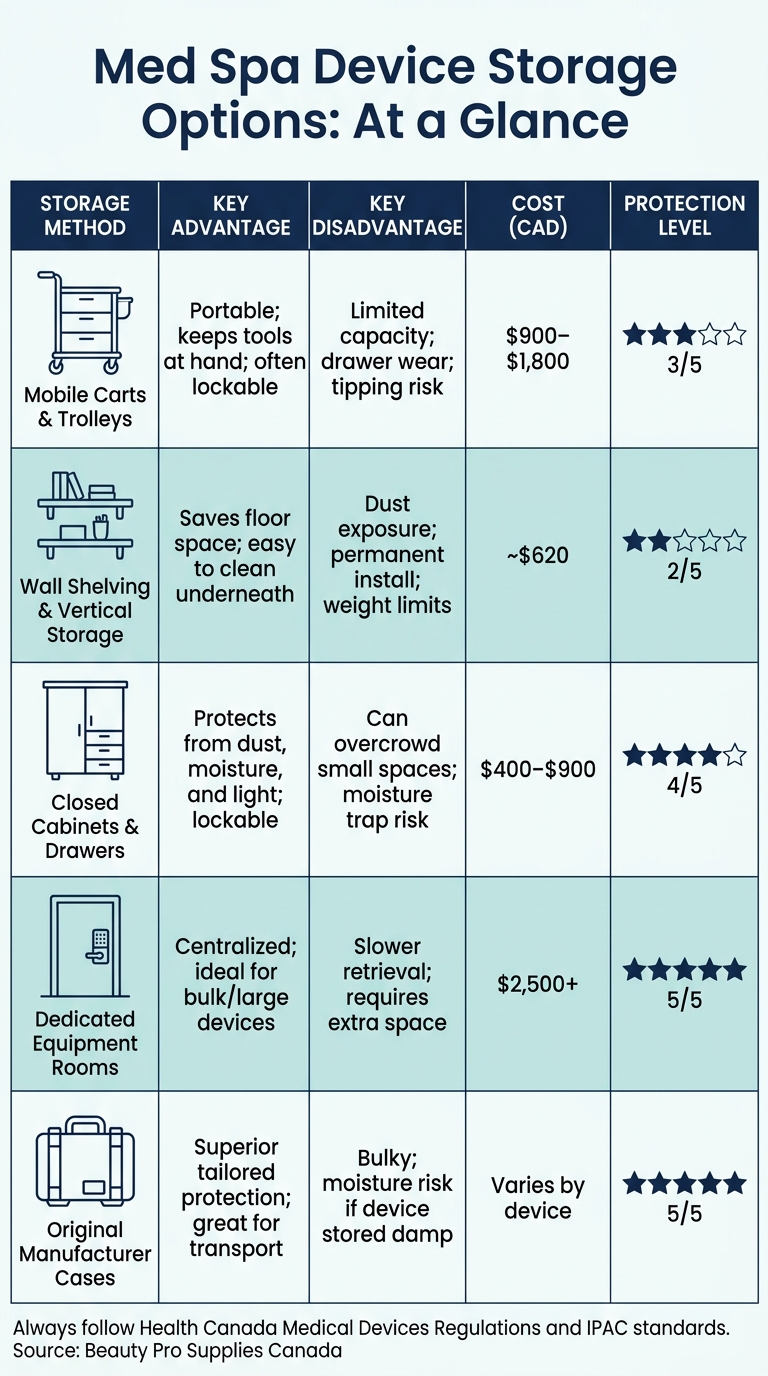
Med Spa Device Storage Options: Cost, Protection & Compliance at a Glance
When it comes to storage for your clinic, every option brings its own set of benefits and challenges. The right choice often boils down to your clinic’s size, budget, and how often you use specific devices. Here’s a breakdown of the trade-offs for each storage method.
Mobile carts and trolleys offer unmatched flexibility, especially for clinics with multiple treatment rooms. They keep essential tools close at hand during procedures, and many models feature locking drawers for added security - perfect for storing injectables or expensive equipment. However, users report that drawer rails might wear down after a few months of regular use, and their limited storage capacity can make it tough to accommodate larger items.
Wall shelving is ideal for saving floor space while making it easier to clean underneath. That said, its permanent installation and weight restrictions can be limiting. Plus, since items are exposed to dust, regular upkeep is necessary to maintain infection prevention and control (IPAC) standards. Closed cabinets and drawers solve this issue by shielding devices from dust, moisture, and light while offering lockable storage to meet regulatory needs. The downside? They take up more space, which could make smaller rooms feel cramped.
Dedicated equipment rooms are a great solution for high-volume clinics handling bulk supplies or larger devices. However, they come with the drawback of longer retrieval times, as staff need to leave treatment areas to access items. Original manufacturer cases provide the best physical protection for handheld devices, ensuring their integrity and supporting IPAC guidelines. Yet, their bulky design can be inconvenient in busy clinical environments, and storing damp devices in sealed cases may lead to contamination risks.
| Storage Method | Key Advantages | Key Disadvantages | Cost (CAD) |
|---|---|---|---|
| Mobile Carts & Trolleys | Easy to move; keeps tools at hand; often lockable | Limited capacity; drawer wear; tipping risk when full | $900–$1,800 |
| Wall Shelving & Vertical | Saves floor space; simplifies floor cleaning | Permanent install; weight limits; dust exposure | $620 avg. |
| Closed Cabinets & Drawers | High capacity; protects from contamination; lockable | Can overcrowd small spaces; requires assembly | $400–$900 |
| Dedicated Equipment Rooms | Great for bulk storage; keeps treatment rooms clear | Slower retrieval; requires additional space | $2,500+ (custom) |
| Original Manufacturer Cases | Superior protection; supports IPAC; good for transport | Bulky; moisture risk if device stored damp | Varies by device |
"The best cabinets for med spa setups balance infection control, organization, and aesthetic integration into clinical spaces." - Sam, Author
Conclusion
Proper storage of medical devices is critical for ensuring patient safety, meeting regulatory standards, and extending the life of equipment in Canadian med spas. With IPAC standards from organizations like the CPSO requiring strict adherence to protocols, storage becomes a vital part of the reprocessing cycle.
Effective storage starts with thorough reprocessing. The rule is simple: clean thoroughly, dry completely, and store securely. Depending on the device, this might mean using a lockable cabinet for electrical equipment, a dedicated room for larger items, or a temperature-controlled refrigerator for injectables like Botox or Dysport. Tailor your storage choices to the unique needs of your devices and the workflow of your clinic.
"Failure to ensure the proper reprocessing of reusable medical equipment can pose a risk of transmission of life-altering pathogens to large numbers of patients." - Public Health Ontario
This highlights the importance of compliant storage practices. For clinics upgrading their storage systems, consider sourcing from a Canadian supplier. Beauty Pro Supplies Canada offers options like medical-grade carts, UV sterilizer cabinets, and other storage solutions that align with infection prevention standards. They even offer flexible payment plans through Sezzle, allowing you to split costs into four interest-free payments over six weeks.
The key is choosing a storage system that your team will use consistently. Focus on clear labelling, designated clean zones, and thorough staff training to maintain safety and streamline your clinic's daily operations.
FAQs
How do I choose the best storage option for my clinic?
To ensure med spa devices are stored correctly, opt for clean, durable, and moisture-resistant containers along with non-porous shelving that can be disinfected easily. Create organized zones for supplies, such as clean, soiled, and prep areas, and store sterile items in dust-free bins. These bins should be positioned at least 25 cm off the floor and 46 cm below the ceiling to maintain proper hygiene standards.
Keep the storage area at a temperature between 18°C and 23°C with 30%–60% humidity to help preserve tools and maintain a hygienic environment.
What humidity and temperature range should devices be stored in?
Devices should be kept in an environment where the temperature remains between 18°C and 23°C and the relative humidity stays within 30% to 60%. Maintaining these conditions helps avoid premature wear and ensures the sterilization process works effectively.
How can I prevent moisture problems in closed cabinets and cases?
To keep tools safe from moisture, opt for moisture-resistant, easy-to-clean containers like plastic bins or totes. Sealed pouches or bags are also a smart choice to shield tools from dust, moisture, and other contaminants. For metal tools, consider adding silica gel packets to absorb excess humidity and ward off rust. Aim to store tools in conditions where the temperature is between 18°C and 23°C and the relative humidity stays within 30%–60%. Make it a habit to inspect the storage area regularly for any signs of moisture buildup.
Leave a comment