
Cleaning Vinyl Treatment Beds: Best Practices
Vinyl treatment beds require proper cleaning to protect client health, maintain hygiene, and extend the bed’s lifespan. Sweat, oils, and product residue can damage vinyl, leading to cracks, bacterial growth, and unpleasant odours. Improper cleaning also accelerates wear, making the material brittle and less durable. Here's a quick summary of how to clean and care for vinyl treatment beds effectively:
- Daily Cleaning Steps: Remove linens, inspect for damage, clean with mild soap and water, and disinfect with vinyl-safe products like quats or hydrogen peroxide-based solutions. Avoid harsh cleaners like alcohol or bleach.
- Weekly Deep Cleaning: Focus on seams, hinges, and hidden areas. Use a vinyl conditioner monthly to prevent cracking and maintain flexibility.
- Protective Measures: Use covers, rotate beds to avoid sun damage, and prevent sharp objects from tearing the vinyl.
- Product Selection: Choose Health Canada DIN-registered disinfectants, such as Myo-Ther Genie Plus, which are safe for vinyl and meet clinical standards.
How To Disinfect Your Massage Table
sbb-itb-8ec3e54
Daily Cleaning Routine for Vinyl Treatment Beds
How to Clean Vinyl Treatment Beds: Daily Routine Step-by-Step
Preparing the Treatment Bed
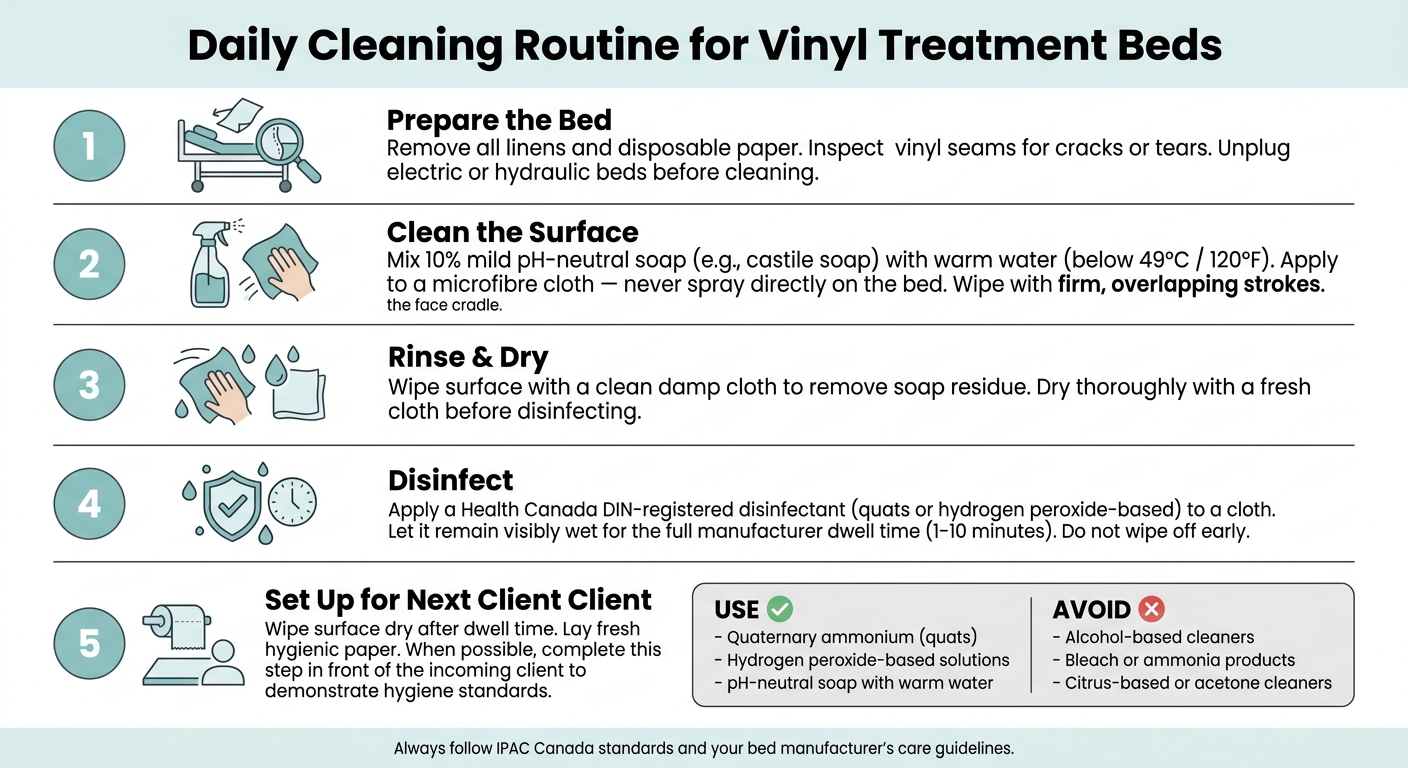
After each client, start by removing all linens and disposable paper from the treatment bed. Carefully inspect the vinyl surface, including the seams, for any cracks or tears that might allow moisture to seep into the foam. If you spot damage, address it promptly to prevent further issues. Ensure good ventilation in the room before beginning, especially when using disinfectants. For electric or hydraulic beds, unplug the unit to avoid accidental activation and to protect electrical components from exposure to moisture. Once the bed is prepped and inspected, proceed to remove any physical residues.
Removing Soil and Body Oils
Thoroughly removing residues is an essential first step to prevent buildup. As Kelly from Pure Spa Direct explains:
"A proper protocol means cleaning first to remove the goo, then sanitizing to kill the germs. Mixing these steps is like using dry shampoo instead of a shower - it looks okay from afar, but the roots are lying."
Prepare a cleaning solution by mixing 10% mild pH-neutral soap (like castile soap) with warm water, ensuring the temperature stays below 49°C (120°F). Spray this solution onto a microfiber cloth - never directly onto the bed - and use firm, overlapping strokes to wipe the vinyl surface. Pay extra attention to the face cradle, which often collects oils, makeup, and moisture from clients. After cleaning, rinse your cloth with clean water and wipe the surface again to remove soap residue. This step is crucial, as leftover soap can make the vinyl feel sticky and attract dirt. Once the surface is clean, dry it thoroughly with a fresh cloth before moving on to disinfection.
Disinfecting After Cleaning
Disinfection works best on a clean, dry surface. Use hospital-grade disinfectants, such as quaternary ammonium compounds (quats) or hydrogen peroxide-based solutions, as these effectively kill pathogens without damaging the vinyl's plasticizers, which keep the material soft and flexible.
Apply the disinfectant to a cloth rather than spraying it directly onto the bed. Allow the disinfectant to remain visibly wet on the surface for the full dwell time specified by the manufacturer - usually between one and ten minutes. This ensures it has enough time to eliminate bacteria and viruses. Avoid wiping it off prematurely, as this reduces its effectiveness.
Here’s a quick guide on what to use and what to avoid:
| What to Use | What to Avoid |
|---|---|
| Quaternary ammonium (quats) | Alcohol-based cleaners |
| Hydrogen peroxide-based solutions | Bleach or ammonia products |
| pH-neutral soap with warm water | Citrus-based or acetone cleaners |
Once the dwell time is complete, wipe the surface dry with a clean cloth. Before the next client arrives, lay down fresh hygienic paper. Whenever possible, perform this final step in front of the incoming client to demonstrate your dedication to maintaining a clean and safe environment.
Deep Cleaning and Stain Removal
Weekly Deep Cleaning Steps
Daily wiping is great for keeping the surface hygienic between clients, but it’s the weekly deep clean that truly helps maintain the bed's condition over time. This extra care not only keeps things spotless but also extends the life of your treatment bed. Dedicate some time each week to clean those easy-to-miss areas.
Start by unplugging the bed, then focus on removing hair and debris from hinges, seams, and mechanical components. These spots can collect dust and product residue, which may cause wear and tear if ignored. Use a microfibre cloth dampened with a 10% mild soap solution to clean the vinyl, frame, and padding, paying extra attention to seams where buildup tends to occur.
For electric or hydraulic controls, stick to a damp cloth - no soap. Once cleaned, rinse with a clean, damp cloth to remove any lingering soap film, and dry everything thoroughly. During this session, take a moment to inspect bolts, check hydraulic pistons, and lubricate moving parts following the manufacturer's instructions. To wrap things up, apply a thin, even layer of vinyl conditioner to keep the material soft and prevent cracks.
Safe Stain Removal Methods
Even with regular cleaning, stains can happen. Oils, makeup, and skincare products often leave marks that daily maintenance might not catch. Luckily, most stains can be tackled with the same mild soap-and-water solution you already use - as long as they’re addressed quickly.
For sticky residue or wax stains, try a mild degreasing cleanser. Let it sit for a few minutes, then gently wipe away the stain. Professional wax strips can also come in handy for lifting wax buildup without damaging the vinyl. If you’re dealing with tougher stains like ink or pigments, isopropyl alcohol might seem like a quick fix, but proceed with caution. Alcohol, bleach, and acetone can harm vinyl, leading to cracks and fading.
If you must use isopropyl alcohol, apply a small amount to a cloth (never directly on the surface), work on the stain quickly, and immediately follow up with vinyl conditioner to prevent drying. Always test new cleaning products on a hidden area first. Avoid bleach altogether - even diluted, it weakens the vinyl over time by breaking down its plasticizers.
Protecting Vinyl and Extending Bed Lifespan
Keeping your vinyl clean is just the first step. To truly make your treatment bed last, you need to go beyond cleaning and focus on protecting the material itself. Taking the right steps to safeguard the vinyl can help it stay flexible and durable for years to come.
Preventing Cracking and Plasticizer Migration
Vinyl gets its flexibility from plasticizers, but these can break down over time. When that happens, the material becomes stiff, starts to crack, and eventually fails. Harsh cleaning agents like quaternary ammonium compounds (quats), ammonia, and bleach - even when diluted - can speed up this process.
"Over time, quaternary ammonium compounds can break down upholstery coatings, causing dryness, discoloration, stiffness, and premature wear." - Medical Spa Supply
Heat and direct sunlight are also enemies of vinyl. Prolonged exposure causes the material to dry out and degrade. To avoid this, try to keep your treatment bed out of direct sunlight, or rotate it periodically if it’s near a window to reduce uneven wear.
Once a month, apply a silicone-free vinyl conditioner to replenish moisture and keep the surface soft and pliable. Make it a habit to inspect the vinyl weekly for early signs of damage, like tiny cracks or "alligator skin." Even a small crack can create a hygiene issue, as it allows fluids to seep into the foam beneath, leading to bacteria and mould growth.
By following these steps, you can better protect your vinyl and prepare it for further reinforcement, like using covers and careful handling.
Using Protective Covers and Linens
Adding a protective layer between clients and the vinyl is one of the easiest ways to limit wear and tear. Things like body oils, sweat, and treatment products can degrade the material, but a good cover can absorb much of that before it reaches the upholstery.
| Cover Type | Primary Benefit | Best Use Case |
|---|---|---|
| PU Vinyl Fitted Cover | Water/oil resistant, easy to wipe | Protecting new beds or refreshing older ones |
| Cotton/Flannel Sheets | Client comfort, oil absorption | Standard facial or body treatments |
| Medical-Grade Vinyl | Disinfectant resistance | High-sanitation clinical environments |
| Disposable Paper Roll | Quick turnover, hygienic | High-traffic clinics or waxing services |
When selecting a cover, look for ones with concealed zipper flaps. These prevent moisture and cleaning agents from seeping underneath to the foam and upholstery. Always clean the cover between clients using a pH-balanced cleaner to maintain hygiene.
Safe Handling and Storage
Even with regular cleaning and protection, how you handle and store the bed plays a big role in its longevity. Physical damage is often overlooked but can easily compromise the vinyl.
Ask clients to remove jewellery, clothing with sharp zippers, or accessories like rhinestones before using the bed. A single snag can tear the vinyl and create a breach in the sanitary barrier.
When the bed isn’t in use, don’t treat it like a storage shelf. Placing heavy items on the surface can leave permanent indentations and stress the vinyl. For portable beds, always store them in a dedicated carrying case to protect against scratches and dust. Occasionally flip the bed to check the legs and hinges, ensuring they’re secure and not causing uneven stretching of the vinyl.
Taking these precautions ensures your treatment bed stays in great condition, saving you time and money in the long run.
Clinic Protocols and Product Selection
Building a Cleaning Protocol
To meet IPAC standards in Canada, clinics must have a written cleaning protocol in place. Infection Prevention and Control (IPAC) Canada establishes these standards nationally, while provincial authorities enforce them locally.
The process involves two steps: first, clean surfaces with a neutral detergent (pH 6–8) to remove organic matter. Then, apply a registered disinfectant. Skipping the cleaning step forces the disinfectant to work through organic debris, which weakens its ability to eliminate pathogens. Once applied, the disinfectant must stay visibly wet on the surface for the full duration specified on its label - this is called the dwell time, and it’s essential for proper disinfection.
Equally important is staff training. General cleaning instructions aren’t enough; all staff members must receive documented, IPAC-specific training. Clinics should also maintain a signed and dated cleaning log after every session. This log should detail the cleaned areas, the products used, and the staff responsible. Such records are crucial during provincial health inspections.
To reduce cross-contamination, many clinics use a colour-coded cloth system. A common method assigns blue cloths for general clinical areas, including treatment beds and exam rooms.
Choosing Vinyl-Safe Cleaning Products
Once your cleaning protocol is set, choosing the right products becomes critical to meeting standards and protecting vinyl surfaces. Not all disinfectants are safe for vinyl, and only those approved for professional use in Canada should be considered. Look for an eight-digit Health Canada DIN (Drug Identification Number) on the label. Without a DIN, the product isn’t deemed hospital-grade for clinical use.
"Standard commercial disinfectants used in office buildings are not sufficient for healthcare settings. Medical offices require Health Canada DIN-registered hospital-grade disinfectants with proven efficacy against specific pathogens." - Zusashi Maintenance
For vinyl surfaces, hydrogen peroxide–based cleaners and botanical disinfectants (like those with thymol) are gentler alternatives to high-alcohol or bleach-based solutions. High-alcohol cleaners can damage adhesives and degrade rubber components, while chlorine-based products are corrosive and may leave residues requiring rinsing. Recommended options include Oxivir, Cavicide, Virox, Accel, and Clorox Healthcare Bleach Germicidal Cleaner. Each has varying contact times and compatibility with different materials.
For clinics specifically looking for a disinfectant for treatment beds, Myo-Ther Genie Plus is a strong choice. Available through Beauty Pro Supplies Canada, it’s AOAC-tested and includes humectants that help maintain vinyl flexibility while disinfecting against pathogens like Salmonella, Staphylococcus, and Pseudomonas. It’s priced at $20.00 CAD per litre, with a 10% discount for orders of 10 litres or more - perfect for clinics managing multiple treatment rooms.
| Disinfectant Type | Vinyl Safety | Key Consideration |
|---|---|---|
| Quaternary Ammonium | High | Noncorrosive; check for hard water interference |
| Hydrogen Peroxide | Moderate | Gentler on material; higher cost |
| Alcohol (60–80%) | Low to Moderate | Can damage adhesives and rubber over time |
| Chlorine (Bleach) | Low | Corrosive; requires rinsing; 10-min dwell for spores |
Always check your treatment bed manufacturer’s care guidelines before using any disinfectant. Using a product that isn’t compatible could void your equipment warranty.
Conclusion: Keeping Vinyl Treatment Beds Clean and in Good Condition
Every step of cleaning and maintenance plays a role in protecting your clients and your equipment. To keep vinyl treatment beds in top shape, make sure to remove oils and organic matter, disinfect with a Health Canada DIN-registered product, and follow proper dwell times. These steps ensure both safety and longevity.
Consistent cleaning, thorough disinfection, and regular conditioning are essential to maintaining the integrity and safety of your beds. Without proper care, vinyl can dry out, become brittle, and eventually crack, making it impossible to fully sanitise. As Beth-Ann from Pure Spa Direct explains:
"When [vinyl is] clean, smooth, and intact, it conveys professionalism and sanitary care to your client. When cracked, sticky, or stained, it undermines client trust."
A spotless treatment bed not only protects your clients but also reflects your professionalism. Cleaning visibly in front of clients builds trust - a trust that's hard to measure but easy to sense.
Proper upholstery care protects your investment, your reputation, and your clients' safety. Treatment beds are a major expense, and using a thoughtful cleaning routine with vinyl-safe products - like those from Beauty Pro Supplies Canada - can extend their lifespan and ensure compliance with IPAC standards.
All it takes is a clear protocol, trained staff, a signed cleaning log, and the right products to create a clinic where both clients and equipment are well cared for. These practices help maintain a safe, professional environment while preserving the life of your treatment beds.
FAQs
How can I tell if my vinyl bed is too damaged to disinfect safely?
Inspect the vinyl cover for any cracks, peeling, or major damage. These flaws can weaken the surface, making it harder to disinfect properly and potentially allowing bacteria to linger. If you notice such damage, it’s best to replace the cover, as cleaning chemicals could exacerbate the issue and create risks for clients. Make it a habit to perform regular visual inspections to keep the bed safe and sanitary.
What’s the safest way to disinfect vinyl without causing cracking over time?
To clean and disinfect vinyl without causing damage, stick to mild options like hydrogen peroxide, diluted bleach (1:10), or isopropyl alcohol. Once disinfected, rinse the surface with clean water and dry it completely using a soft cloth to eliminate any leftover residue.
Steer clear of harsh chemicals such as undiluted bleach, acetone, or citrus-based cleaners, as they can harm the material. For added care, apply a vinyl conditioner after cleaning to help keep the surface flexible and reduce the risk of cracking.
How do I choose a Health Canada DIN disinfectant that’s compatible with my bed?
When selecting a Health Canada DIN disinfectant for your vinyl treatment bed, make sure it has a valid Drug Identification Number (DIN) and is explicitly approved for use on inanimate surfaces, such as beds. Check the label to confirm it is safe for vinyl, provides clear usage instructions, and aligns with Health Canada's biocide monograph standards, including proper contact times and active ingredient levels. To avoid any potential damage, always adhere to the manufacturer’s guidelines.
Leave a comment