

Ultimate Guide to Professional Microneedling Training
Microneedling is a growing trend in Canada, offering skin rejuvenation through controlled micro-injuries that boost collagen production. For beauty professionals, it’s a great way to expand services, but proper training is essential to ensure safety and effectiveness. This guide covers everything you need to know, including:
- What Microneedling Is: A treatment using fine needles to improve skin texture, reduce wrinkles, and address scars.
- Why Training Matters: Safety protocols, skin anatomy, and hands-on practice are crucial to avoid complications like infections or scarring.
- Training Options: In-person courses provide hands-on experience, while online programs offer flexibility. Hybrid models combine both.
- Certification: Required to meet provincial regulations. Programs often include exams and supervised practice.
- Equipment: Only use Health Canada-approved devices for compliance and client safety.
Microneedling is a skill that requires structured education, certified equipment, and ongoing learning to deliver safe, high-quality results.
What is Microneedling and How is it Used Professionally
What is Microneedling?
Microneedling is a skin treatment that uses fine needles to create controlled micro-injuries in the skin's surface. These tiny punctures stimulate the production of collagen and elastin - proteins responsible for keeping skin firm, smooth, and elastic. Professionals typically use electric devices with adjustable needle depths, ranging from 0.5 mm to 2 mm, tailoring the treatment to address specific concerns. For example, deeper needle settings work well for acne scars and pockmarks, while shallower depths are ideal for improving surface texture and fine lines.
Professionals often combine microneedling with other treatments, like Radiofrequency (RF) technology or Platelet-Rich Plasma (PRP) therapy, to boost tissue regeneration and deliver even better results. This flexibility has made microneedling a popular service in medical spas, dermatology clinics, and advanced esthetic practices equipped with professional medical exam tables across Canada.
By understanding how microneedling works, it’s easier to see why it’s such a sought-after treatment.
Client Benefits of Microneedling
Microneedling attracts clients looking to improve acne scars, stretch marks, fine lines, wrinkles, enlarged pores, and uneven skin tone. Unlike heat-based or laser procedures, microneedling relies on a mechanical process instead of thermal energy. This approach avoids the risk of heat-related pigment changes, making it a safer option for individuals with darker skin tones who may be prone to discolouration from other treatments.
That said, results take time. The full effects of collagen production usually appear within 3 to 6 months, and treatments often require multiple sessions spaced 3 to 8 weeks apart. Beyond cosmetic benefits, microneedling is also used to treat medical conditions like alopecia areata (a type of hair loss) and hyperhidrosis (excessive sweating).
With such a range of applications, professional skill is essential to ensure safe and effective treatments.
Why Professional Training Matters
Microneedling is an advanced procedure that requires a deep understanding of skin anatomy, contraindications, and proper infection control measures. Since the treatment targets deeper layers of the skin, errors can lead to complications like infections, bruising, or scarring.
"This course is amazing! ClaraDerma Academy has taught me so much about Medical Aesthetics. I now can feel confident in providing patients the information they need before starting their treatments." – Olivia, ClaraDerma Academy student
In Canada, all esthetic procedures must comply with the Food and Drugs Act and Cosmetic Regulations, ensuring safety and quality. Professional training programs teach practitioners to recognize unsuitable candidates - such as those with blood disorders, active acne, keloid scarring tendencies, or undergoing chemotherapy. These courses blend theoretical lessons with supervised hands-on practice, helping practitioners develop the technical skills needed for precise device handling, pressure control, and personalized treatment plans. This training not only enhances client outcomes but also ensures professional credibility and safety.
sbb-itb-8ec3e54
FREE Comprehensive Cosmetic Microneedling Training for Medical Professionals
What You'll Learn in a Microneedling Training Program
Microneedling training programs are designed to equip practitioners with the knowledge and skills needed to perform treatments safely and effectively. These courses combine scientific theory with hands-on practice, ensuring participants meet Canadian regulatory standards while gaining confidence in their craft.
Skin Science and Treatment Basics
The journey begins with understanding how microneedling works. The process involves creating controlled micro-injuries in the skin, which stimulate the production of collagen and elastin - key elements for skin rejuvenation. Training delves into the structure of the epidermal and dermal layers, explaining how the body's natural wound-healing response releases growth factors that enhance treatment outcomes.
"Microneedling... stimulates the body's own healing ability, encouraging the production of new collagen and elastin and creating a rejuvenated, firmer texture to the skin." – My Absolute Beauty
You'll also learn how to assess skin types using tools like the Fitzpatrick scale, which helps determine treatment suitability. The curriculum covers common concerns such as acne scars, fine lines, and hyperpigmentation, along with techniques to evaluate scar depth. Additionally, the program explores the role of topical serums, explaining how microneedling enhances their absorption through micro-channels. A typical session lasts about 15 minutes, with optimal results achieved through 4–6 treatments spaced 4–6 weeks apart.
Safety and Hygiene Protocols
Safety is a cornerstone of microneedling training. Courses place a strong emphasis on infection control, device sterilisation, and maintaining a hygienic treatment environment. You'll learn to follow bloodborne pathogen protocols and identify contraindications, such as active infections, blood disorders, or a tendency for keloid scarring, to ensure client safety.
Accredited programs align with industry standards and local regulations. Before enrolling, it's important to confirm that the course meets the requirements of your provincial or local cosmetology and medical boards. Certification typically involves completing an approved program and passing an exam, which establishes your credibility as a qualified practitioner. These safety protocols are reinforced through live demonstrations, bridging the gap between theoretical knowledge and real-world application.
Live Demonstrations and Hands-On Practice
Practical experience is where theory truly comes to life. Supervised hands-on sessions with live models allow instructors to showcase proper techniques, device handling, and pressure control. Students then receive direct feedback as they practice, helping them avoid common errors and build confidence.
Most in-person certification programs are intensive, spanning one to two days. These sessions cover everything from pre-treatment skin preparation to post-care protocols. For those unable to attend in person, some programs now offer virtual training with live interactive components. These online formats provide the same level of instructor feedback and practical experience, making them a viable option for continuing education. Beginners benefit most from in-person practice, while experienced practitioners often use virtual sessions to refine their skills and stay updated on new techniques.
Online vs In-Person Microneedling Training
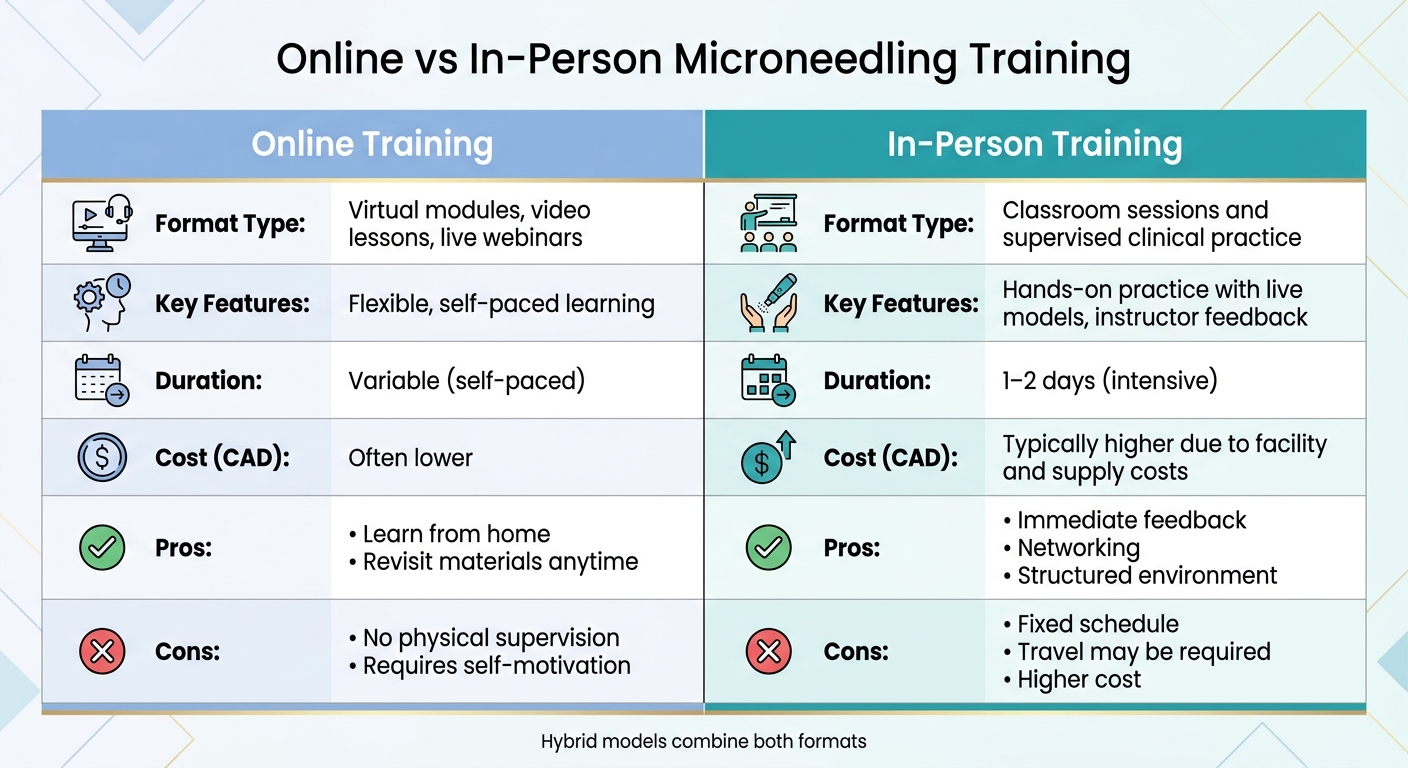
Online vs In-Person Microneedling Training Comparison
When deciding how to approach microneedling training, it’s important to weigh the pros and cons of online versus in-person learning. The choice comes down to your personal learning style, schedule, and level of experience. While both formats cover essential topics like skin anatomy, safety protocols, and treatment techniques, the way you develop hands-on skills varies greatly.
Online Training Programs
Online microneedling courses are perfect for those who need flexibility. These programs often include interactive modules, video tutorials, and downloadable resources that you can access anytime, anywhere. Some even feature live virtual sessions, where instructors provide real-time feedback as you practise on models at home.
This format allows you to learn at your own pace, revisit materials as needed, and fit training around your schedule. It’s particularly helpful for mastering theoretical concepts like device handling and pressure control. However, online training requires a lot of self-discipline, as there’s no in-person guidance to fine-tune your technique or correct mistakes on the spot.
"Microneedling classes provide in-person, hands-on training that lets you practise under supervision, while online certification offers convenience and flexibility." – MDPen
While online learning is convenient, many practitioners agree that hands-on experience is essential to truly master microneedling techniques.
In-Person Training Programs
In-person training provides hands-on practice under the close supervision of an instructor - something especially important for beginners. These courses are typically run over 1–2 days in a clinical or spa setting, where you work directly with live models. This immediate feedback helps you refine your technique and build confidence.
Another advantage of in-person programs is the chance to network with other industry professionals. These connections can lead to mentorships, job opportunities, and ongoing support as you grow your microneedling business. Plus, the structured environment keeps you focused and ensures you complete your certification within a set timeframe.
"Practical experience is a cornerstone of the program... This hands-on training allows you to apply your classroom knowledge, build confidence in your abilities, and establish valuable industry connections." – Algonquin Careers Academy
Some Canadian institutions, like Algonquin Careers Academy, offer hybrid models that combine online learning for theory with in-person sessions for practical skills. These programs provide the best of both worlds, balancing convenience with hands-on experience.
Comparison Table: Online vs In-Person Training
| Feature | Online Training | In-Person Training |
|---|---|---|
| Format Type | Virtual modules, video lessons, live webinars | Classroom sessions and supervised clinical practice |
| Key Features | Flexible, self-paced learning | Hands-on practice with live models, instructor feedback |
| Duration | Variable (self-paced) | 1–2 days (intensive) |
| Cost (CAD) | Often lower | Typically higher due to facility and supply costs |
| Pros | Learn from home, revisit materials anytime | Immediate feedback, networking, structured environment |
| Cons | No physical supervision, requires self-motivation | Fixed schedule, travel may be required, higher cost |
It’s also important to ensure the program you choose meets your province’s licensing requirements. Some provinces in Canada have specific rules for microneedling, and online certification alone may not meet those standards. If you’re just starting out, in-person or hybrid training is often the best option to build a solid foundation. Experienced practitioners, on the other hand, can benefit from online courses to stay updated on the latest techniques.
Once you’ve decided on the right training format, the next step is selecting the proper microneedling equipment and training protocols. Choosing wisely not only boosts your skills but also enhances your credibility in Canada’s competitive beauty industry.
Choosing Microneedling Equipment and Supplies
Once you've completed your microneedling training, the next step is selecting equipment that meets safety standards and complies with Canadian regulations.
Why Health Canada-Approved Devices Matter
The first thing to check is whether your microneedling device has Health Canada approval. In Canada, professional microneedling devices must be classified as Class 2 medical devices and listed on Health Canada's Medical Devices Active Licence Listing (MDALL). For instance, the Dr. Pen Microneedling System - models A20, A9, and DP-MC9 - was granted Health Canada Licence No. 114618 on January 6, 2026. This certification ensures the equipment meets strict safety and performance standards.
Before making a purchase, you can confirm the device's licence number on the MDALL database using the manufacturer's Company ID. This step not only ensures legality but also guarantees the safety of your clients. Even manual microneedling rollers require certification. Health Canada Licence No. 114768, issued in January 2026, covers rollers with needle lengths ranging from 0.2 mm to 2.5 mm. Using certified tools aligns with the safety protocols emphasized in professional training.
Essential Tools and Supplies for Professionals
Microneedling requires more than just a pen or roller. You'll need a variety of high-quality supplies to perform treatments safely and effectively:
- Sterile needle cartridges: Always use disposable options, like Dr. Pen H14 tips, to prevent cross-contamination. Needle depths generally range from 0.25 mm to 2.5 mm, depending on the treatment and local regulations.
- Topical anaesthetic: Products like Dr Numb 5% Lidocaine are recommended for client comfort during procedures.
-
Hyaluronic Acid serum: A glide serum with high molecular weight Hyaluronic Acid is essential for smooth application and quick absorption. As Valérie, a Verified Professional User, shared:
"I use this HA to do microneedling, during and after, and the skin reacts very well, no bad reaction. It is not sticky and absorbs really quickly."
To maintain a sterile environment, stock up on items like 70% Isopropyl Alcohol, disposable gloves, and stainless steel implement trays (priced between $8.95 and $16.95). Additionally, post-treatment care products, such as hydrogel facial sheet masks and aftercare serums, are crucial for preventing infection and supporting skin recovery.
For advanced treatments, you might consider supplemental tools like LED light therapy devices (e.g., the O'melon OMEGA at $199.95) or high-frequency facial machines priced at $79.95.
Beauty Pro Supplies Canada is a reliable source for Health Canada-approved microneedling equipment, medical-grade disposables, and professional-grade serums. Their range includes cordless microneedling pens, pre- and post-care skincare, and other trusted supplies that meet Canadian regulatory requirements.
Getting Certified and Starting Your Microneedling Services
Once you've chosen your equipment and completed your training, certification is the next step to establishing your credibility as a microneedling professional in Canada.
How to Get Certified in Canada
The first thing to do is check the regulations in your province. Some areas allow estheticians to perform microneedling, while others limit it to medical professionals. Your local cosmetology or medical board can provide the exact requirements.
Certification usually begins with foundational education in fields like esthetics or nursing. After that, you’ll need to enrol in a microneedling program. These programs cover essentials like skin anatomy, wound healing, infection control, and device techniques. Practical training is key, and you’ll need supervised hands-on experience working with real clients. Keep detailed records of your clinical hours as they may be required for licensure.
To earn certification, you’ll need to pass both written and practical exams. Trusted certifying organizations include the International Association for Physicians in Aesthetic Medicine (IAPAM), the American Board of Aesthetic Medicine (ABAM), and the Esthetic Skin Institute (ESI). Once certified, you’ll need to apply for licensing through your province’s regulatory board. Keep in mind, some areas may require you to work under medical supervision or in a medical facility, so confirm these details before starting your business. Also, ongoing training is often required to renew your licence.
Creating Custom Treatment Plans for Clients
No two clients are the same, so creating a personalized treatment plan is essential. Start with a thorough skin analysis during the consultation. Look for concerns like acne scars, fine lines, melasma, or hyperpigmentation. Screen for contraindications to ensure the treatment is safe and assess the skin barrier’s health before proceeding.
Skin tone is another key factor. For clients with darker skin tones, precision is especially important to avoid complications. Adjust needle depth and techniques to suit their needs. Pre- and post-treatment care is also critical. For example, recommend niacinamide to reduce inflammation and pre/probiotics to strengthen the skin barrier.
"Pre and probiotics keep the skin's barrier healthy and intact. So important when you're applying a product that sloughs off your dead skin cells."
If a client isn’t already using retinol, suggest starting with a lower concentration (around 0.5%) before moving to stronger formulations. This gradual introduction helps prevent irritation and allows the skin to build tolerance.
Once you’ve crafted tailored plans for your clients, effective marketing will help you grow your business.
How to Market Your Microneedling Services
Highlight your credentials both in your clinic and online. Certifications from recognized organizations like ABAM, ESI, or IAPAM reassure potential clients that you’re qualified and experienced.
Visual proof is a powerful marketing tool. With your clients’ consent, create a portfolio of before-and-after photos that showcase the results of your treatments. This helps potential clients see the benefits of microneedling firsthand. Additionally, detailed post-procedure care plans and patient assessment forms not only ensure safety but also show your professionalism and attention to detail.
Educate your current clients about microneedling through consultations, social media posts, and email newsletters. Use these platforms to explain how the treatment can address concerns they’ve mentioned in past appointments. Offering introductory packages is another great way to attract new clients while building trust. Lastly, keep your certification records up to date for audits and recertification. Your expertise and training not only guide your treatments but also strengthen your marketing efforts.
Conclusion
Proper training is the backbone of safe practices and outstanding results for clients. Mastering the science of collagen induction, selecting the right needle depth, and adhering to infection control protocols requires more than just casual observation - it demands structured, high-quality education. Such programs ensure you gain the expertise needed to deliver consistent, high-level outcomes.
Statistics show that most trained professionals quickly recover their training investment while also experiencing revenue growth. Additionally, proper certification helps meet insurance and provincial regulatory requirements, both of which are essential for long-term business success.
This strong foundation doesn’t just sharpen your technical abilities - it also brings measurable benefits to your business.
"A basic course can teach you the steps, but a superior microneedling training course teaches you the science, safety, and artistry behind the procedure." – Kevin Simons, MDPen Skincare
As previously discussed, using Health Canada-approved microneedling devices and earning accredited certification significantly boosts your professional credibility. With the global anti-aging market expected to hit $284.8 billion by 2028, now is the perfect time to add microneedling to your service offerings. Combining thorough training, top-notch equipment, and a commitment to client care lays the groundwork for a thriving practice capable of delivering genuine, life-changing results.
But education doesn’t end with certification. Staying up to date with ongoing training ensures you remain informed about regulatory updates and industry innovations, keeping your skills sharp and your practice competitive. This continuous learning is the key to excelling in microneedling.
For Canadian beauty professionals aiming to elevate their microneedling services, Beauty Pro Supplies Canada provides the trusted equipment and expert resources to support your path to excellence.
FAQs
What needle depths can I legally use in my province?
The needle depths you can use legally depend on the regulations in your province. Microneedling typically involves depths ranging from 0.1 mm to 3.0 mm, with different depths targeting specific skin concerns. For instance, treating acne scars often calls for depths between 0.5 mm and 1.5 mm. Be sure to verify the permitted needle depths with your local health authority or regulatory body to ensure compliance.
How do I verify a microneedling device is Health Canada approved?
To verify if a microneedling device is approved by Health Canada, start by checking its presence in Health Canada’s licensing records. Look for a valid licence number and its certification status. For extra peace of mind, you can refer to the Government of Canada’s active licence listing, which provides details such as licence numbers and device classifications. It’s important to confirm that the device meets Health Canada’s safety and quality standards.
What insurance do I need to offer microneedling in Canada?
In Canada, having the right insurance is essential if you're offering microneedling services. Your policy should cover liability, property, and treatment-related risks to safeguard both your business and your clients. Since licensing requirements differ across provinces, it's crucial to ensure your insurance specifically includes microneedling procedures to comply with local regulations. To get the best protection, consult an insurance provider who specializes in beauty and aesthetic services. They can help customize a policy that fits your unique needs.
Leave a comment