

How Soundscapes Improve Spa Experiences
When you walk into a spa, the first thing you notice is often the sound - gentle water trickles, soft melodies, or calming tones. These soundscapes aren’t just for ambience; they help relax your nervous system, reduce stress, and create a deeply soothing experience. By using techniques like psychoacoustics (influencing brain waves) and vibroacoustics (using vibrations), spas can shift clients from a "fight or flight" state to "rest and digest."
Key takeaways:
- Relaxation Boost: Sounds at 60–70 BPM mimic the resting heart rate, promoting calm.
- Layered Design: Soundscapes combine nature sounds, gentle music, and occasional highlights for immersive relaxation.
- Emotional Impact: Thoughtful audio design helps clients feel more centred and likely to return.
- Custom Soundscapes: Different tempos and tones suit specific treatments like massages, facials, or hydrotherapy.
The right soundscape, paired with quality audio equipment, transforms spa visits into memorable, stress-relieving experiences while enhancing client satisfaction and loyalty.
Total Calm Sound Bath Performance || Relaxing Meditation Music | Singing Bowls Spa Music
sbb-itb-8ec3e54
What Soundscapes Are and Why They Matter
A soundscape isn’t just a playlist of soothing tunes - it’s a carefully crafted mix of natural sounds, soft instrumentals, and restorative tones. Think of it as a "sonic sanctuary" that wraps your clients in calm the moment they step into the treatment room.
This works through two fascinating processes. Psychoacoustics uses sound waves to influence the body’s physiological responses, while vibroacoustics transmits vibrations directly through the body to improve well-being. Together, they create a sensory experience that helps clients shift from tension to tranquillity.
Soundscapes are built using a three-layer approach: a foundation of continuous nature sounds, a middle layer of gentle instrumental tones, and a top layer with occasional melodic highlights. This layering creates what’s often called a "sound shower", immersing clients in an all-encompassing auditory atmosphere. This thoughtful design isn’t just about aesthetics - it’s the backbone of the benefits that follow.
How Soundscapes Affect Client Relaxation
Sound therapy has been shown to reduce cortisol levels, lower blood pressure, ease muscle tension, and even improve sleep. The secret lies in syncing the tempo of the music with the body’s natural rhythms. For example, music set at 60–80 beats per minute mirrors the resting heart rate, signalling the nervous system to relax.
Different treatments call for different tempos. For facials, slower tempos around 50–60 BPM work best, while deep tissue massages benefit from slightly faster tempos of 60–80 BPM. Even a treatment like waxing can use quicker tempos (120+ BPM) to help distract from discomfort.
"Sound can help calm the fight or flight part of our brain called the amygdala... allowing better decision-making and letting go of fear." - Phillipa Spivey, Sound Healing Practitioner
The impact of soundscapes goes beyond relaxation. By calming the amygdala - the brain’s centre for fear and stress responses - sound helps shift the body from a reactive "fight or flight" mode to a restorative "rest and digest" state. Instruments like crystal quartz singing bowls, often tuned to 432Hz, are particularly effective at soothing the mind and restoring balance, as this frequency resonates with natural harmony.
These physiological effects set the stage for the deeper emotional benefits that soundscapes bring to spa treatments.
The Emotional Impact of Sound in Spas
Soundscapes do more than relax the body - they create an emotional connection that elevates a treatment from ordinary to unforgettable. When every sensory detail, including sound, feels intentionally curated, clients are more likely to return, recommend your spa, and explore additional wellness services and spa equipment.
"One of the basic tenets of using sound as a healing modality is this – we are like an extraordinary orchestra playing the symphony of the self. Every organ, every bone, every tissue, every part of our body is playing together, producing different frequencies and sounds." - Michelle Saudan, Wellness Specialist
Sound-enhanced treatments can help release emotional blockages and ease lingering stress, aligning the body’s vibrations with their natural rhythm. This isn’t just soothing background noise - it’s a scientifically supported part of the healing process. By integrating soundscapes into treatments, spas can create environments that promote both physical relaxation and emotional well-being, leaving clients feeling truly cared for.
Selecting the Right Soundscapes for Your Spa
When it comes to creating the perfect atmosphere in your spa, sound plays a crucial role. The right soundscapes should align with your brand identity and treatment goals, creating a seamless audio experience that ties into your overall story. A carefully curated auditory environment can become just as memorable as your spa's visual branding.
"Sound shapes how we feel about a place – often more than visuals. And when it's intentional? That's where audio branding meets environmental storytelling." - Paul Sumpter, Founder & Creative Director, The Futz Butler
Consistency is the cornerstone here. If your spa aims to be a luxurious retreat, this should be reflected in every sound your clients hear, from the reception area to the treatment rooms. Minimalist spaces might benefit from simple, clean audio designs, while wellness centres with a holistic approach could incorporate layered natural sounds. A great example of this is JW Marriott's 2024 multi-sensory program, "Aurora, Sun, Dusk and Moon", where they used playlists to match circadian rhythms and set specific moods throughout the day. This kind of thoughtful sound design can elevate the client experience and make it feel intentional from start to finish.
Common Types of Soundscapes
Once you've defined your spa's brand identity, you can choose soundscapes that bring it to life. Here are some popular options:
- Nature sounds: These are a staple for most spa environments. Gentle rainfall, ocean waves, or forest sounds are perfect for easing clients into relaxation, especially at the start of treatments. These sounds draw on biophony (animal sounds) and geophony (earth sounds), creating a natural and calming ambiance.
- Instrumental ambient music: Instruments like hang drums, soft strings, acoustic guitars, and monochords provide soothing, wordless melodies. These are ideal for maintaining a peaceful atmosphere without distracting clients, as lyrics can engage the brain and disrupt relaxation.
- Therapeutic tones: Crystal quartz singing bowls, Tibetan bowls, gongs, and Solfeggio frequencies are excellent for energy work or deep meditation sessions. For advanced relaxation techniques, binaural beats - which use different frequencies in each ear - are gaining popularity. Keep in mind, these require headphones or precise speaker placement to be effective.
By understanding these categories, you can craft soundscapes that not only relax your clients but also reflect your spa's unique character.
What to Consider When Choosing Soundscapes
To get the best results, there are a few practical factors to keep in mind:
- Tempo alignment: Match the tempo of your soundscape to the physiological goals of each treatment. For example, slower tempos encourage relaxation, while slightly faster rhythms might work for energizing treatments.
- Room acoustics: The materials in your spa can greatly affect how sound behaves. Hard surfaces like glass and tile can create unwanted echoes, while soft furnishings and comfortable massage beds help absorb sound and create a more balanced auditory experience. Always test your soundscapes in the actual treatment spaces to ensure they sound just right.
- Time of day and season: Adjust your soundscapes to complement the time of day or even the season. Morning sessions might benefit from uplifting tones, while evening treatments could lean into deeper, more soothing sounds.
- Client preferences: Gathering client preferences during intake can help you tailor their experience. Personalizing the soundscape adds an extra touch that clients will appreciate.
Installing Audio Technology in Treatment Rooms
Setting Up Audio Systems
A properly installed audio system can transform a well-designed soundscape into an immersive, therapeutic experience.
Start with an acoustic audit. Spend about 10 minutes in each treatment chair with your eyes closed to identify background noises - like equipment hums, conversations, or traffic sounds. Use a "clap test" to check for echoes; any fluttering sound means the room could benefit from acoustic treatment.
Speaker placement is key. Place speakers at least 1.8 metres apart, mounting them high in the corners for optimal stereo sound and a "sound shower" effect. Angle the speakers downward to ensure consistent volume, even as clients move. To find the best spots for acoustic panels, try the mirror technique: have someone slide a mirror along the wall while you sit in the chair. Wherever you see the speaker's driver reflected is an ideal spot for a panel.
Choose hardware designed for spa environments. Look for business-grade, humidity-resistant speakers that can handle up to 100% relative humidity. Use a dedicated playback tablet for music control, and invest in a calibrated USB measurement microphone (around $100–$200) to fine-tune your audio setup. For premium audio solutions, check out suppliers like Beauty Pro Supplies Canada.
"A spa music sound system isn't just background noise - it's the invisible masseuse that works in harmony with your hands to melt away tension." - Pure Spa Direct
Match the tempo of your soundscapes to the treatment. For example:
- 50–60 BPM: Ideal for facials
- 60–80 BPM: Perfect for deep tissue massages
- 120+ BPM: Suitable for faster treatments like waxing
For a more advanced setup, consider vibro-acoustic transducers. These devices attach to the underside of loungers, allowing clients to physically feel the sound vibrations, adding a deeper sensory element to the experience.
Matching Soundscapes with Spa Branding
Once your audio system is set up, ensure your soundscapes reflect your spa’s brand identity.
Your music choices should reinforce your brand at every touchpoint. For instance, if your spa markets itself as a luxury retreat, avoid sudden genre changes or interruptions from personal streaming apps. A wellness clinic in early 2026 demonstrated this by using a 60 BPM warm-pad playlist, two stereo speakers angled 20° from the treatment table, and soft 2,700K lighting at 25% brightness. Over six weeks, they saw an 18% improvement in client relaxation and a 22% increase in session focus.
Customise soundscapes by area:
- Use energetic tones in reception areas to create a welcoming vibe.
- Opt for grounding, calming sounds in treatment rooms to promote relaxation.
Keep ambient noise levels between 45–55 dB(A), ensuring peaks stay below 60 dB(A). Install white noise machines near doors to block external disturbances. For better sound absorption, replace standard ceilings with wooden slats or acoustic clouds. Adding cork flooring or high-density rugs can further reduce vibrations, enhancing the overall tranquillity of your space.
Tailoring Soundscapes for Different Treatments
Customizing soundscapes can make treatments even more effective by enhancing relaxation and creating a cohesive sensory experience.
Massage Therapy
Massage soundscapes often follow a structured flow: a welcoming introduction, a deeply immersive middle phase, and a smooth, gentle conclusion. Start with a tempo that matches your client’s resting heart rate (60–70 BPM) and gradually slow it down by 3–8 BPM over the first 10 minutes.
For Swedish or relaxation massages, aim for 60–75 BPM with warm synth pads and soft piano melodies. Deep tissue and myofascial massages benefit from slightly faster tempos (65–85 BPM) paired with low synth tones and cello drones. For hot stone treatments, choose earthy, warm sounds for a grounding effect.
Incorporate low-frequency pads to promote body awareness and use instruments like flutes to encourage mindful breathing. Avoid sudden transitions - ensure the final track fades out softly, aligning with the last massage strokes to keep the client in a relaxed state.
Facials and Skincare Treatments
Facials can begin with calming tracks in the 50–70 BPM range to help lower the heart rate and ease the nervous system. Instrumental or ambient music works well here. During the masking phase (10–20 minutes) of a treatment using a professional facial steamer, use low-tempo nature sounds or ambient tracks - streams or ocean waves can complement treatments for oily skin, while soft ambient swells are ideal for sensitive skin.
To wrap up, include 1–2 minutes of silence or a soft tone to amplify the relaxation response. Keep the volume between 50–60 dB to maintain a tranquil atmosphere, while also reinforcing your spa’s identity and supporting the skin’s healing process.
Hydrotherapy and Saunas
For heat-based treatments like saunas or hydrotherapy, ambient drone soundscapes with minimal melody can enhance the feeling of immersion. In Vichy showers, watery and flowing sounds paired with ethereal vocals can complement the water element. For saunas, position speakers on the lower benches and use water-resistant models rated IPX5 or higher.
During contrast therapy, use distinct audio cues, such as a bell, to signal transitions between hot and cold phases. Maintain a volume level of 45–55 dB(A) to keep the environment soothing and unobtrusive.
Practical Tips for Using Soundscapes
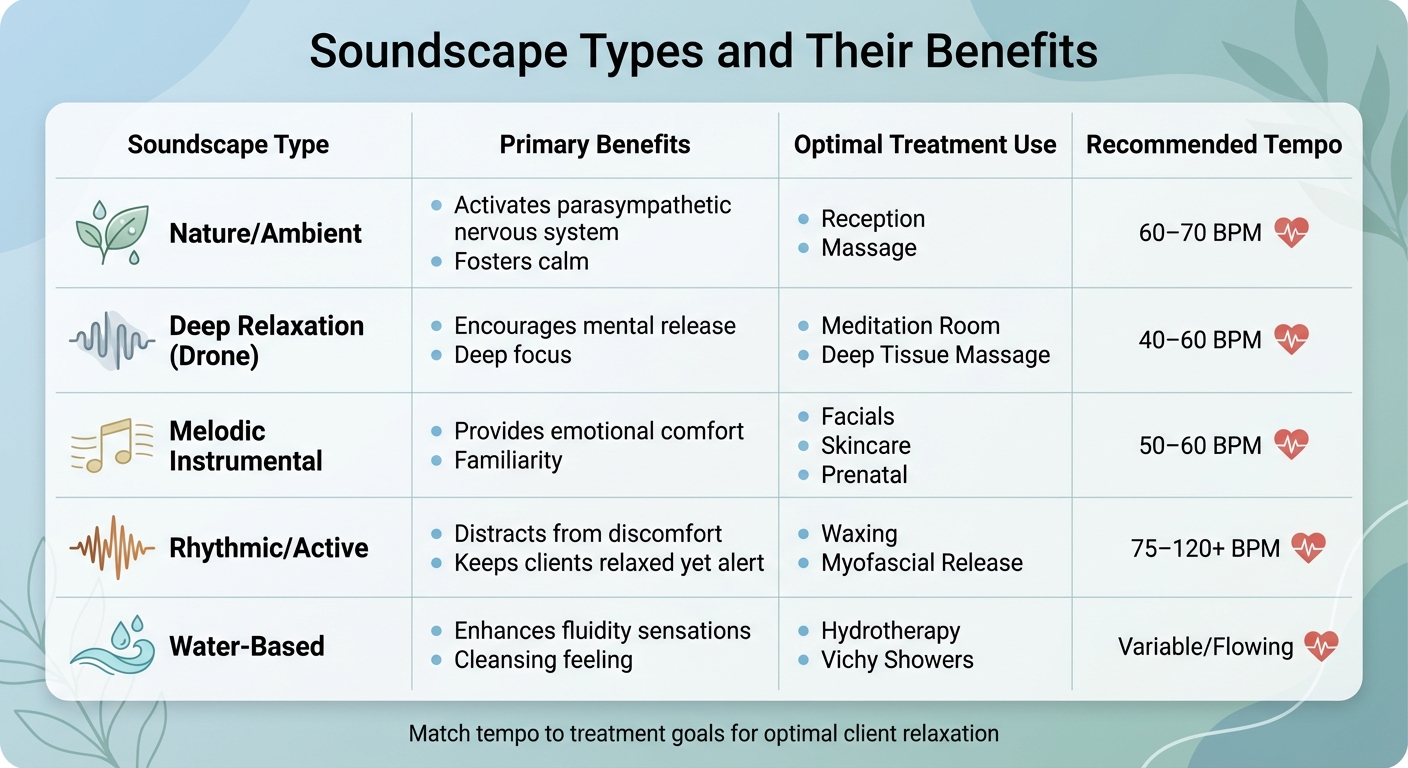
Spa Soundscape Types: Benefits, Treatments, and Recommended Tempo Guide
Once you've set up your audio system and chosen your soundscapes, these tips will help you fine-tune the experience for each treatment.
Soundscape Types and Their Benefits
Choosing the right soundscape for each treatment ensures your clients enjoy an immersive and harmonious experience. Different treatments call for different auditory environments - what works for a deep tissue massage might not be ideal for a facial or waxing session.
| Soundscape Type | Primary Benefits | Optimal Treatment Use | Recommended Tempo |
|---|---|---|---|
| Nature/Ambient | Activates the parasympathetic nervous system and fosters a sense of calm | Reception, Massage | 60–70 BPM |
| Deep Relaxation (Drone) | Encourages mental release and deep focus | Meditation Room, Deep Tissue Massage | 40–60 BPM |
| Melodic Instrumental | Provides emotional comfort and familiarity | Facials, Skincare, Prenatal | 50–60 BPM |
| Rhythmic/Active | Distracts from discomfort while keeping clients relaxed yet alert | Waxing, Myofascial Release | 75–120+ BPM |
| Water-Based | Enhances sensations of fluidity and cleansing | Hydrotherapy, Vichy Showers | Variable/Flowing |
"Music should be felt more than heard. The ideal volume allows for normal conversation but fills silent spaces comfortably." - Pure Spa Direct
By pairing these soundscapes with your technical setup, you can maximise their therapeutic impact. For guidance on volume levels and speaker placement, refer to the audio setup instructions.
Technology Compatibility Requirements
To maintain a seamless auditory experience, consider multi-zone programming that allows you to customise soundscapes for different treatment rooms. For instance, the calming tones suited to hydrodermabrasion and facial treatments may differ from the upbeat rhythms needed for waxing.
Look for systems with reliable connectivity options like Zigbee, Matter, or Wi-Fi, enabling you to control playlists via a dedicated tablet. In wet areas, ensure you use humidity-resistant speakers as outlined in the installation guidelines. To avoid interruptions, opt for ad-free streaming services or pre-downloaded high-quality audio files on a dedicated device. Additionally, make sure lighting drivers are commercial-grade and silent, as any high-pitched noises from subpar electronics can disrupt the tranquil atmosphere in quieter spaces.
Conclusion
Soundscapes play a key role in helping clients shift from "fight or flight" to "rest and digest." They work by lowering blood pressure, easing muscle tension, and encouraging genuine relaxation. By pairing carefully designed soundscapes with advanced audio technology, you can strengthen your brand identity and transform treatment rooms into true sanctuaries.
The benefits for your business are clear. Clients who enjoy deeply calming auditory environments are more likely to rebook, recommend your services to others, purchase retail products, and feel less sensitive to pricing. These outcomes not only enhance client satisfaction but also boost repeat business and improve staff morale. Your team also reaps the rewards - a well-managed acoustic environment eliminates the overwhelming noise levels that can lead to staff fatigue and burnout. As mentioned earlier, these enhancements directly contribute to higher client satisfaction and elevate your brand's reputation.
To achieve this, investing in high-quality audio systems, moisture-resistant speakers, and ultra-quiet devices is non-negotiable. The right soundscape, delivered through professional-grade equipment, enhances every service you provide, from facials to hydrotherapy sessions.
When sourcing equipment, quality matters. Beauty Pro Supplies Canada offers professional-grade audio gear, humidity-resistant acoustic panels, and silent spa tools designed to maintain a serene atmosphere. With over 85,000 specialized items for spa professionals, you can find everything from low-decibel steamers to durable speakers - all engineered to sustain the tranquil environment your clients expect.
"In a world overflowing with stress and stimulation, offering a truly restorative auditory experience makes your business a sanctuary." - Pure Spa Direct
Consider conducting an acoustic audit and upgrading your equipment to strengthen client loyalty and grow referrals.
FAQs
How do I know if my treatment room acoustics need fixing?
You can spot acoustic problems in your treatment room by paying attention to specific signs. If clients seem uncomfortable with loud noises or if background music and other sounds feel jarring or out of sync, it could ruin the tranquil vibe you're aiming for. Noticeable echoes or sound that doesn't flow evenly through the space are also red flags. Tackling these sound issues can significantly enhance the soothing, peaceful atmosphere your clients expect in a spa.
What’s the easiest way to match a soundscape to each service?
Creating a "treatment soundtrack" is an easy and effective approach. Structure it with a clear beginning, middle, and end that aligns with the flow of the service. For the opening, opt for calming sounds to set a relaxing tone. In the middle, include soothing rhythms to maintain the serene atmosphere. Finally, wrap up with tranquil or uplifting tunes to leave clients feeling refreshed. This approach seamlessly integrates the music with the treatment, eliminating the need to handpick tracks for each session.
Do I need special speakers for humid spa areas?
Absolutely. For humid spa environments, it's best to use waterproof or moisture-resistant speakers. These models are designed to handle wet conditions, reducing the risk of damage while delivering reliable sound quality. By choosing the right speakers, you'll not only extend their lifespan but also maintain the soothing atmosphere your clients expect.
Leave a comment