

Allergy Risks in Beauty Clinics
Allergic reactions in beauty clinics are on the rise in Canada, affecting both clients and professionals. With over 30% of facial dermatitis cases linked to cosmetic allergies, understanding the risks is essential. Here's what you need to know:
- Common allergens include fragrances, preservatives, hair dyes (PPD), acrylates in gel nails, and metals like nickel.
- Reactions vary: Immediate symptoms (redness, itching) can escalate to severe issues like throat swelling, while delayed reactions may appear days later as rashes or eczema.
- Key culprits: “Natural” products with essential oils, acrylates from nail kits, and improperly layered skincare products.
- Impact on professionals: Occupational dermatitis and legal risks from allergic incidents are growing concerns.
Prevention strategies: Patch testing, detailed client screening, and using safer, professional-grade products are critical. Clinics need clear protocols to handle emergencies and protect their reputation while ensuring client safety.
'Natural' skin care products can cause allergic reactions
sbb-itb-8ec3e54
Common Allergens in Beauty Clinics
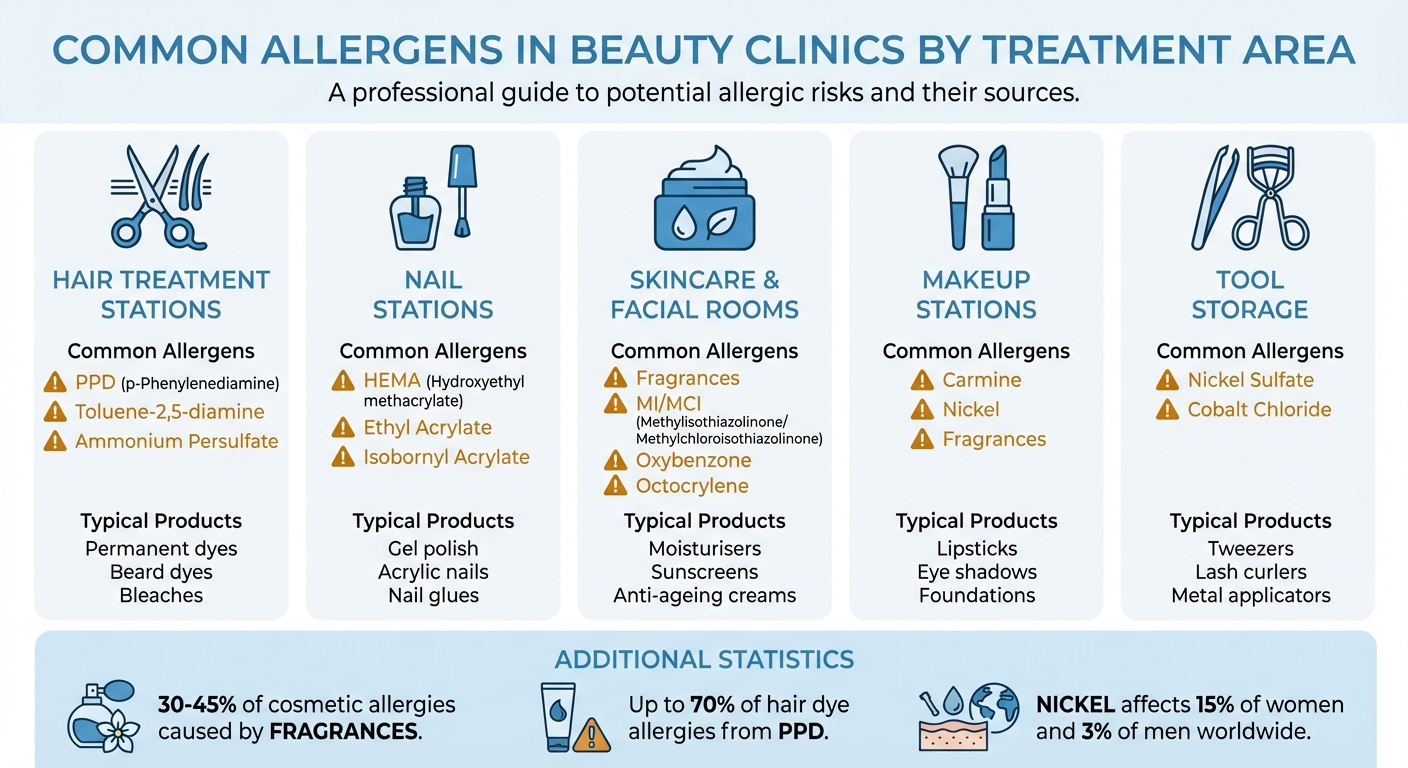
Common Allergens in Beauty Clinics by Treatment Area
When it comes to managing allergy risks in beauty clinics, knowing the common allergens is a must. Research shows that about 10% of patch-tested patients experience cosmetic allergies, though this rate can vary depending on the products and treatments involved. Below, we’ll explore the main allergenic ingredients and where they are typically found in beauty clinics.
Ingredients That Cause Allergies
Fragrances are the leading cause of cosmetic allergies, responsible for 30–45% of cases. Ingredients like linalool, limonene, geraniol, and cinnamal are common culprits. Patch testing with Fragrance Mix I or Balsam of Peru can identify 70–80% of fragrance-related allergies.
Preservatives come in second. Methylisothiazolinone (MI), for example, caused such a spike in sensitization rates between 2010 and 2015 that it was banned from leave-on products in Europe. Other problematic preservatives include methylchloroisothiazolinone (MCI) and formaldehyde releasers like DMDM hydantoin and quaternium-15, which affect around 2–3% of patch-tested patients.
Hair dye chemicals, such as para-phenylenediamine (PPD), are responsible for up to 70% of hair dye allergy cases. Products like “black henna” are especially risky. Similarly, acrylates, found in gel nail products and adhesives like hydroxyethyl methacrylate (HEMA), are becoming a growing concern with the rise of at-home gel nail kits.
Metals, including nickel sulfate and cobalt chloride, are also frequent allergens. Nickel, which affects up to 15% of women and 3% of men worldwide, is the most common contact allergen globally. These metals are often found in makeup pigments and product packaging. Other allergens to watch for include cocamidopropyl betaine (CAPB) used in “gentle” cleansers, lanolin in moisturisers and lip products, and natural ingredients like propolis, tea tree oil, and lavender oil.
Understanding where these allergens are typically encountered can help clinics focus their prevention efforts.
Where Allergens Are Found
The table below highlights common allergens by clinic area and the products where they are typically found:
| Clinic Area | Common Allergens | Typical Products |
|---|---|---|
| Hair Treatment Stations | PPD, toluene-2,5-diamine, ammonium persulfate | Permanent dyes, beard dyes, bleaches |
| Nail Stations | HEMA, ethyl acrylate, isobornyl acrylate | Gel polish, acrylic nails, nail glues |
| Skincare & Facial Rooms | Fragrances, MI/MCI, oxybenzone, octocrylene | Moisturisers, sunscreens, anti-ageing creams |
| Makeup Stations | Carmine, nickel, fragrances | Lipsticks, eye shadows, foundations |
| Tool Storage | Nickel sulfate, cobalt chloride | Tweezers, lash curlers, stainless steel tools |
For safer product choices, professionals should opt for “fragrance-free” rather than “unscented” labels, as the latter may still contain masking fragrances. Additionally, clients with nickel allergies might benefit from mineral makeup brands that test for heavy metal contamination. By identifying these allergen hotspots, beauty clinics can take practical steps to protect both clients and staff.
Types of Allergic Reactions
Allergic reactions can differ significantly in how quickly they appear and how severe they become. In beauty clinics, understanding these variations is key to managing them effectively and ensuring client safety.
Immediate Reactions
Immediate reactions (Type I hypersensitivity/contact urticaria) occur within minutes to an hour of exposure to an allergen. These reactions usually subside within 24 hours but can, in some cases, become more severe and require urgent medical attention. Clients often report symptoms like burning, itching, or tingling, alongside the classic "wheal and flare" pattern - raised, red, and swollen areas on the skin.
In more serious cases, immediate reactions may progress to contact urticaria syndrome, which includes systemic symptoms like conjunctivitis, breathing difficulties, or even gastrointestinal issues. Rarely, this can escalate to anaphylaxis, a life-threatening emergency. Common triggers for these reactions include fragrance ingredients such as cinnamal, preservatives like benzoic acid, hair dyes containing PPD, and proteins like hydrolysed wheat or oat extracts. If symptoms extend beyond the application site or involve breathing problems, immediate medical intervention is essential.
Delayed Reactions
Delayed reactions (Type IV hypersensitivity) take longer to develop, usually appearing after 12 hours and peaking between 24 and 72 hours. These reactions manifest as allergic contact dermatitis, which includes symptoms like intense itching, redness, swelling, and eczematous rashes. Without removing the allergen, these reactions can persist for days or even weeks.
One of the challenges with delayed reactions is that they can mimic other skin conditions, such as rosacea, seborrhoeic dermatitis, or atopic dermatitis. An Goossens from the Department of Dermatology at K.U. Leuven explains:
"Contact-allergic reactions to cosmetics may be delayed-type reactions such as allergic and photo-allergic contact dermatitis, and more exceptionally also immediate-type reactions, that is, contact urticaria."
Diagnosing delayed reactions often requires patch testing, with results evaluated at 48 hours and again at 3–5 days. Common culprits include fragrances, preservatives like methylisothiazolinone, hair dyes, and acrylates found in nail products.
Interestingly, reactions don’t always occur where the product was applied. For instance, allergens in nail polish can lead to dermatitis on areas like the eyelids or neck, transferred there by the fingers - this is known as ectopic dermatitis.
These differences in how allergic reactions present highlight the importance of thorough allergen identification and management in beauty clinics.
Prevention Strategies for Beauty Professionals
Managing allergy risks in beauty services is essential for safeguarding both clients and your professional reputation. By taking proactive steps, you can significantly lower the chances of immediate or delayed allergic reactions.
Patch Testing and Client Screening
Patch testing is one of the most effective ways to spot potential allergies before a full treatment. To perform a patch test, apply a rice-sized amount of the product to a small, clean area - like behind the ear, the inner elbow, or the upper forearm. Leave it undisturbed and dry for 24 to 48 hours. This timeframe is critical, as delayed hypersensitivity reactions can take up to 96 hours to appear.
Different products require tailored testing methods. For example:
- Strong acid peels: Patch test for only 30 seconds.
- Cleansers: Apply to the inner arm for one minute, rinse, and repeat daily for 72 hours.
Watch for signs like redness, swelling, blisters, or welts. If any reaction occurs, halt the treatment and advise the client to consult a dermatologist.
Screening goes beyond patch tests. Always ask about:
- New medications
- Pregnancy or breastfeeding
- Sensitive skin history
- Recent cosmetic treatments (e.g., chemical peels or lasers)
Be aware that certain factors can skew test results. For instance, oral steroids may suppress immune responses, leading to false negatives, while active dermatitis can cause widespread redness, making results unreliable. Re-test clients who haven’t had a service in over six months or when switching to a new product or brand. Document any allergies or past reactions in your client management system - this step is crucial, as around 68% of people report allergic reactions to new skincare products.
Product selection is another key element in reducing allergen risks.
Selecting Hypoallergenic Products
Choosing safer products starts with careful ingredient checks. Watch out for common allergens like:
- Paraphenylenediamine (PPD) in brow tints and hair dyes
- Formaldehyde-releasing preservatives like DMDM hydantoin and quaternium-15
- Nickel, commonly found in metal tools
- Fragrance blends containing limonene or linalool
Nickel, in particular, is the top cause of allergic contact dermatitis globally, so ensure tools and equipment are nickel-tested.
Look for labels such as "hypoallergenic", "fragrance-free", "dermatologist-tested", or "nickel-tested." While these terms aren’t always strictly regulated, they usually indicate a lower likelihood of triggering allergies. Remember, "natural" or "organic" doesn’t always mean harmless - ingredients like tea tree oil, lavender, or coconut-derived agents can still cause reactions.
Request full ingredient lists from suppliers like Beauty Pro Supplies Canada to ensure safety. Use sample kits for internal testing or preliminary patch tests with sensitive clients. Keep a salon safety log with product names, batch numbers, and ingredient details to help trace patterns if reactions occur.
Educating your team about allergy risks is just as important as product selection.
Training Staff on Allergy Risks
Your staff must be able to distinguish between two common skin reactions:
- Allergic contact dermatitis: A delayed immune response, appearing 48 to 96 hours after exposure, with intense itching and swelling.
- Irritant contact dermatitis: An immediate reaction that feels more like a chemical burn - painful rather than itchy.
This knowledge helps determine the appropriate response and whether alternative products can be used safely.
Train your team on best practices, such as:
- Following the "No-Skin Touch" rule to prevent uncured gels or tints from contacting skin
- Proper use of LED lamps for complete curing
- Maintaining dust extraction systems to reduce allergen exposure
As an industry expert from Pure Spa Direct explains:
"The reaction happens when uncured product contacts the skin. A fully cured gel or acrylic nail is polymerized - the chemical structure has changed - and is generally stable and safe."
Finally, establish a clear emergency protocol. If a reaction occurs, immediately stop the treatment, remove the product gently (avoiding abrasive methods), and document the incident thoroughly. Proper training and precautions can reduce skin flare-ups by up to 80%, ensuring both client safety and satisfaction.
How Clinics Can Manage Allergy Risks
Managing allergy risks in clinics goes beyond prevention; it requires well-structured protocols and top-quality supplies to protect both clients and staff. While prevention is vital, being prepared to handle allergic reactions effectively is just as important.
Creating Allergy Response Protocols
Start by developing detailed intake forms to capture client allergies and medical history. These forms aren’t just practical - they also provide legal protection and help ensure informed consent. Consent should include both a signed document and a verbal explanation of potential risks. As Borden Ladner Gervais LLP points out:
"Consent forms alone are often insufficient. Clients are entitled to be informed of the material risks inherent to the procedure they are undergoing."
Have a clear emergency response plan for your team to follow. If an allergic reaction occurs, your protocol should include these four steps: stop the treatment immediately, remove all products, advise the client to seek medical attention if symptoms worsen, and document everything thoroughly. Always keep written post-treatment care instructions ready for every service, and follow up with clients within 24 to 48 hours to check on their recovery.
For clinics offering advanced services like injectables or laser treatments, medical oversight is crucial. This ensures that your protocols align with the highest safety and regulatory standards.
Using Professional-Grade Supplies
The quality of your supplies plays a major role in reducing allergy risks. Professional-grade products, which are more likely to meet Health Canada approval standards, typically have fewer impurities than lower-quality options. For instance, nail services benefit from using HEMA-free gel systems, which significantly lower the risk of sensitization.
Proper curing of gel products is equally important. Fully polymerized gels have a stable chemical structure, making them safer. Using a complete product system with the manufacturer’s recommended LED lamp ensures proper curing and reduces exposure to uncured monomers. Avoid mixing brands, as this can lead to incomplete polymerization and increase the risk of allergic reactions.
Reputable suppliers like Beauty Pro Supplies Canada offer products that meet regulatory standards, including disposable tools, powder-free nitrile gloves, and Health Canada-approved injectables. Always request full ingredient lists and batch numbers for your salon safety log, which can help trace patterns if any reactions occur.
Single-use items, such as disposable files, buffers, and sterile tools, are another layer of protection against cross-contamination. For nail services, stations with built-in dust extraction systems are invaluable - they remove allergen-laden particles from the air, shielding both clients and technicians from prolonged exposure.
Conclusion
Key Takeaways for Beauty Professionals
Incorporating safety into every aspect of your practice isn’t optional - it’s essential. Start with thorough consultations and detailed intake forms that capture critical information like medications, lifestyle factors, and any history of allergic reactions. Don’t skip patch testing; it’s your most dependable tool for spotting potential issues before they become serious.
Using professional-grade, Health Canada-approved products and HEMA-free systems significantly reduces the risk of sensitization. As Borden Ladner Gervais LLP wisely points out:
"Obtaining consent requires a process, not a form."
This means informed consent goes beyond a simple signature. You need to explain all risks clearly and ensure clients truly understand them.
Ongoing education for your team is another cornerstone of safety. Staff should be trained to recognize allergens - like the 5,000+ types of fragrances in cosmetics or preservatives such as methylisothiazolinone - and know how to handle reactions effectively. Controlled acts should only be performed by qualified professionals to avoid unnecessary risks and liabilities.
As discussed earlier, prevention strategies and allergen management protocols work hand in hand to create a safer environment for your clients. Together, they form a strong foundation for reducing the likelihood of allergic reactions.
Prioritizing Client Safety
Client safety is the backbone of your practice. It’s not just about protecting your clients - it’s about safeguarding your reputation, staying compliant with regulations, and ensuring your long-term success. Consider this: studies show that 57% of women and 31% of men have reported adverse reactions to cosmetic products. These numbers underscore the importance of vigilance. As Thanisorn Sukakul and Cecilia Svedman from Lund University’s Department of Occupational and Environmental Dermatology highlight:
"Continued vigilance in diagnosis, improved regulatory measures, and increased reporting are essential to reduce allergy rates and enhance patient care."
Regulations are becoming stricter, with provincial bodies like the College of Physicians and Surgeons tightening oversight on controlled acts and supervision requirements. By implementing clear, comprehensive policies, you create consistency and transparency in your practice. Pairing these protocols with high-quality, professional-grade supplies from trusted sources like Beauty Pro Supplies Canada helps you build a practice that prioritizes safety and excellence. This commitment not only protects your clients but also fosters trust, encouraging repeat visits and referrals.
FAQs
How do I know if it’s an allergy or irritation?
To determine whether you're dealing with an allergy or irritation, pay attention to the symptoms. Allergic contact dermatitis often shows up as itching, redness, swelling, or even blisters after coming into contact with a specific substance. On the other hand, irritant dermatitis is usually triggered by things like water, soaps, or friction and doesn't involve an allergic response. While allergies are localized and caused by allergens, irritations tend to be broader and result from external factors.
What should a clinic do if I react during a service?
If you have a reaction during a treatment, the clinic’s priority should be to stay calm and evaluate your symptoms. For minor issues such as redness or itching, they might rinse the area with cool water and apply a gentle, fragrance-free moisturizer. However, if you experience swelling, hives, or more intense irritation, they should advise you to seek medical attention. In more severe cases, clinics must adhere to emergency care procedures to ensure your safety.
Which ingredients should I avoid if I have sensitive skin?
If your skin tends to be sensitive, it's a good idea to steer clear of common irritants such as fragrances (parfum), linalool, limonene, geraniol, cinnamal, and eugenol. These ingredients often cause reactions in people with delicate skin. Make it a habit to read product labels thoroughly to reduce the chances of irritation.
Leave a comment