

How to Use BARBICIDE in Spas and Clinics
BARBICIDE is a hospital-grade disinfectant widely used in spas and clinics to clean non-porous tools and surfaces like scissors, combs, and countertops. It kills bacteria, viruses (including HIV-1 and Hepatitis), and fungi, ensuring a safe environment for clients and staff. Proper use involves:
- Dilution: Mix 62.5 ml of concentrate per 1 litre of cold water.
- Contact Time: Immerse tools or wet surfaces for 10 minutes.
- Daily Replacement: Change immersion solutions every day.
- Safety: Wear gloves and masks when handling the product.
Avoid using BARBICIDE on porous materials like wood or fabric. It’s essential to pre-clean items with soap and water before disinfection. Proper ventilation and adherence to provincial regulations, including maintaining Safety Data Sheets, are key to compliance. With correct use, BARBICIDE protects your tools, meets health standards, and reassures clients of your spa’s hygiene practices.
What is BARBICIDE and How is it Used?
Product Overview and Active Ingredients
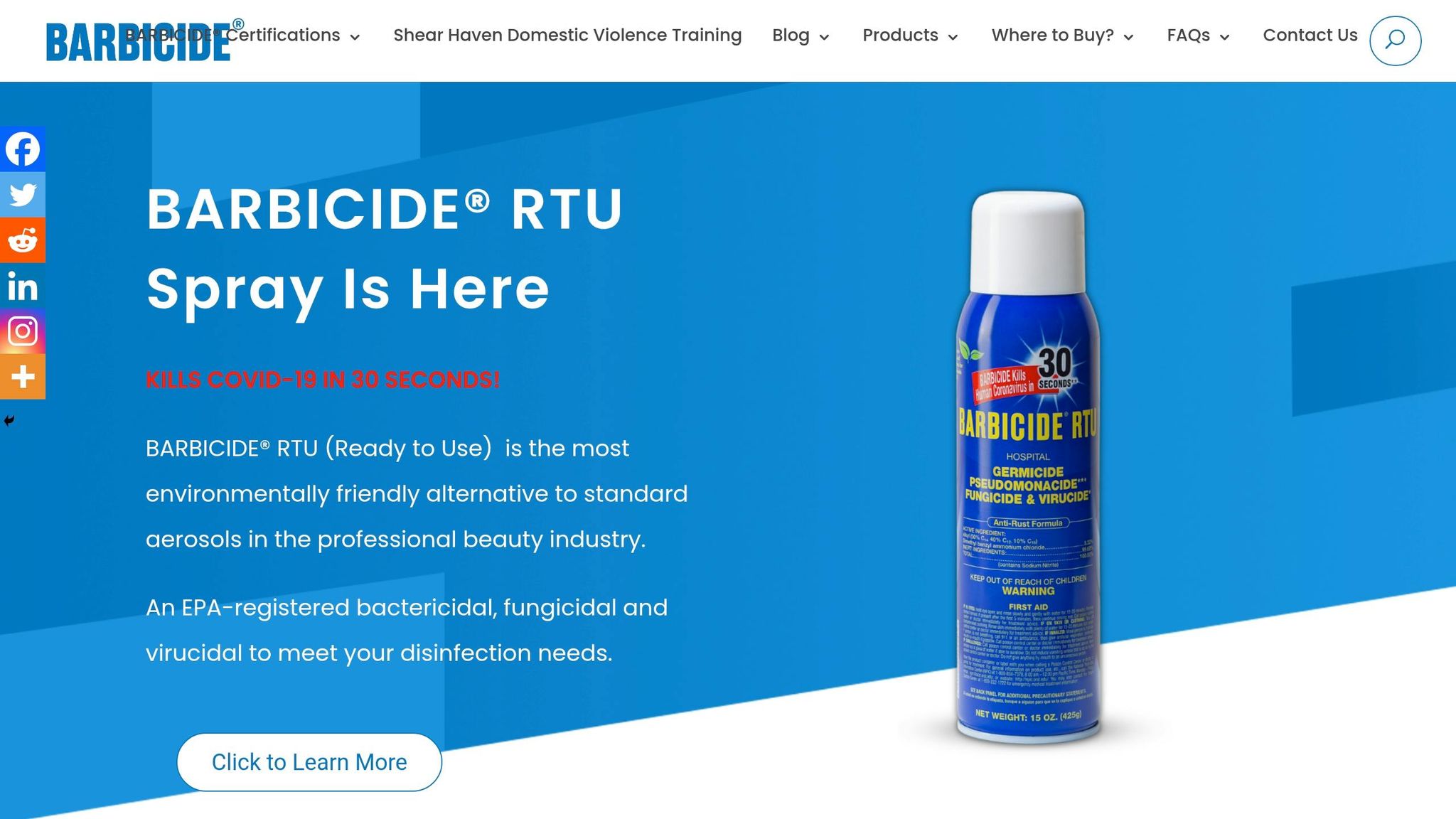
BARBICIDE concentrate contains 5.12% alkyl dimethyl benzyl ammonium chloride, which serves as its primary disinfectant. It also includes sodium nitrite to prevent rust and its signature blue dye, a hallmark of professional hygiene standards.
Recognized as an EPA-approved disinfectant, BARBICIDE works as a germicide, fungicide, and viricide. When mixed correctly, it creates an alkaline solution with a pH between 10 and 12. This balance effectively eliminates pathogens while remaining safe for use on non-porous tools. Invented in 1947, BARBICIDE has been a trusted name in the beauty and grooming industry for over 70 years.
This tried-and-tested formula is why BARBICIDE remains a dependable choice in professional settings.
Benefits for Professional Spas and Clinics
BARBICIDE eliminates 99.9% of germs and bacteria, offering comprehensive protection against common pathogens in spa and clinic environments. Its EPA registration ensures compliance with strict infection control standards set by provincial health departments and regulatory bodies across Canada. For instance, the BARBICIDE RTU Spray can kill COVID-19 in just 30 seconds.
Using BARBICIDE also visibly reassures clients about hygiene standards. As BARBICIDE® explains:
BARBICIDE® is perhaps the most iconic of all images in the professional beauty industry. It signifies a safe, clean environment for everything from a haircut to a pedicure.
Additionally, its anti-rust formulation protects expensive professional tools. For higher-risk areas, such as pedicure stations, BARBICIDE Spacide Complete meets OSHA bloodborne pathogen standards, making it an essential choice.
Approved Applications for Equipment and Surfaces
BARBICIDE’s effectiveness extends to various non-porous materials, including metal, stainless steel, glass, plastic, and synthetic surfaces. It’s safe to use on tools like combs, brushes, rollers, perm rods, clips, shears, tweezers, brow razors, and scissors. Larger equipment, such as tanning beds and pedicure bowls, can also be disinfected with BARBICIDE.
For facility surfaces, BARBICIDE is suitable for countertops (including quartz), floors, tiles, reception desks, phones, computers, and even iPad payment systems. As the BARBICIDE® Team notes:
BARBICIDE® can be used to disinfect any hard, non-porous surface or item such as metal, glass or plastic.
However, it’s important to avoid using BARBICIDE on porous materials like leather, fabric, or wood, as these are not compatible with the solution.
sbb-itb-8ec3e54
Preparing BARBICIDE Solutions
Correct Dilution Ratios and Measurements
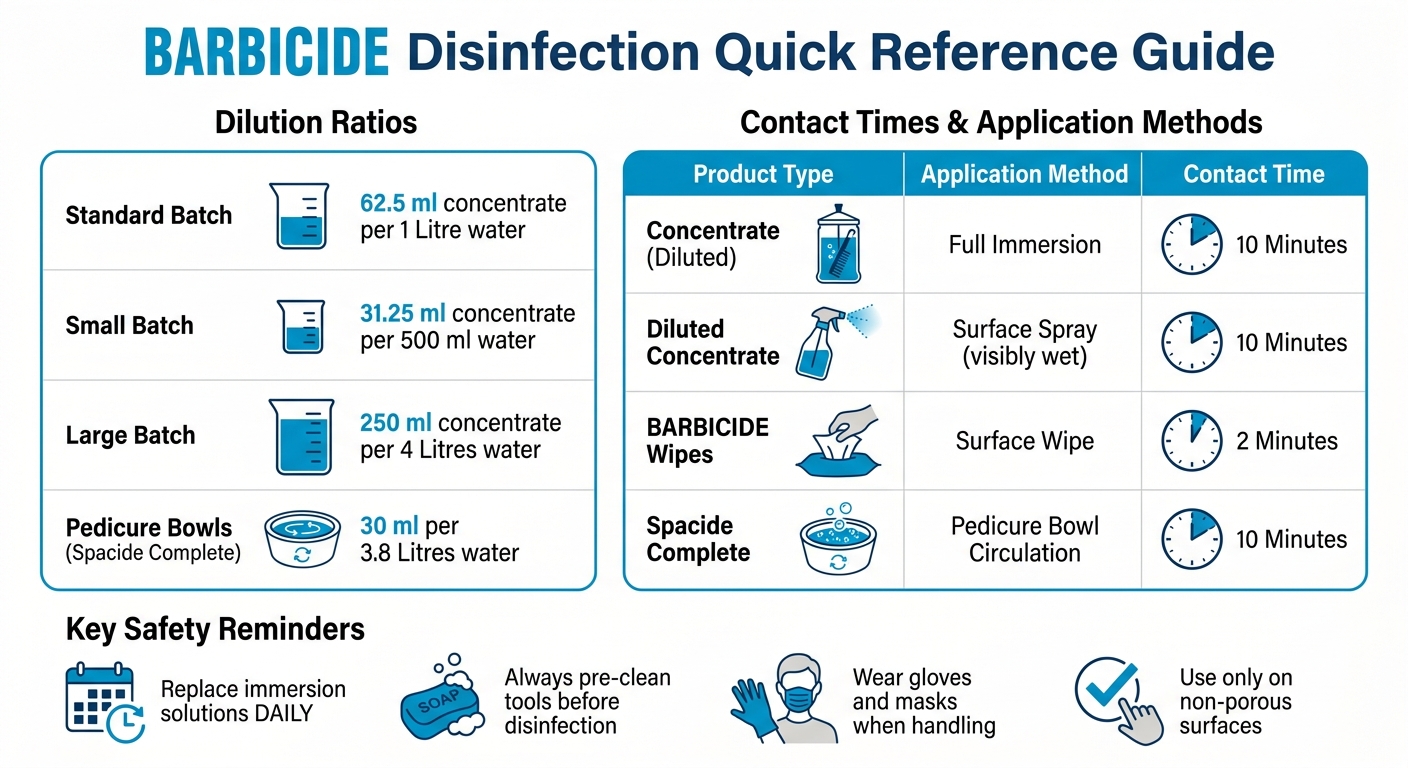
Getting the right dilution is key to ensuring BARBICIDE works properly against pathogens. The standard ratio is 62.5 ml of BARBICIDE concentrate per 1 litre of water. For smaller amounts, use 31.25 ml of concentrate in 500 ml of water. If you need a larger batch, mix 250 ml of concentrate with 4 litres of water.
| Measurement System | BARBICIDE Concentrate | Water Volume |
|---|---|---|
| Metric (Standard) | 62.5 ml | 1 Litre |
| Small Batch (Metric) | 31.25 ml | 500 ml |
| Large Batch (Metric) | 250 ml | 4 Litres |
BARBICIDE concentrate comes in various sizes and, when stored properly, does not expire. This makes it a practical choice for busy salons or clinics. Once you’ve measured your concentrate, it’s time to mix it correctly for it to work as intended.
Mixing Instructions and Safety Precautions
Always use cold water when preparing BARBICIDE solutions. Start by pouring the water into your container first, then carefully add the measured concentrate while wearing protective gloves. This method prevents splashing and ensures the solution mixes evenly. For pedicure bowls using BARBICIDE Spacide Complete, adjust the ratio to 30 ml per 3.8 litres of fresh water.
Before disinfecting tools, make sure to pre-clean them with soap and water to remove any visible debris. This is especially important for porous items like a pumice stone that can trap bacteria. For proper disinfection, immerse tools completely in the solution for 10 minutes. Afterward, rinse them with clean water and store them in an airtight container. These steps ensure your tools are fully disinfected and ready for use.
Storage and Solution Replacement
For immersion jars, it’s essential to replace the solution daily. As noted by The BARBICIDE® Team, "It is important that disinfectants used for immersion be changed DAILY. This is a requirement of the EPA."
Spray bottles, however, have different guidelines. According to The BARBICIDE® Team, "BARBICIDE® Spray will always remain effective as long as you do not contaminate the solution. The spray does not need to be made fresh every day since it is a closed container that you are not sticking things into!"
Keep immersion jars covered when not in use to avoid evaporation or contamination. Store BARBICIDE concentrate in its original container, out of reach of children, and in a well-ventilated area. Following these storage practices ensures the disinfectant remains effective and safe to use.
BARBICIDE Sanitation & Disinfection Training Video
Disinfection Procedures for Tools and Surfaces
BARBICIDE Dilution Ratios and Contact Times Quick Reference Guide
Disinfecting Professional Tools and Equipment
Start by cleaning and drying tools thoroughly before disinfection. Once ready, fully submerge them in a prepared BARBICIDE solution for 10 minutes, ensuring every part of the tool is submerged.
After the required contact time, rinse the tools with water, dry them with a clean towel, or let them air dry. For electrical clippers, avoid submerging them in any liquid. Instead, use a disinfectant spray like Clippercide. Spray while holding the clippers at an angle to prevent liquid from reaching the electrical components.
For larger equipment or pedicure bowls, follow specific disinfection protocols tailored to their needs.
Pedicure Bowls and Spa Equipment Disinfection
Spa equipment, including pedicure bowls, requires a separate cleaning process. Begin by cleaning, rinsing, and drying the bowl. Next, fill it with fresh water, ensuring the intake valve is covered. Add 30 ml of BARBICIDE Spacide Complete per 3.8 litres of water (or 1 oz per gallon). Circulate this solution for 10 minutes, then drain and rinse thoroughly.
For equipment that can't be immersed, spray diluted BARBICIDE directly onto all surfaces, ensuring they remain visibly wet for 10 minutes.
Surface Disinfection and Contact Times
High-touch areas such as reception desks, treatment tables, and doorknobs should be disinfected regularly throughout the day. When using BARBICIDE Spray, ensure surfaces stay visibly wet for 10 minutes to effectively eliminate pathogens listed on the EPA-registered label. For quicker disinfection, BARBICIDE Wipes reduce the required contact time to just 2 minutes, making them ideal for quick clean-ups between clients.
| BARBICIDE Product Type | Application Method | Required Contact Time |
|---|---|---|
| Concentrate (Diluted) | Full Immersion | 10 Minutes |
| Diluted Concentrate | Surface Spray – visibly wet for 10 minutes | 10 Minutes |
| BARBICIDE Wipes | Surface Wipe | 2 Minutes |
| Spacide Complete | Pedicure Bowl Circulation | 10 Minutes |
Safety and Regulatory Requirements
Required Personal Protective Equipment
When working with BARBICIDE, gloves and masks are a must - whether you're mixing the concentrate or disinfecting surfaces. The BARBICIDE team stresses this point: "We always recommend wearing protective equipment." This isn't limited to intensive cleaning but applies to all disinfection tasks.
If you're using BARBICIDE in a fogger to sterilize larger areas, wearing a mask is non-negotiable. The team advises: "Please follow proper mixing ratios, allow proper ventilation and always wear a mask when doing so." Eye protection is also crucial when handling the concentrate to prevent splashes. Keep in mind, BARBICIDE is strictly for use on hard, non-porous surfaces and is not meant for skin contact. If it accidentally touches your skin, wash the area immediately. As the BARBICIDE team clarifies: "BARBICIDE® is not labeled for use on the human body."
Besides PPE, adhering to provincial safety regulations and maintaining proper documentation is essential for safe and compliant use of BARBICIDE.
Canadian Provincial Regulations and Documentation
Safety goes beyond personal protection - it also involves meeting regulatory standards and keeping accurate records. Provincial guidelines require that disinfectants used in spas and clinics be bactericidal, virucidal, and fungicidal. Items like towels and neck strips, which are porous, must be discarded after one use. Non-porous items, such as those made of metal, glass, or plastic, must be thoroughly cleaned and disinfected before reuse.
Always have Safety Data Sheets (SDS) readily available to meet provincial health and safety requirements. These documents provide detailed instructions for safe handling and emergency procedures. It's also mandatory to change the immersion solution daily. When disposing of diluted BARBICIDE, follow local and federal environmental rules. According to the BARBICIDE team: "Diluted BARBICIDE® is suitable for sink or drain disposal in accordance with all local and federal environmental regulations." If you're unsure about disposal protocols, reach out to your local municipality for guidance.
To further demonstrate your commitment to safety, consider completing BARBICIDE certification courses. This training highlights adherence to disinfection standards and protocols. As the BARBICIDE team states: "Showcase your commitment to salon safety and hygiene by proudly displaying your BARBICIDE® Certification."
Ventilation and Environmental Safety
Proper ventilation is another layer of protection for both users and clients. Good airflow is especially critical when using BARBICIDE in enclosed spaces, particularly with foggers or sprayers. Avoid inhaling the mist to reduce the risk of respiratory irritation. Keep windows open or ensure ventilation systems are running during application.
If BARBICIDE gets into your eyes, rinse them immediately with water for at least 15 minutes, and remove contact lenses if applicable. The RTU (Ready to Use) Spray format offers a safer alternative to traditional aerosols, as it minimizes airborne chemicals while delivering effective results. During use, follow the same PPE guidelines and wash your hands thoroughly for at least 20 seconds after handling the product.
Conclusion
Using BARBICIDE correctly is key to maintaining the high hygiene standards outlined earlier. Proper use not only protects your clients but also helps preserve your tools and ensures compliance with Canadian regulations. Stick to the recommended dilution - 60 ml of concentrate per 950 ml of water - and allow a full 10-minute contact time to effectively eliminate a wide range of pathogens.
Every step matters, from accurate dilution to careful application. Following these guidelines prevents damage to expensive tools and ensures client safety. Daily solution replacement, precise mixing, and pre-cleaning of non-porous items are essential habits that keep your workspace professional and compliant.
The iconic blue of BARBICIDE is more than just a colour; it’s a visible assurance of safety that clients recognize and value. By incorporating these practices into your daily routine, you can maintain a safe, compliant, and trustworthy environment for everyone who walks through your doors.
FAQs
What happens if I mix BARBICIDE too strong or too weak?
Using the right dilution of BARBICIDE is crucial for effective disinfection. If the solution is too strong, it can harm your tools, stain surfaces, or even create safety hazards. On the other hand, a solution that's too weak won't kill germs effectively, leaving dangerous pathogens behind. To get it right, stick to the recommended ratio: 2 oz. of concentrate per 32 oz. of water. This ensures both safety and proper disinfection.
When should I use immersion vs spray vs wipes?
To disinfect non-porous tools like combs, brushes, and scissors, immersion is key. Fully submerge them in Barbicide for the recommended contact time, typically about 10 minutes. For surfaces or equipment that can be sprayed and wiped down, use a spray disinfectant for quick and effective cleaning. For smaller surfaces or tools, wipes are a great option - just make sure the surface stays wet for the specified contact time. Always adhere to the manufacturer’s guidelines for best results.
How do I disinfect tools that can’t be submerged (like clippers)?
To disinfect tools that can’t be submerged, like clippers, here’s what you need to do:
- Start with cleaning: Remove any debris and wash the tools with soap and water to get rid of surface dirt.
- Use disinfectant: Apply an EPA-registered disinfectant, such as BARBICIDE, either by spraying or wiping the tools thoroughly.
- Allow proper contact time: Let the disinfectant sit for the amount of time recommended by the manufacturer, which is typically around 10 minutes.
- Finish up: If the product requires rinsing, do so, then dry the tools completely. Finally, store them in a clean, dry container to keep them ready for use.
Leave a comment