
Jade vs. Rose Quartz: Gua Sha Tool Materials
When choosing a Gua Sha tool, the material matters for your skin type, preferences, and care routine. Jade and rose quartz are the most popular options, each offering distinct properties:
- Jade: Durable, resists chipping, and feels cool initially but warms quickly. Its slight grip makes it great for sculpting and lifting. Ideal for oily or combination skin.
- Rose Quartz: Smooth, heavier, and stays cold longer, making it effective for sensitive or mature skin. Its calming properties also reduce redness and puffiness but require careful handling due to its brittleness. For a more durable alternative, consider a stainless steel Gua Sha tool.
Quick Comparison
| Feature | Jade | Rose Quartz |
|---|---|---|
| Hardness (Mohs) | 6.0–7.0 | 7.0 |
| Durability | High, resists chipping | Prone to shattering |
| Temperature | Cools, warms quickly | Stays cold longer |
| Weight | Lightweight | Heavier |
| Best For | Oily/combination skin | Sensitive/mature skin |
Jade connects to Qi flow and detoxification, while rose quartz promotes calm and emotional balance. Both require proper technique and care for effective use. Choose based on your skin needs and maintenance preferences.
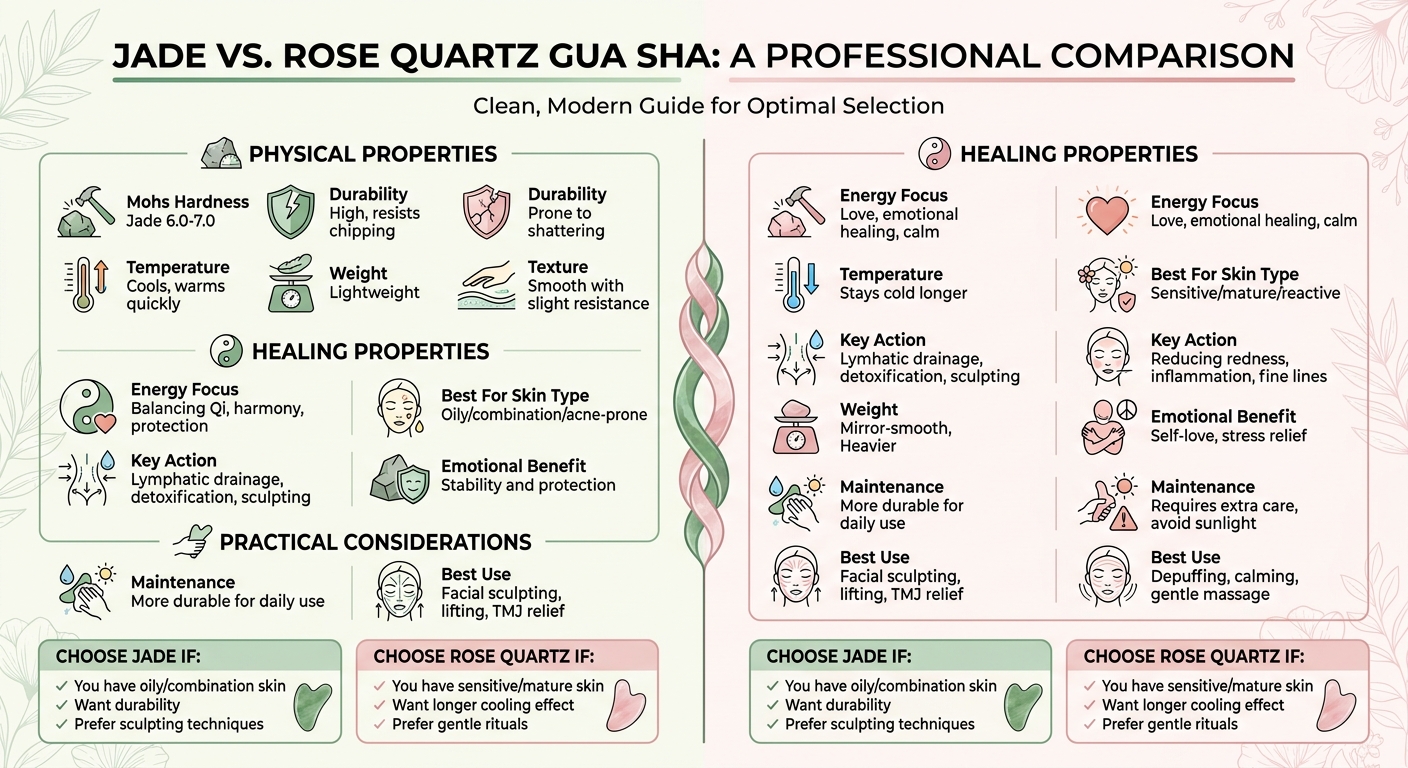
Jade vs Rose Quartz Gua Sha Tool Comparison Chart
Physical Properties of Jade and Rose Quartz
Jade Properties
Jade falls between 6.0 and 7.0 on the Mohs hardness scale, which means it’s moderately hard but impressively tough. Thanks to its fibrous structure, it resists chipping, making it a durable option for daily use on both the face and body.
One standout feature of jade is its high thermal conductivity. When you first touch it, the stone feels cool, but it quickly adapts to your body temperature. Its surface is smooth yet offers a slight grip, which many practitioners find useful for contouring and lifting motions. Compared to rose quartz, jade is lighter and feels more buoyant in the hand, which allows for gentler rolling or scraping. A well-polished jade surface ensures a seamless glide during treatments with these facial tools.
Anthony Kingston from White Lotus Beauty explains: "To determine if your Jade is genuine or fake, hold the stone against your face for a minute. If it remains cool, it is real Jade; if it warms up, it is a fake."
Rose Quartz Properties
Rose quartz rates 7.0 on the Mohs scale, making it slightly harder than jade. Its crystalline structure allows it to be polished to an ultra-smooth, mirror-like finish, which glides effortlessly across the skin. However, this same structure makes the stone more brittle, meaning it’s prone to shattering if dropped or handled roughly.
Rose quartz is denser and heavier than jade, giving it a solid feel and allowing for firmer pressure with less effort. It also excels at retaining coolness, staying cold longer during treatments. This property makes it especially effective for reducing puffiness and soothing inflammation. On the downside, prolonged exposure to sunlight can cause its signature pink hue to fade over time.
"Rose quartz is slightly harder than jade and harder to carve as it is more likely to shatter. This extra difficulty in carving is the main reason genuine rose quartz Gua Sha are usually a little more expensive than Jade Gua Sha", says Anthony Kingston from White Lotus Beauty.
Physical Properties Comparison
| Feature | Jade | Rose Quartz |
|---|---|---|
| Mohs Hardness | 6.0–7.0 | 7.0 |
| Durability | High; resistant to chipping | Moderate; prone to shattering |
| Temperature | Initially cool; warms quickly | Stays cold for longer |
| Weight | Lightweight and buoyant | Heavier and denser |
| Texture | Smooth with slight resistance | Mirror-smooth, effortless glide |
| Best For | Oily/combination skin; lifting | Sensitive/mature skin; depuffing |
The tactile and thermal differences between jade and rose quartz are key to understanding their uses. Jade offers durability and a slight grip, making it ideal for sculpting and lifting. On the other hand, rose quartz provides a cooling effect and a smooth glide, which is perfect for calming and depuffing. These distinctions make it easier to choose the right Gua Sha tool for your specific needs.
sbb-itb-8ec3e54
HOW TO USE A GUA SHA?? ROSE QUARTZ VS JADE !! DETAILED- DEMONSTRATION || POULAMI SARKAR
Healing Properties of Jade and Rose Quartz
Understanding the unique properties of jade and rose quartz helps you see how each stone can influence your Gua Sha tool selection and skincare approach.
Jade's Healing Properties
In Traditional Chinese Medicine, jade is celebrated for its ability to enhance the flow of Qi, which is thought to help combat skin blemishes and slow the signs of ageing.
Jade is particularly effective at soothing inflammation, reducing redness, tightening pores, and encouraging lymphatic drainage. This drainage process helps remove toxins and excess fluids from the skin, reducing puffiness and water retention. Another standout feature of jade is its ability to regulate oil production, making it a great option for oily, combination, or acne-prone skin.
"Jade is especially useful for administering facial Gua Sha because it can enhance the flow of 'Qi' or energy, to achieve toning and defining effect", explains YINA.
Its durability and slight resistance on the skin make jade ideal for facial sculpting and relieving muscle tension. The hooked edge of a jade Gua Sha tool is particularly effective for massaging the jawline and easing tension related to TMJ. By boosting circulation, jade promotes skin cell renewal, leaving your complexion looking more toned and radiant.
Rose Quartz's Healing Properties
Rose quartz is closely associated with the heart chakra, symbolizing emotional healing, self-love, and stress relief. Known as the "stone of love", it adds a sense of calm and compassion to your skincare routine, making it more than just a physical treatment.
The natural coolness of rose quartz helps to reduce redness, inflammation, and puffiness. Its soothing energy is especially beneficial for sensitive, reactive, or mature skin. The stone contains minerals like silicium, magnesium, iron, sodium, and oxygen, which some believe can be absorbed by the skin during use.
"Rose Quartz, known as the stone of love, is soothing and meant to promote self-love, reflection and acceptance", says Kari Gran, Founder of Kari Gran Skin Care.
Rose quartz is often recommended for smoothing fine lines and wrinkles, especially in mature skin. Its smooth texture glides easily over delicate areas, making it gentle enough for daily use on sensitive skin. Beyond the physical benefits, rose quartz helps reduce stress and encourages a more mindful, calming skincare ritual.
Both stones bring unique healing qualities, offering targeted benefits for different skincare needs.
Healing Benefits Comparison
The table below highlights the key benefits of each stone:
| Feature | Jade | Rose Quartz |
|---|---|---|
| Energy Focus | Balancing Qi, harmony, protection | Love, emotional healing, calm |
| Best For Skin Type | Oily, combination, acne-prone | Sensitive, mature, reactive |
| Key Action | Lymphatic drainage, detoxification, sculpting | Reducing redness, inflammation, fine lines |
| Temperature Behaviour | Adapts to skin temperature; can be warmed | Stays cool for longer periods |
| Emotional Benefit | Stability and protection from negative energy | Self-love, stress relief, compassion |
Jade is perfect for those looking to address puffiness, water retention, and firmness through detoxification and balance. Rose quartz, on the other hand, focuses on soothing and anti-ageing, making it ideal for calming sensitive skin and supporting emotional well-being. Your choice depends on whether you prioritise energetic balance and sculpting (jade) or emotional calm and gentle care (rose quartz).
Historical and Cultural Background
Delving into the history of these stones sheds light on their importance in Gua Sha rituals and their evolving roles over time.
Jade in Traditional Chinese Medicine
Jade has been the cornerstone of Gua Sha tools in Traditional Chinese Medicine for centuries. In ancient China, jade was highly prized - often considered even more precious than gold. It symbolized wealth, power, and moral virtue. Reserved for the elite and royalty, jade tools were often stored in luxurious silk-lined boxes, believed to enhance the flow of Qi (life energy).
"Jade was expensive in ancient China (often more valuable than gold) but also became a symbol of wealth and position beyond its mere physical value", explains White Lotus.
Traditional practitioners attributed jade with the ability to promote Qi flow throughout the body, addressing skin issues that were seen as signs of blocked energy. Early Gua Sha techniques often used tools made from bone, horn, or metal for more vigorous scraping to relieve muscle tension. Over time, jade gained prominence for its cooling sensation and deeper symbolic meaning, elevating it to the material of choice.
While jade carries a rich legacy tied to ancient practices, rose quartz brings a more contemporary perspective influenced by Western healing traditions.
Rose Quartz in Modern Wellness
Unlike jade, rose quartz was not historically part of Gua Sha practices in ancient China, as the stone was rare in the region. Its inclusion in Gua Sha is a modern development, shaped by Western crystal healing traditions rather than Traditional Chinese Medicine.
Rose quartz has long been associated with love and emotional healing, drawing from ancient Egyptian and Greek beliefs. Today, it is celebrated in wellness circles for its supposed ability to promote self-love, emotional balance, and heart chakra alignment. These qualities make rose quartz a popular choice for those who seek a spiritually enriched skincare experience.
Together, these stones highlight the blend of ancient traditions and modern interpretations that continue to shape Gua Sha's enduring appeal in skincare rituals.
Choosing the Right Gua Sha Tool Material
Selecting between jade and rose quartz depends on factors like your skin type, lifestyle, and how you plan to use the tool. Each stone has its own strengths, and understanding the practical differences can help you decide which suits you best. Below, we dive into key considerations like maintenance, durability, cost, and skin-specific recommendations to guide your choice.
Maintenance and Durability
Practical upkeep is essential to keep your gua sha tool in good condition. Both jade and rose quartz are non-porous, meaning they won’t absorb your skincare products, which makes them hygienic when properly cared for. Cleaning is simple: wash your tool with warm, soapy water after each use, dry it immediately, and occasionally disinfect it with a 70% isopropyl alcohol wipe.
Jade is more durable and better suited for long-term, daily use. Although rose quartz scores slightly higher (7) on the Mohs hardness scale compared to jade (6–7), it’s more brittle and prone to internal cracks or breaking if dropped. As Rena Chris highlights, "For frequent gua sha over many years, jade is likely the better choice based on durability. Jade is one of the toughest stones, so a jade gua sha tool can withstand repeated use without chipping or breaking."
Rose quartz, on the other hand, needs extra care. Avoid storing it in direct sunlight or near heat sources, as prolonged exposure can cause its pink hue to fade. Both stones should be kept in a padded pouch to prevent chips or cracks, and it’s a good idea to check the edges regularly for rough spots that could irritate your skin.
Cost and Authenticity
The price and authenticity of gua sha tools can vary greatly depending on the material. Historically, high-quality jade has been considered extremely valuable, sometimes even more so than gold. While jade tools are often seen as a smart long-term investment, rose quartz tends to be more common but can be pricier to carve due to its tendency to break during production. Be cautious of very low prices, as they may indicate fake materials.
To ensure you’re buying an authentic stone, try the temperature test: real jade and rose quartz feel cool to the touch initially and warm up slowly in your hand. In contrast, plastic or resin will feel warm right away. Genuine stones are also heavier and feature natural imperfections like veins, speckles, or a slightly mottled translucency, similar to the variations found in a natural pumice stone. Avoid tools with bubbles inside, as these are signs of synthetic materials like glass.
Recommendations by Skin Type
Jade is particularly effective for oily, combination, or acne-prone skin due to its ability to regulate oil production and reduce puffiness. Meanwhile, rose quartz, with its smoother texture and calming properties, is ideal for sensitive or reactive skin. As Veg Out Organics explains, "If you have skin that tends to overreact, or want a soothing, rejuvenating self-care ritual, rose quartz is for you."
For an added cooling effect, refrigerate your gua sha tool before use. Always apply it on clean skin with a facial oil or serum to ensure a smooth glide and enhance the benefits of your skincare routine.
Conclusion
Jade and rose quartz each bring something unique to gua sha treatments, and the right choice comes down to what your clients need most. Jade is known for its durability and excellent cooling qualities, making it a great option for professionals who need a reliable tool for frequent use. It’s also ideal for addressing puffiness or inflammation, and its connection to Traditional Chinese Medicine appeals to those seeking a classic wellness approach.
On the other hand, rose quartz offers a softer touch. Its slightly porous texture provides gentle friction, which works well for sensitive or reactive skin. Plus, its ties to emotional healing make it a favourite among clients drawn to modern crystal wellness. However, it’s worth noting that rose quartz is more fragile and requires extra care.
Ultimately, the material of the tool influences durability and client experience, but the real results come from proper technique. Dr. Susan Mayou, Consultant Dermatologist at Cadogan Clinic, explains: "In terms of skin physiology, the material of the tool makes very little difference to the biological effect. The benefits come from the massage technique rather than the stone itself." This highlights the importance of mastering your technique while choosing tools that suit your practice.
For beauty professionals in Canada, this comparison helps guide smart investments. Jade is a dependable, long-lasting option for daily use, while rose quartz is a thoughtful choice for clients with delicate skin. Whichever you pick, ensure the tool is authentic and always maintain strict hygiene standards. The key is selecting a tool that best supports your clients’ skincare goals.
FAQs
Which stone is better for acne-prone skin?
Jade is a popular choice for those with acne-prone skin, and for good reason. Known for its durability, this stone is particularly effective at helping to balance oily or breakout-prone skin. By supporting energy flow, jade can contribute to a smoother complexion and a healthy glow, making it a great option for everyday skincare routines.
While rose quartz is often praised for its gentle and calming nature, jade stands out because of its ability to smooth and regulate skin, especially when dealing with breakouts or excess oil. If managing blemishes is a priority, jade could be the better choice.
How can I tell if a gua sha tool is real stone?
To determine if a gua sha tool is made from genuine stone, pay close attention to its surface and texture. Real jade or rose quartz tools are smooth, durable, and non-porous, with a natural sheen. They often have slight variations in colour and feel cool to the touch, staying cooler for longer periods. On the other hand, fake stones tend to look overly uniform, may be artificially dyed, or coated with resin.
Do jade and rose quartz change results, or is it technique?
The effectiveness of Gua Sha largely hinges on using the correct technique. While the material of the tool - such as jade or rose quartz - plays a smaller role, it can still make a slight difference. Both materials are non-porous and can be kept hygienic with proper care. Rose quartz tends to be harder and often feels smoother, whereas jade offers a slightly different texture. That said, the key to noticeable results lies in regular practice, mastering the technique, staying hydrated, and getting enough sleep, rather than focusing solely on the material of the tool.
Leave a comment