

Steel vs Aluminum Electric Treatment Beds
If I need one short answer, it’s this: steel fits fixed, high-use rooms; aluminum fits rooms where the bed moves often.
When I compare the two, I look at five things first:
- Stability: steel usually feels firmer under load
- Weight: aluminum is much lighter and easier to move
- Rust risk: aluminum handles scratches and moisture better
- Repairs: steel is often easier to weld and fix
- Cost in Canada: steel often starts lower in C$, but freight and upkeep can shift the total
For many clinics, this choice comes down to daily use. If a bed stays in one room and handles back-to-back clients, steel often makes more sense. If staff move it between rooms or reset the layout a few times a day, aluminum can save time and effort.
A frame can affect more than comfort. Bed weight, coating damage, humidity, cleaning spray, and shipping across provinces all play a part in how much you pay over time.
Quick Comparison
| Factor | Steel | Aluminum |
|---|---|---|
| Weight | Heavy | Light |
| Stability | Higher | Lower, depending on build |
| Rust risk after scratches | Higher | Lower |
| Moving between rooms | Harder | Easier |
| Repair work | Often simpler | Often needs TIG welding |
| Starting price | Often lower | Often similar or a bit higher |
| Best fit | Fixed, busy treatment rooms | Multi-use rooms and frequent moves |
If I were buying for a Canadian spa or clinic today, I’d match the frame to room layout, treatment volume, moisture exposure, and total landed cost in C$ - not just the sticker price.
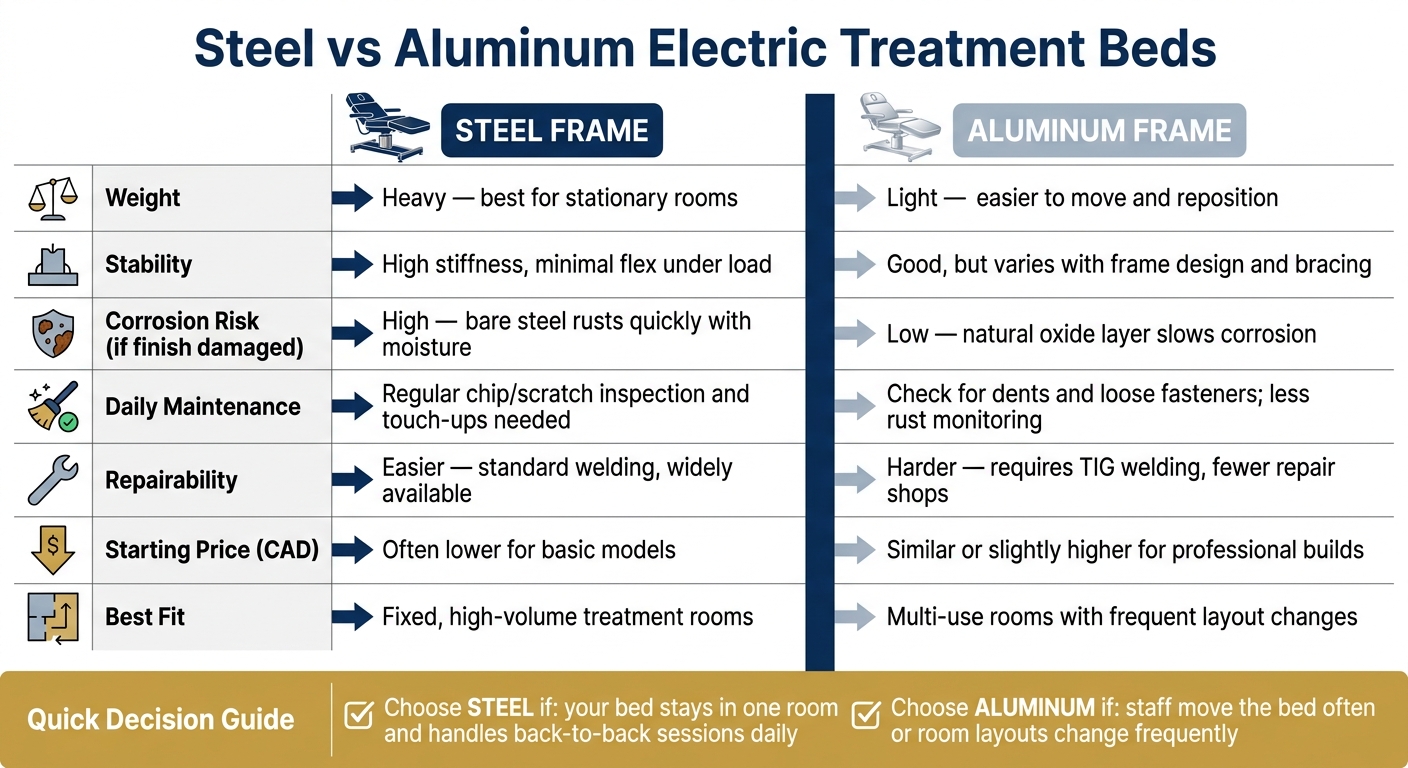
Steel vs Aluminum Electric Treatment Beds: Side-by-Side Comparison
Strength, Stability, and Daily Use
Frame material has a direct effect on how stable a bed feels during client movement and electric height changes.
Steel for Stationary, High-Use Treatment Rooms
In fixed rooms with heavy day-to-day use, stiffness is the main thing to look at. Steel is much stiffer than aluminium, so it bends less under load. On the floor, that usually means a steadier bed, even when a client shifts position or the actuator moves the bed height during treatment.
Heavy-duty steel models also tend to come with higher load ratings. And the extra frame mass helps keep the bed planted, with less side-to-side movement during detail-focused procedures. Since these beds usually stay in one room, the added weight is often a fair trade-off, not a problem.
Aluminium for Lighter Frames and Easier Repositioning
If the bed needs to be moved more often, lower frame weight starts to matter more. A well-built aluminium frame can still offer strong load ratings. Reinforced aluminium models can handle substantial loads while staying lighter, which makes a noticeable difference when staff reposition a bed several times a day.
That lighter frame can also make room resets easier in multi-use spaces where layouts change between services. Less strain, less effort, and less time spent shuffling equipment around.
That said, lighter aluminium frames can feel less steady during height adjustments, especially at maximum height or on uneven floors. Material alone doesn't tell the whole story. Frame design matters too.
| Factor | Steel Frame | Aluminium Frame |
|---|---|---|
| Stiffness under load | High; deflects less under client movement | Lower; varies with profile size and bracing |
| Feel during height adjustment | Solid, minimal flex | May feel less stable if lightly built |
| Best use case | Fixed, high-volume treatment rooms | Multi-use rooms requiring frequent repositioning |
sbb-itb-8ec3e54
Weight, Corrosion Risk, and Maintenance
Moving the Bed Within the Clinic or Between Rooms
Steel is heavier. Aluminium is lighter, which makes it easier to move, pivot for cleaning, and reposition in tight spaces. In narrow hallways or older buildings without freight elevators, a lighter frame is often simpler to handle safely.
Weight also plays a part in day-to-day wear. Heavier beds are more likely to pick up chips and scuffs on the frame as they’re moved around the clinic.
Corrosion Resistance and Finish Protection
This is one of the biggest day-to-day differences between the two materials. Aluminium naturally forms a thin oxide layer when it’s exposed to air. If the powder coat or paint gets scratched, that oxide layer forms fast and helps slow more corrosion. That gives aluminium a bit more room for error in rooms where disinfectant spray, saline, or small fluid spills reach the base.
Steel depends fully on its protective coating. Once paint or powder coat chips - from a rolling stool, an equipment cart, or repeated cleaning - bare steel can start to rust when moisture gets to it. In humid treatment rooms used for body wraps, facial steamers, or hydrotherapy, condensation and constant wiping can speed this up. Surface rust can stain floors and spread. If no one deals with it, it can move into joints and cut service life short.
For clinics that disinfect often, aluminium usually holds up better in spots where finish damage is likely. If steel is the better fit for a wet or humid room, it’s smart to choose heavily coated steel and add finish checks to your regular maintenance routine.
Once the finish is damaged, the upkeep picture starts to split.
Maintenance and Repairability Over Time
Steel needs closer inspection for chipped coating and rust, especially at the lower legs, corners, and welds. Aluminium needs fewer corrosion checks, but it still should be inspected for dents and loose fasteners. In provinces with harsh winters, road salt tracked into treatment rooms can speed up corrosion on unprotected steel bases. Minor scratches on aluminium usually stay cosmetic under normal indoor use.
On the repair side, steel has a practical edge. Steel repairs usually rely on standard welding. Aluminium repairs need TIG welding and more specialised labour, which can mean higher costs, longer turnaround times, and fewer repair options outside major urban centres. That gap in repairability affects downtime and total service life, not just what happens in the workshop.
Those upkeep differences show up clearly over time.
| Factor | Steel Frame | Aluminium Frame |
|---|---|---|
| Corrosion risk if finish is damaged | High; bare steel rusts quickly with moisture | Low; natural oxide layer slows further corrosion |
| Finish response to daily disinfecting | Chips can become rust sites if not touched up | Minor scratches stay cosmetic under normal use |
| Routine upkeep focus | Regular inspection and touch-up of chips and scratches | Check for dents and loose fasteners; less rust monitoring |
| Repairability | Easier; standard steel welding repairs widely available | Requires TIG welding; fewer repair shops equipped for aluminium |
Price and Long-Term Value for Canadian Buyers
That maintenance gap shows up in total cost of ownership too. The final price isn’t just about frame material. Motor count, upholstery, bed size, shipping, and where the unit is made all shape the final cost in CAD.
What Drives the Price Difference
Professional electric treatment beds in Canada can vary a lot based on specs. Steel-frame models often start lower for basic setups. Aluminium-frame beds are often priced about the same, or a bit higher, for professional-grade builds. That’s partly because aluminium usually needs tighter manufacturing to deliver the same stiffness as steel.
Shipping can also shift the math. Steel beds weigh more, so freight costs can climb fast across provinces, especially for long-haul routes or deliveries with stairs, narrow halls, or other access issues. Some aluminium models are built for partial disassembly, which can shrink package size and make delivery easier. If a clinic is buying several units, consolidated shipping through a Canadian wholesale distributor such as Beauty Pro Supplies Canada can make landed costs easier to predict. In other words, freight isn’t a side note here. It’s part of the purchase decision.
| Aspect | Steel Electric Treatment Bed | Aluminium Electric Treatment Bed |
|---|---|---|
| Price positioning (CAD) | Lower starting price for basic models; value rises with motors, upholstery, and size | Similar or slightly higher starting price for professional builds; premiums for lightweight or portable designs |
| Shipping impact in Canada | Heavier; higher freight and handling costs, especially for long-distance or upstairs delivery | Lighter; potentially lower freight; some models ship partially disassembled |
| Value in stationary high-use rooms | High; durable, stable, and easier to justify over years of heavy use | Moderate to high; suitable for many uses, but may not match steel under extreme daily loads |
| Value in flexible or multi-purpose rooms | Moderate; strong once placed, but less convenient to move | High; lighter weight supports easier repositioning and layout changes |
When a Lower Upfront Cost Can Cost More Later
A lower sticker price can hide a lot: thinner coatings, weaker hardware, and a shorter working life. In busy clinics, heavy-duty steel beds often outlast lighter aluminium models. And once you spread the purchase price across all the treatments a bed handles over its lifespan, that “cheaper” option may not look so cheap. Service calls, actuator swaps, and downtime all eat into the savings.
For clinics running a heavy daily schedule - dozens of sessions a day for injectables, facials, or body treatments - the frame isn’t just furniture. It’s a revenue-producing asset. That’s where the trade-off becomes clear: the right frame depends on how hard the bed will be used and how the room needs to function.
The next decision is which frame fits your layout and treatment volume, along with choosing a luxury comfort stool to match.
Matching Frame Type for Clinic Layout and Treatment Volume
After you’ve compared stability, rust resistance, and price, there’s one last filter: your room setup and how hard the bed gets used.
It usually comes down to two simple things: how often the bed needs to move, and how much stress it takes each day.
Choose Steel If Your Bed Stays Put and Sees Heavy Daily Use
Steel works best in fixed rooms with heavy daily traffic. In a busy injectables or body contouring room, back-to-back sessions put steady pressure on the frame over time. Steel handles that kind of workload well, and many steel-frame beds come with a higher load margin. That gives you a solid safety buffer across a broader mix of client sizes.
Choose Aluminium If Mobility and Easier Handling Matter More
Aluminium makes more sense in rooms that move around or change setup often. Think of a shared space used for facials, lash services, and training sessions on a Laguna Sand electric spa bed. In that kind of room, staff may need to reposition the bed several times a day to fix lighting, open up floor space, or shift the layout completely.
Because aluminium is much lighter than steel, a bed of similar size can feel noticeably easier to move. That matters for a solo practitioner or a small team without extra hands. Aluminium can also make room changes simpler during a near-term expansion or rework. Before you buy, compare those day-to-day demands against the frame and your actual space.
Key Points to Review Before You Buy
Use this checklist to compare models fast. Go through it room by room:
- Load rating: Confirm the maximum static load in kilograms and match it to your client volume and weight range.
- Bed weight: Heavier steel beds fit stationary rooms; lighter aluminium fits rooms where the bed moves several times a day.
- Corrosion exposure: Check the coating type on steel, or look at aluminium if rust risk is a concern.
- Repair and parts availability: Ask whether replacement actuators, casters, and hardware are available in Canada, and what repair timelines usually look like.
- Relocation plans: If a room reconfiguration is likely during a near-term expansion, factor that into the frame choice now.
FAQs
How do I choose the right load rating for my clinic?
Choose a treatment bed that can comfortably support your patients’ maximum weight, while also handling the extra pressure applied during treatment.
It’s also smart to look at your daily patient volume and the frame material’s durability. A bed might look fine on paper, but if it’s used all day, every day, the build quality matters. The right fit for your clinic comes down to safe weight support, day-to-day durability, and long-term use.
Is an aluminum bed stable enough for daily treatments?
Yes. An aluminum bed is stable enough for daily treatments when it’s built for professional use.
A clinic-grade aluminum frame is made to handle day-to-day work. It offers the strength, steady performance, stability, and safety you need in a treatment setting.
So, steel or aluminum? Both can support a safe, professional treatment experience. The main difference usually comes down to the bed’s build quality and intended use, not just the frame material alone.
When does a steel bed cost more over time?
A steel treatment bed can end up costing more in the long run if repairs or maintenance go past 50% of the cost of a new unit.
Heavy use and age can also make the bed less stable, which often leads to more downtime. And if it’s an older or discontinued model, replacement parts may be hard to source or priced too high. At that point, replacing the bed is often the more cost-effective choice.
Leave a comment